Table of Contents
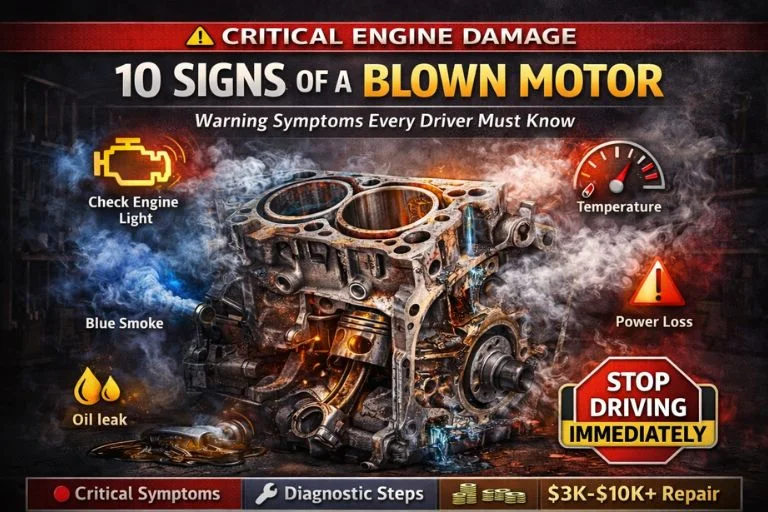
In case something has gone awry inside, the result may be a small inconvenience or a full-blown and expensive engine change. Early identification of the indicators of a blown motor can be the difference between a simple repair and a complete engine replacement. Recognizing the early symptoms that can lead to your engine harm can help you prevent from costly repair and engine replacement. There is hardly a case of engine failure that you do not get some warning that your car is almost about to run out of control. This guide covers the top 10 signs of engine trouble to ensure that you respond before minor problems escalate into disastrous failures.
What Does a “Blown Motor” Actually Mean?
A blown motor is a term used to describe extreme engine damage which makes the engine either inoperable or hazardous to use. This may be due to overheating, absence of lubrication, failure of internal components or long time disregard of maintenance. The effects of a blown motor will depend on the kind of damage that occurred but most of them have similar warning signs that ordinary drivers can easily recognize without necessarily being a mechanic.
Top 10 Signs of a Blown Motor
1. Check Engine Light (CEL) on the Dashboard
The check engine light coming on your dashboard is one of the most obvious indications of a blown motor when it is still in its early stages. Although this warning may be of minor issues, including, but not limited to, a loose gas cap, it can also be an indication of a serious internal engine issue, including misfires, malfunctioning sensors, or low compression.
2. Knocking or Ticking Noises in the Engine
Some of the most indicative features of a blown motor are strange noises within the engine bay. The connecting rod bearings have become worn or broken, and a deep, rhythmic knocking sound that is frequently referred to as rod knock is used to indicate that. This form of noise indicates that the engine is radically self-destructing with each revolution and needs to be shut down. Constant ticking or clicking may indicate valve train issues, low oil pressure or lifters that are worn out. Any of these sounds symbolize the way to understand that your engine is bad they are mechanical distress signals, which require urgent professional diagnosis.
3. Excessive or Colored Smoke from Exhaust
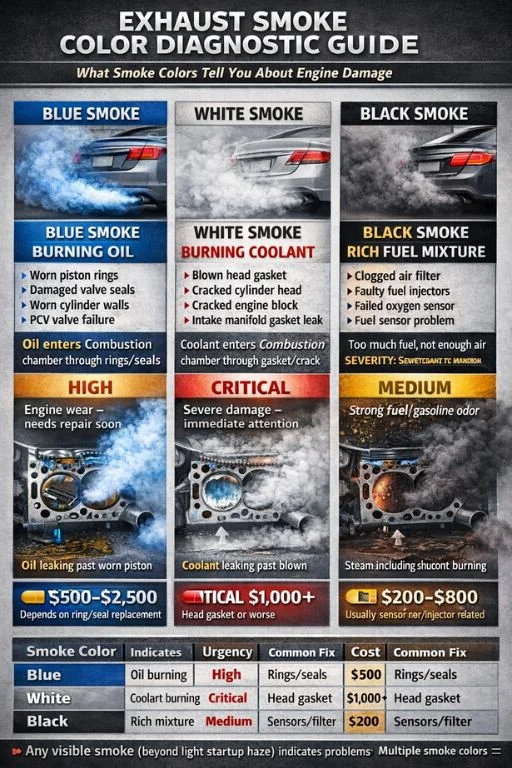
The smoke of your tailpipe is one of the symptoms of a blown motor that are most telling. This is the way to make out what you see:
- Blue smoke: The engine is being fed with oil, and this can happen because of either worn piston rings or valve seals.
- Thick white smoke: Coolant is getting into the combustion chamber, usually through a blown head gasket or broken engine block.
- Black smoke: The engine is rich running, it is burning excessively as a result of injector or sensor problems.
4. Engine Overheating
When your temperature gauge tends to shoot into the danger zone or when you notice steam coming out of the hood, then your engine is overheating, which is a severe issue and may even cause the engine to die. The heat is excessive and may cause distortion of cylinder heads, broken engine blocks and gaskets of heads. Low coolant, faulty thermostat, defective water pump or plugged radiator are the common causes of overheating. It is also among the most hazardous indications of a blown motor since the damage is gathered very rapidly. In case of an overheated engine, pull over, switch off and get it towed. Do not endeavor to push it any further.
5. Power Loss and Slow Acceleration
When your engine has a hard time accelerating, is sluggish or just not performing as well as usual, this is one of the classic symptoms of engine trouble on the list of top 10 engine troubles. If left unchecked it may spiral into more serious damages. The power failure can be due to the following reasons:
- Broken or contaminated fuel injectors
- Worn or dirty spark plugs
- Low cylinder compression
- A defective mass airflow (MAF) sensor
6. Rough Idling or Unintended Stalling
A healthy engine will run well and quietly. When your engine shudders, vibrates, make a noise as though it is straining when at rest, you have a rough idle, one of the most important indications of a blown motor at its infancy. This is usually caused by misfires, a defective idle air control valve or a leak in the vacuum. Stalling is much worse. A sudden shutoff of an engine, particularly during traffic jams or when moving slowly, is an indication that there is a serious failure in a fuel, ignition, or air intake system element. This is not only a safety risk, but it is also a good sign of the way to know whether your engine is bad.
7. Under-Car Fluid Leakage
This is any pool of colored or oily fluid that pools under your parked car and should be addressed at once. The most worrying engine related leaks are:
- Dark brown or black oil: Oil that leaks out of a gasket, seal, or the oil pan.
- Bright green, pink, or orange fluid: Coolant escaping the cooling system.
One of the quickest methods of creating catastrophic internal damage is that of running an engine low on oil. The leakage of oil especially is the sure indication of a blown motor in action. These issues can be detected with a regular inspection of your parking and frequent fluid test before they are beyond repair.
8. Declining Fuel Efficiency
Driving with higher frequency without any change in driving habit is an imperceptible yet significant engine problem symptom. The low fuel economy usually indicates clogged air filters, bad oxygen sensors, spark plugs, or dirty fuel injectors. This symptom is not necessarily a screamer of a blown engine on its own but it is one of the first indicators of a slowly escalating blown motor. The problem of fuel efficiency can be solved quickly, usually by a tune-up, which can maintain the performance and avoid additional damage.
9. Burning Smells or Abnormal Smells
The engine bay or even inside the cabin should not give your car a strong, acrid, or sweet smell. The notable odors to observe are:
- Sweet smell: Leaking coolant, not uncommonly a hose or radiator.
- Smell of burning oil: Drip of oil on the hot exhaust manifold.
- Burning rubber: A belt sliding or a hose touching a hot area.
These smells are some of the symptoms of a blown motor that are not always given serious consideration, yet they always indicate leakages or overheated parts that need to be attended to by a professional.
10. Trouble Starting the Engine
Although a flat battery or a faulty starter are the usual suspects in a hard start, continued inability to turn the engine over may also be one of the symptoms of a blown motor. When the battery and the starter check-in are okay and the engine slows down or is difficult to start, the issue may be in low compression, a weak fuel pump, or bad ignition system. A full engine diagnostic scan and compression test can easily reveal whether you have an electrical problem or a more serious mechanical one – and assure you how to know whether your motor is blown.
Quick Reference: Signs of a Blown Motor at a Glance
The table below summarizes the top 10 signs of engine trouble, their severity, and whether immediate action is required:
| Warning Sign | What It Indicates | Urgency Level |
| Check Engine Light | Sensor or internal fault | High |
| Knocking / Ticking Noise | Bearing or valve damage | Critical |
| Excessive Exhaust Smoke | Oil/coolant burning | Critical |
| Engine Overheating | Cooling system failure | Critical |
| Loss of Power | Fuel/ignition/compression issue | High |
| Rough Idle or Stalling | Combustion or fuel fault | High |
| Fluid Leaks | Gasket, seal, or hose failure | Medium–High |
| Decreased Fuel Efficiency | Sensor or injector fault | Medium |
| Burning Smell | Oil or coolant leak | High |
| Hard Starting | Fuel, spark, or compression issue | Medium–High |
How to Tell If Your Motor Is Blown: Diagnostic Steps
- Check the oil level and quality – look for milky consistency or extremely low levels.
- Check to see any leaks below the car (oil, coolant, or both).
- Pay attention to any abnormal sounds in the engine (knocking, ticking, grinding).
- Check the dashboard temperature indicator and warning lights.
- Retrieve the trouble codes in the engine control module using an OBD-II scanner.
- Get a professional mechanic to conduct a compression test to determine the health of the cylinders.
Diagnosis at the earliest stage is essential. Early detection of a blown motor will help you avoid the cost of having to completely replace your engine, which may cost you $3,000 to $10,000 or more depending on your vehicle.
If your engine has suffered catastrophic damage and repair isn’t economical, Tagore Auto Parts offers quality remanufactured engines and replacement transmissions as cost-effective alternatives to buying a new vehicle.
Preventing Engine Damage: Best Practices
The best way to avoid ever experiencing the symptoms of a blown motor is through proactive maintenance:
- Change your oil and filter at manufacturer-recommended intervals.
- Monitor coolant levels and flush the cooling system as scheduled.
- Address Check Engine Light alerts promptly, never ignore warning signs.
- Avoid aggressive driving habits that put excessive strain on engine components.
- Schedule regular tune-ups and inspections with a trusted mechanic.
Conclusion
Your engine will tell you of its suffering far before it is too late. The symptoms of a blown motor are the cry of a vehicle in need of assistance, whether it is the peculiar knocking and the check engine light, the excessive heat, and the leakage of fluids. Being aware of the signs of a blown motor early on and acting promptly – can save you thousands of dollars and help you gain a long life of your vehicle. Wait not to break down on the road. In case you have observed any of the 10 most common symptoms of engine problems listed in this paper, then make an appointment with a trained engine examiner.
It does not take long before a qualified mechanic can tell whether your motor is blown and suggest the most economical course of action. Your wallet and your engine will be glad. According to Society of Automotive Engineers (SAE) research, early detection and diagnosis of engine problems can prevent up to 70% of catastrophic engine failures, with proper maintenance being the single most important factor in engine longevity and reliability.
Frequently Asked Questions
What are most common symptoms of a blown motor?
The most common symptoms of a blown motor includes knocking of the engine, excessive colored exhaust smoke (blue, white or black), extreme overheating, unexpected loss of power and engine stalling or difficulty in starting.
What do I do to know whether my engine is bad without a mechanic?
To find out how to determine whether your engine is bad, you may listen to unusual sounds (knocking, ticking), watch the color of exhaust smoke, look under the car to see the presence of fluid leaks, watch the temperature gauge, and feel a strong decrease in power or fuel efficiency. Nevertheless, a professional mechanic with diagnostic equipment is always advisable in order to diagnose accurately.
Is it possible to drive with a blown motor?
No. Driving a blown-motor is liable to irreparable damage. In case of serious engine problems, park in a safe place and get the car towed to an engine repair shop. The result of keeping on driving could be that something that would be fixed becomes a complete engine change.
What is the cost of repairing a blown motor?
The cost of repairing a car differs greatly with the level of the damage and the type of the vehicle. Small repairs like changing a spark plug or sensor would cost a few hundred dollars, whereas a full engine rebuild or replacement would cost between 3,000 and more than 10,000. Costs can be minimized by early identification of the symptoms of a blown motor.
What will make a motor blow?
Some of the common causes are extreme overheating, operation of an engine without enough oil, engine knock (detonation), presence of coolant in the combustion chamber and disastrous bearing failure. The best prevention measure towards these problems is routine maintenance.