Table of Contents
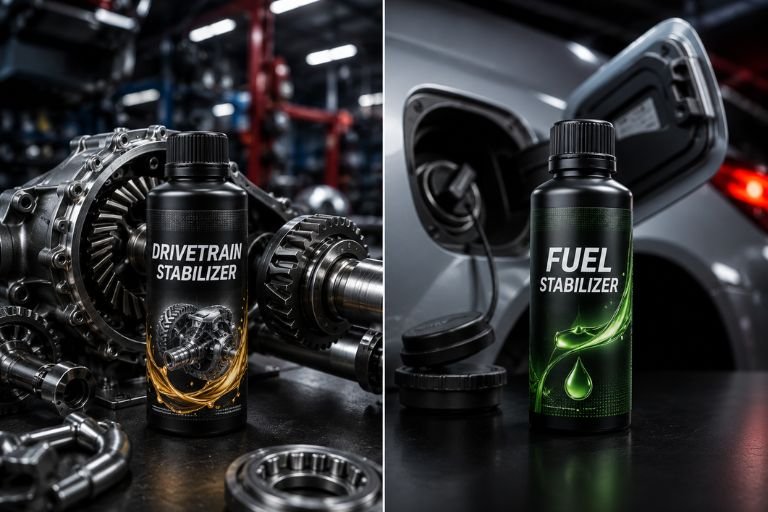
Whether you may be a commuter or a weekend getaway driver, no matter what your driving habits may be, to keep your car performing at its best you need to focus on both its mechanical components and its fuel health. The drivetrain stabilizer and fuel stabilizer are two items every car owner should know about. Although they play distinct roles, they make an excellent team to safeguard your investment and preserve your vehicle’s performance.
In this blog we will make you understand how using these products will protect your investment and ensure a smooth and safe driving experience.
What Is a Drivetrain Stabilizer?
A drivetrain stabilizer (DTS) is an aftermarket accessory, typically made from steel or aluminium with polyurethane mounts, that limits excessive motion of the drivetrain under load. It connects the drivetrain to the chassis to reduce rotational movement under acceleration, as well as gear shifting, to aid gear engagement, responsiveness to the throttle and drivetrain efficiency.
The DTS doesn’t completely lock the transmission, but instead adds a restraint to the existing mounts. It can help to improve performance, especially in high-torque and hard acceleration situations, but can also increase noise, vibration and harshness (NVH) and is not recommended for comfort vehicles.
Key Benefits of Using a Drivetrain Stabilizer
- Reduces steering-wheel and floor vibration
- Eliminates clunking of the drivetrain when accelerating and decelerating
- Improves traction and handling via correct alignment
- Extends the life of CV joints, U-joints and transmission mounts
- Smooths out a rough ride
- Works with stock and modified vehicles
When to Install a Drivetrain Stabilizer?
Not sure if your car needs a drivetrain stabilizer? Keep an eye out for:
- Thump or clunk when changing gears
- Movement of the drivetrain when the engine is revved
- Excessive vibration when accelerating
- Excessive wear on engine or transmission mounts
- Reduced power transfer
Drivetrain Stabilizer vs. Standard Motor Mount: A Quick Comparison
| Feature | Drivetrain Stabilizer | Standard Motor Mount |
| Primary Function | Limits drivetrain movement & vibration | Supports engine weight only |
| Vibration Reduction | High — targets all drivetrain NVH | Moderate — engine only |
| Performance Benefit | Yes — improved traction & handling | Minimal |
| Compatibility | Most vehicles, including modified | Vehicle-specific OEM fitment |
| Longevity Impact | Extends CV joints, axles, mounts | Engine mount only |
What is a Fuel Stabilizer and Why Does Your Car Need One?
A fuel stabilizer is an additive that stops fuel from degrading while kept stored. Fuels containing ethanol usually start to breakdown within 30 days, resulting in the formation of residues that can block the fuel injectors and carburettors. A fuel stabilizer slows down the oxidation process by extending the life of fuel injectors and carburettors. A fuel stabilizer is an inexpensive and easy way to keep your engine going.
How to Use a Fuel Stabilizer for Gasoline
Applying a fuel stabilizer for gasoline is straightforward. Here is a step-by-step guide:
- Fill the fuel tank to at least 95% capacity to minimize air space and reduce moisture intake
- Add the recommended dosage of fuel stabilizer for car engines — typically 1 oz. per gallon
- Run the engine for 5–10 minutes to circulate the treated fuel through the entire system
- Store the vehicle in a cool, dry place away from temperature extremes
- Restart the engine every 30 days if possible, even during storage
Top Use Cases for a Gas Stabilizer
- Seasonal vehicles: boats, ATVs, motorcycles, snowmobiles
- Classic or collector cars stored during winter
- Emergency generator fuel preservation
- Daily drivers during extended travel or leave
- Fleet vehicles in low-use rotation
Fuel Stabilizer for Car: Dosage and Storage Duration Guide
| Product Type | Typical Dosage | Storage Duration |
| Standard Fuel Stabilizer | 1 oz per gallon | Up to 12 months |
| Premium Gas Stabilizer | 1 oz per 2.5 gallons | Up to 24 months |
| Ethanol Treatment + Stabilizer | 1 oz per gallon | Up to 12 months |
| Marine / Aviation Fuel Stabilizer | Varies by brand | Up to 24 months |
Understanding Performance Upgrades and Vehicle Maintenance
For vehicles requiring extensive storage like classic cars, fuel stabilizer works alongside proper coolant system maintenance to preserve engine health When drivetrain components require replacement due to wear or performance upgrades, quality aftermarket suppliers like Tagore Auto Parts provide reliable remanufactured engines, transmissions, and drivetrain components at reasonable costs.
Using a Drivetrain Stabilizer and Fuel Stabilizer Together
A drivetrain stabilizer and a fuel stabilizer are two very different products, but together, as part of a regular maintenance plan, they work great. The drivetrain stabilizer protects the integrity of the vehicle’s drivetrain components, and the fuel stabilizer for car fuel systems keeps the fuel burning cleanly each time – even if the vehicle has been stored for months.
This combination of products is recommended by industry experts for fleet managers, classic car enthusiasts, and those who store their cars for the off-season. The small initial investment in these products can save much larger sums from the damage wrought by drivetrain and fuel system degradation.
Conclusion
The drivetrain stabilizer and the car engine fuel stabilizer are modest investments for a significant return on investment. The drivetrain stabilizer will keep your engine, transmission and drivetrain components running in alignment, smoothly and quietly, no matter the conditions.
The fuel stabilizer keeps all the fuel in your tank fresh, clean and ready to fire up your engine. Whether you’re putting a car in storage for the winter, enhancing your vehicle’s performance, or simply taking a preventative approach to maintenance, using these two products is wise. Read your car’s owner’s manual, select the best products for your needs, and rest easy knowing your vehicle is cared for – from the inside out.
Frequently Asked Questions
When should I install a drivetrain stabilizer?
Typically, the drivetrain stabilizer should be used to reduce unwanted engine and transmission movement that might result in crisper shifting and better throttle response. Install one if you experience clunking during acceleration, excessive vibration, or reduced power transfer.
Can I use a fuel stabilizer while driving?
Yes, but while a car fuel stabilizer is typically used to treat fuel during storage, some stabilizers also contain cleaning compounds to prevent deposits and clean fuel injectors during normal use. Read the label to determine if it is suitable for active use.
Will gas stabilizer work with ethanol-blended fuel?
Yes, ethanol-blended fuel can be stabilized, but an ethanol-specific fuel stabilizer will help prevent moisture from entering the fuel and provide better protection against phase separation and corrosion.
What does a drivetrain stabilizer do?
The drivetrain stabilizer reduces drivetrain movement and enhances the feel of shifting by limiting rotational movement of the transmission and drivetrain under load, improving power transfer and reducing vibration.
Which type of fuel stabilizer for gasoline is the best?
The best fuel stabilizer is compatible with ethanol-blended fuel as it stops oxidation and prevents water-related problems. Premium stabilizers offering 24-month protection are ideal for long-term storage of classic cars, boats, and seasonal vehicles.