Table of Contents
If you’ve ever wondered what a strut is and how it’s different from a shock absorber, you’re not the only one. People often get confused with it. As on the surface, it might seem similar, but they don’t do the same job and that difference shows up in how your car feels on the road. In this guide, we’ll go over what a strut is, look at the struts vs shocks comparison, and point out a few signs that something might not be working as it should.
Understanding Your Vehicle’s Suspension System
Before we go into the struts and shocks, it is important that we have an idea about what the suspension system is and what its function is. The suspension system enables to absorb the shocks of the road while keeping the tires stay firm on the road. The main components of the suspension system include springs, shock absorber, strut, control arm, and sway bar. All of these components are important and are supposed to perform a certain function. If a component of the suspension system malfunctions, the whole system is affected. This suspension vs shocks discussion is part of the bigger picture of the suspension system functioning correctly.
What Is a Strut?
So, what basically a strut means? A strut is one of the most important part of your vehicle’s suspension system that absorbs road impact by seamlessly supporting the weight of your vehicle. Unlike other shock absorbers a strut is physically integrated into the suspension structure. The struts are typically found in the front suspension of your car but in some models it can be found in rear suspension too.
Here’s what a strut is responsible for:
- Structural Support: It carries part of the vehicle’s weight and helps to keep the things more aligned as you drive.
- Shock Absorption: It helps to reduces the impact from bumps and rough patches on the road.
- Spring Mounting: It works alongside the coil spring to maintain ride height and manage movement.
What Is a Shock?
A shock absorber commonly called just a “shock” is a simpler component than a strut. Its primary job is to dampen and control the movement of the vehicle’s springs, preventing excessive bouncing and keeping the ride stable.
Key functions of a shock absorber include:
- Spring Control: Shocks help control how the springs move up and down. This stops the vehicle from bouncing much.
- Ride Comfort: Shocks make the ride smoother. They do this by reducing the shakes and wobbles from the springs.
- Stability During Maneuvers: Shocks keep the vehicle stable when you turn, brake or speed up. They prevent it from tilting or swaying much.
Unlike struts, shocks don’t contribute to the structural framework of the suspension system. They sit between the suspension and the wheel, focused entirely on motion control not load-bearing support.
Struts vs Shocks: Key Differences Explained
Now that we’ve covered what is a strut and what a shock does, let’s put them side by side. The struts vs shocks comparison comes down to four main areas:
1. Function
In the struts vs shocks comparison, function is the clearest dividing line. A strut serves as both a shock absorber and a structural support component. A shock absorber, by contrast, only controls spring movement without providing any structural role.
2. Design
A strut is a more complex, integrated unit it comes assembled with the coil spring and mounts directly to the vehicle’s chassis as part of the suspension framework. Shocks are simpler, standalone components mounted separately from the spring.
3. Location
Struts are most commonly found in the front suspension. Shocks can appear in both front and rear suspensions depending on the vehicle’s design.
4. Effect on Handling
Because a strut supports vehicle weight and affects wheel alignment, a worn strut can throw off your steering and create dangerous instability. Faulty shocks, while they don’t affect alignment directly, lead to a bouncy, unsettled ride, especially during braking and cornering.
Suspension Vs Shocks: Why Knowing the Difference Matters
When people talk about suspension and shocks they usually want to know if their problem is with the shock absorbers or if it’s an issue with the suspension system. Shock absorbers are important because if one is worn out it makes the vehicle ride rough. Suspension system problems can be serious especially if a strut is worn out since the strut is part of the suspension system. The shock absorbers help the vehicle ride smoothly so if they are worn out it affects how the vehicle rides. If the suspension system has a problem it can be a deal and it’s not just about the shock absorbers.
The suspension system and shock absorbers work together. If one has a problem it can affect the other. The suspension system has components, including springs, shock absorbers, struts, control arms and sway bars. The suspension system and its components, such as the suspension system can affect how the wheels are aligned how fast the tires wear out and how the vehicle steers, which is why the suspension system is important to consider when thinking about suspension, versus shocks and the suspension system. So understanding the difference between suspension and shocks is important.
When the vehicle does not feel right knowing which part is causing the problem helps determine how quickly it needs to be fixed and what kind of repair is needed. Suspension and shocks are important to consider. A bad shock absorber is mostly a comfort issue it makes the ride less comfortable.
Signs You Need to Replace Struts or Shocks
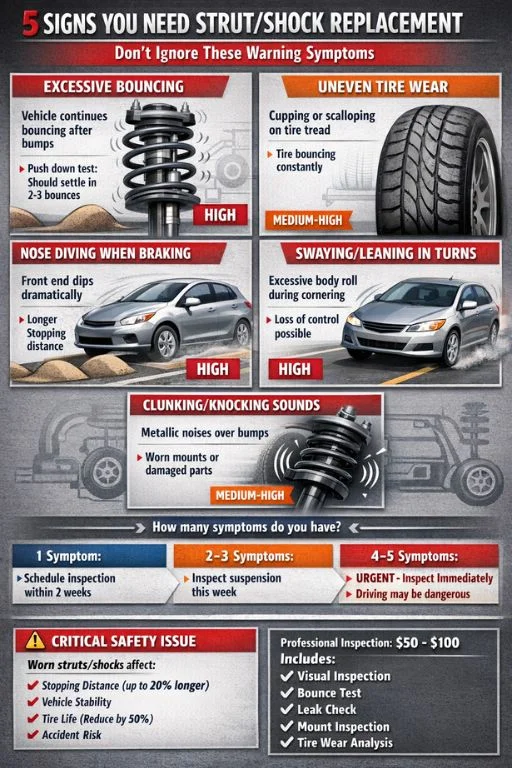
Watch for these warning signs:
- Excessive bouncing after hitting a bump
- Uneven or rapid tire wear
- Vehicle nose-diving during hard braking
- Swaying or leaning through corners
- Clunking noises from the suspension when driving over rough surfaces
If you’re noticing any of these symptoms, have your struts and shocks inspected as soon as possible.
Conclusion
So, if you want to keep your car safe and well-maintained than knowing what a strut is and how it differs from a shock absorber is a must. In the struts vs shocks debate, both serve as of great importance and are crucial to a suspension system running smoothly. As far as suspension vs shocks go, one important note is that these two are connected, and problems with one often affect the other. Regular maintenance including checking your suspension components is essential for vehicle safety and performance.
Just as with any other system, such as oil filter changes, keeping your struts and shocks replaced is the key to a well-functioning car for years to come. If severe suspension failure has caused accidents or vehicle damage requiring major repairs, Tagore Auto Parts offers quality remanufactured engines and replacement transmissions to restore your vehicle to optimal condition.
According to Consumer Reports’ automotive maintenance research, regular suspension system inspection and timely replacement of worn struts and shocks can prevent up to 40% of tire wear issues and significantly improve vehicle safety and handling performance.
Frequently Asked Questions
How long do struts and shocks last?
Struts and shocks can last a long time. They usually go for between 50,000 and 100,000 miles. Honestly it really depends on your driving style and the roads you drive on. Struts and shocks wear out faster if you drive roughly or on bad roads.
Can I replace struts or shocks myself?
I guess you can try to replace struts and shocks by yourself. It is not easy. To replace struts, you need tools and you have to know what you are doing with cars. So it is better to have a professional do it for you.
What happens if I ignore worn struts or shocks?
Struts and shocks that are worn out can make it harder to stop your car. They can make your car harder to control. They can also make your tires wear out faster. If you wait long to fix them struts and shocks can become a real safety hazard.