Have you ever wondered what is the major thing that keeps your engine’s crankshaft from shaking itself apart? Well the answer is the Harmonic Balancer — also known as the crankshaft damper or vibration damper. This component plays a crucial role in maintaining the engine’s longevity and performance. So, whether you are a DIY mechanic or someone who is confused from where is this rattling noise coming from? Then this guide is for you as it will break everything you need to know about what is harmonic balancers and how it can help to improve your engine’s performance.
What Is a Harmonic Balancer?
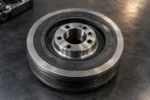
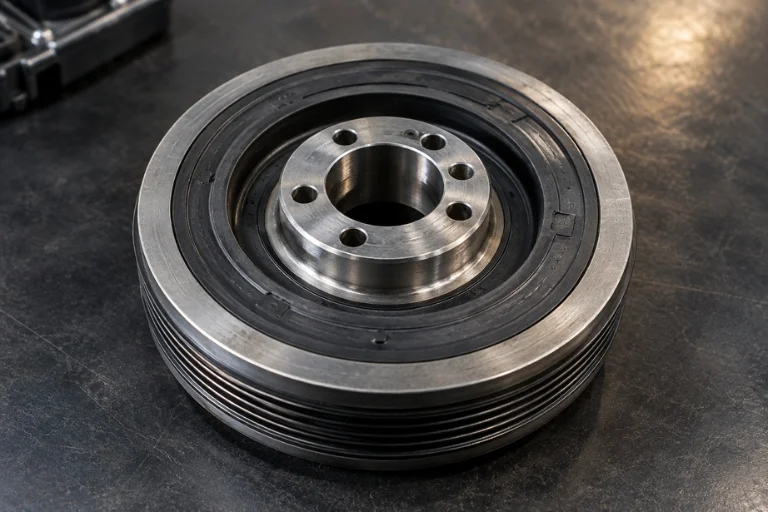
The harmonic balancer is a mechanical unit that’s attached to the front end of the crankshaft, usually between the timing cover and the accessory drive belt. It is mainly used against torsional vibrations produced by the combustion cycles of the engine. Each time the piston fires, it produces a twisting torque on the crankshaft. These forces if left unchecked, occur repeatedly and can lead to premature wear, cracking, or even catastrophic failure of the crankshaft. A harmonic balancer is simply a vibration absorber and damper that prevents these vibrations from being transmitted to the crankshaft and ensures smooth and consistent crank rotation.
When a harmonic balancer fails and crankshaft damage progresses, the repair costs can quickly exceed the value of the engine itself — particularly on higher-mileage vehicles. For drivers whose crankshaft or internal engine damage requires full engine replacement, Tagore AutoParts stocks a full range of used engines for popular makes and models across the USA.
What Does a Harmonic Balancer Do?
To understand the role of a harmonic balancer, one must investigate a little bit into the engine dynamics. The internal combustion engine uses a series of controlled explosions to produce a rotating force. These explosions are not perfectly smooth — they result in pulses that manifest as torsional (twisting) vibrations in the crankshaft. The harmonic balancer accomplishes a number of important tasks:
- Absorbs torsional vibrations – Minimises crankshaft twisting stresses during firing.
- Protects crankshaft – Aids in the prevention of fatigue cracking and enhances the crankshaft life.
- Stabilizes engine RPM – Aids in more consistent and smoother engine operation.
- Supports accessory drive parts – Houses pulley system for driving the alternator, power steering pump and air conditioning compressor.
- Minimises noise and vibration – Helps to create a more comfortable and quiet driving experience.
If the harmonic balancer isn’t functioning properly, engines can suffer from excessive wear, poor idling and, in extreme cases, even a broken crankshaft.
How Harmonic Balancers Work?
Most harmonic balancers consist of two main parts: an inner hub bolted directly to the crankshaft, and an outer inertia ring connected through a rubber or elastomeric bonding layer. This rubber layer is what actually absorbs vibration energy, flexing slightly to counteract the twisting forces before they can damage the crankshaft. Some high performance balancers use alternative damping methods, such as fluid-filled chambers or viscous dampers, to handle the higher torsional loads produced by modified or high-revving engines.
For trucks and performance vehicles where a failing harmonic balancer has also caused accessory belt misalignment and put additional stress on the transmission mount and drivetrain components, Tagore AutoParts carries reliable used transmissions for a wide range of makes and models to support complete drivetrain restorations at competitive prices nationwide.
Types of Harmonic Balancers
| Type | Description | Best Suited For |
|---|---|---|
| Elastomeric (Rubber) Balancer | Uses a rubber bonding layer between hub and ring | Standard passenger vehicles |
| Viscous Balancer | Uses fluid-filled chamber for damping | Heavy-duty trucks, diesel engines |
| High Performance Balancer | Engineered with lightweight materials and enhanced damping for high RPM | Racing, performance builds |
| SFI-Certified Balancer | Meets strict safety standards for high-stress applications | Drag racing, motorsports |
Why High Performance Balancers Matter?
With engines designed to run fast, tow, or be significantly modified, a standard harmonic balancer may not suffice. High performance balancers are designed for situations that result in higher compression ratios, forced induction or aggressive camshaft profiles that place additional torsional stress on the balancer. There are a number of important advantages to upgrading to a high performance balancer:
- Longer durability at high RPM speeds
- Lower chances of harmonic failure in modified engines
- Improved crankshaft security while big time driving or racing
- SFI Safety Compliance Certification for motorsports
- Precision balancing for smoother power delivery
Many performance balancers are also lighter than OEM balancers, which may help to slightly enhance throttle responsiveness due to reduced rotational mass. For Chevy Camaro and performance vehicle owners where upgrading to a high performance harmonic balancer is part of a broader engine build, Tagore AutoParts stocks used Chevy Camaro engines for drivers looking to pair a quality engine with the right balancer for their performance application.
Signs of a Failing Harmonic Balancer
Common symptoms include:
- Excessive vibration from the engine, particularly at idle
- Squealing or slapping sounds in the front of the engine
- Wobble in pulley visible when engine is running
- The inner hub and outer ring may be separated or cracked
- Cracks or separation between inner hub and outer ring
- Misaligned and worn belts
For Ford Mustang and V8 performance car owners where harmonic balancer failure is a known risk on high-mileage engines running aggressive cam profiles, Tagore AutoParts also stocks used Ford F-150 engines and other performance platform engines for drivers tackling complete engine restorations alongside balancer upgrades.
Conclusion
Although the harmonic balancer is a tiny part, its function of keeping your engine’s crankshaft in place and running smoothly is important. Knowing what a harmonic balancer is, and knowing when it’s time for a replacement, can save you a lot of trouble and potentially some money in the future — whether you are a car enthusiast or have a high-performance car in your garage.
When you’re looking into upgrading your engine for performance, a quality high performance balancer can be a worthwhile investment that will keep your engine durable and reliable even during heavy duty use. If you inspect your engine’s harmonic balancer regularly and replace it in the event of any signs of wear, your engine will continue to perform on par for years.
For all your engine parts needs — from harmonic balancers to complete used engines and transmissions — trust Tagore AutoParts, your reliable autoparts supplier serving customers nationwide.
Frequently Asked Questions
What is a harmonic balancer used for?
It reduces torsional vibrations created by the engine’s combustion process, protecting the crankshaft from stress-related damage and ensuring smooth engine operation.
Can I drive with a bad harmonic balancer?
No, it is not recommended, as a failing unit can cause increased engine vibration, belt misalignment, and crankshaft damage over time.
How long does a harmonic balancer last?
With proper maintenance it can last between 70,000 and 100,000 miles, depending on your driving conditions and engine type.
What is a harmonic balancer?
It is a circular device attached to the front of an engine crankshaft that absorbs and reduces destructive torsional twisting vibrations produced during combustion.
What does a harmonic balancer do?
Its main function is to minimize crankshaft twisting vibrations, stabilize engine RPM, and support the accessory drive belt pulley system for smoother performance.