Table of Contents
One of the most important yet often overlooked component of your car is the brake system. These brake pads are constantly exposed to heat and friction because of which it can deteriorate over time. If you don’t catch the minor issues quickly you might face brake failure. Understanding how to check brake pad and making brake pad inspection a routine part of vehicle can help you save lot of time and money. In this guide we will break down everything you need to know about how to make a step by step approach in checking brake pad thickness, how to check brake pads and why mobile brake pad inspection are becoming the preferred choice among the busy buyers.
Understanding the Signs of Worn Brake Pads
There are few signs you should keep in mind before taking your vehicle for inspection:
- High-pitched screeching: One of the most common sign of a worn out pad. It is caused because of the small metal wear indicator built into the pad. This happens because of the peak braking performance that contact the rotor and produces a sharp sound.
- Grinding sound: Once the pad’s friction material is completely gone the metallic starts grinding against the rotor making the grinding sound.
- Reduced braking performance: If your car takes time to stop the brake feels less responsive than usual.
- Vibration when braking: Feeling shaking sensation through the steering wheels or brake pedal can indicate to uneven brake pad wear.
Worn brake pads that go unaddressed put stress on brake rotors, calipers and wheel bearings — and in extreme cases, brake failure can cause broader engine bay damage from collision impact. For vehicles where accident damage or prolonged mechanical neglect has extended beyond the brake system, Tagore AutoParts stocks a full range of used engines for popular makes and models across the USA.
How to Check Brake Pads?
So, how do you actually check brake pads yourself? The good news is that it’s a fairly simple process that most drivers can do in just a few minutes.
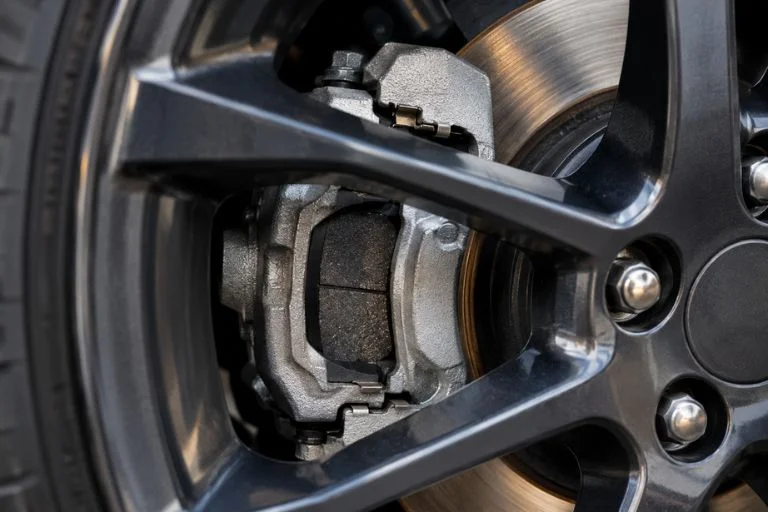
- Locate the wheel spokes. On many vehicles, you can see the brake caliper and pad directly through the gaps in the wheel — this is one of the easiest ways for checking brake pad thickness without removing the tire.
- Look at the pad pressed against the rotor. The brake pad is the flat piece of material sitting inside the caliper, pressed against the metal rotor.
- Estimate the thickness. A healthy brake pad should measure roughly ¼ inch (about 6–8 mm) thick. If the pad looks thinner than this — closer to ⅛ inch or less — it’s a strong indicator that a replacement is needed soon.
- Check for uneven wear. Compare the thickness across the pad. Uneven wear can point to a sticking caliper or alignment issue that a technician should look at.
If your wheel design makes it difficult to see the pads clearly, or if you’re unsure what you’re looking at, a professional brake pad inspection is the safest way to get an accurate reading. For vehicles where a brake inspection has also revealed worn suspension components or transmission wear alongside brake system issues, Tagore AutoParts carries reliable used transmissions for a wide range of makes and models at competitive prices nationwide.
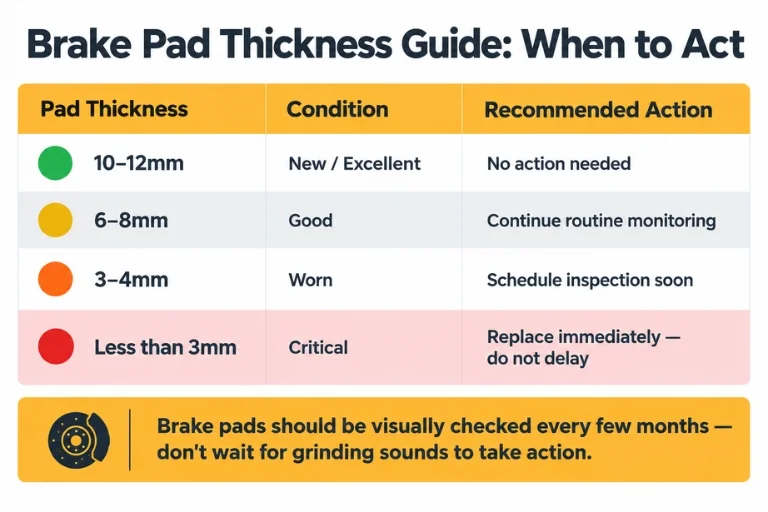
Quick Reference: Brake Pad Thickness Guide
| Pad Thickness | Condition | Recommended Action |
| 10–12 mm (new) | Excellent | No action needed |
| 6–8 mm | Good | Continue routine monitoring |
| 3–4 mm | Worn | Schedule inspection soon |
| Less than 3 mm (about ⅛ inch or less) | Critical | Replace immediately |
How Often Should You Change Your Brakes?
Most of the car enthusiasts often comes up with this question. Generally replacing engine after every 10,000 to 20,000 miles is recommended. This basically depends on the driving habits, vehicle type and braking style. Consistent driving, stop and go vehicle during traffic can tend to wear down brake pad much faster. With regular inspection you can perform well in every curve and pathway without any hassle. For Ford F-150 and truck owners where heavy towing and stop-and-go driving accelerates brake pad wear significantly faster than normal, Tagore AutoParts stocks used Ford F-150 engines for drivers whose brake and maintenance inspections have revealed broader mechanical wear worth addressing at the same time.
Benefits of Mobile Brake Pad Inspections
Checking your brake pads doesn’t have to mean a trip to the shop. Here’s why more drivers are making the switch:
- Ultimate Convenience: Checking your brake pads doesn’t have to mean a trip to the shop. Here’s why more drivers are making the switch.
- Convenience: It is convenient as you have to drive to the shop, the mechanic will come to your driveway or parking lot.
- Time Savings: Rather than wasting your time in the repair shop you can utilise the hours in carrying out your daily tasks.
- Safety First: In case of brake failure driving could be often risky. To check compromised system safely on site you can take a mobile inspection.
- Clear Transparency: This process is transparent as you can talk directly and watch the work personally.
- On the Spot Repairs: Most mobile providers carry tools and replacement pad along with them so that they can fix the issue immediately.
For Toyota Camry and sedan owners where brake pad wear is one of the most commonly reported maintenance items at high mileage, Tagore AutoParts also stocks used Toyota Camry engines for drivers whose comprehensive inspection has revealed mechanical wear beyond the brake system alone.
Conclusion
Regular brake pad inspection is one of the most important and crucial part in keeping the safety of your car much prominent. Knowing proper DIY methods like how to check brake pads, recognizing warning signs can help you drive for long. Regular brake pad inspection is one of the simplest ways to maintain your vehicle’s safety, performance and overall reliability. Making a visual inspection is necessary for you to understand the condition of your brake pad whereas the professional inspection is recommended when you are unsure about the wear and can’t fix it on your own.
Where you choose to visit a mechanic near you or conduct a mobile repair inspection service — staying informed about your brake pad can help protect your rotors and give you greater peace of mind. For all your vehicle parts needs — from brake system components to complete used engines and transmissions — trust Tagore AutoParts, your reliable autoparts supplier serving customers nationwide.
Frequently Asked Questions
How can I tell if my brake pads need replacing without removing the tire?
You can do this by checking the wheel spoke through a flashlight or listening to specific sounds.
What does it mean if my brakes are grinding?
In case if your brakes are grinding, it indicates that the metal parts are rubbing together and your brake pads are completely worn out.
How often should brake pads be inspected?
It’s a good idea to visually check your brake pads every few months and have a professional brake pad inspection performed every 10,000 to 20,000 miles.
What is the brake pad?
The brake pad is one of the most crucial components of your vehicle that holds down on the rotor tightly to slow or stop the car.