When you press the brake pedal and it starts to sink to the floor and does not give you a firm, responsive feel, this is a sign of air in the brake lines. A spongy brake pedal isn’t only uncomfortable; it can also affect braking performance and make you less safe. This is the reason why all home garages should have a brake bleeder kit. Fortunately, it’s not necessary to have a professional mechanic or someone to pump the brake pedal during the work.
There are brake bleed kits that allow you to bleed trapped air in your brakes, and with them you can do it in your driveway, often within an hour per wheel. We’ll first discuss what a brake bleeder kit is, the various brake bleeder types that are available, the considerations for choosing the appropriate kit, and how to use it to have a clean, hassle-free brake bleeding experience.
What Is a Brake Bleeder Kit?
A brake bleeder kit is a basic but vital tool that is used to remove air from your vehicle’s brake hydraulic system. Brake pressure is required for an effective braking system: When you press the brake pedal, the brake fluid pressure is transferred through the brake lines to the calipers, which then squeeze the brake pads against the rotors. Brake fluid is not compressible, which means that it transfers pressure well. But air is compressible, and if there is compression left in the brake lines, the pressure can be absorbed by the air, causing the brake pedal to feel spongy or soft when applied to the wheels and making braking more difficult.
A brake bleeder kit is used to easily flush out fresh brake fluid through the brake system and will allow the safe release of any air blisters out of the calipers via the bleeder valves at each caliper. Fortunately, you can do the brake bleeding yourself with the use of modern brake bleed kits, eliminating the need for a second person to have to repeatedly press the brake pedal while the bleeding is being performed.
A spongy brake pedal after a brake job is one of the most common complaints from DIY mechanics — and it almost always traces back to air in the lines rather than a deeper mechanical problem. For vehicles where a brake inspection has also revealed worn engine mounts or broader mechanical concerns, Tagore AutoParts stocks a full range of used engines for popular makes and models across the USA.
Types of Brake Bleeder Kits
Not all kits work the same way, and picking the right one matters more than people expect.
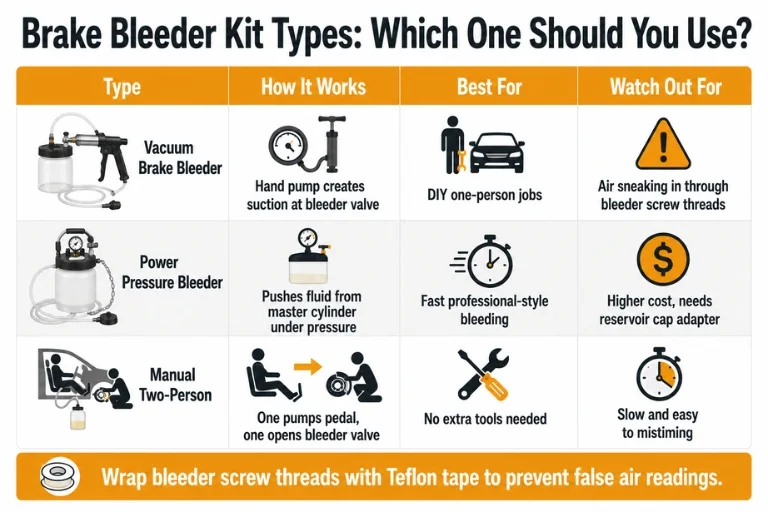
1. Vacuum Brake Bleeder
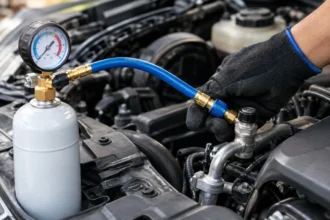
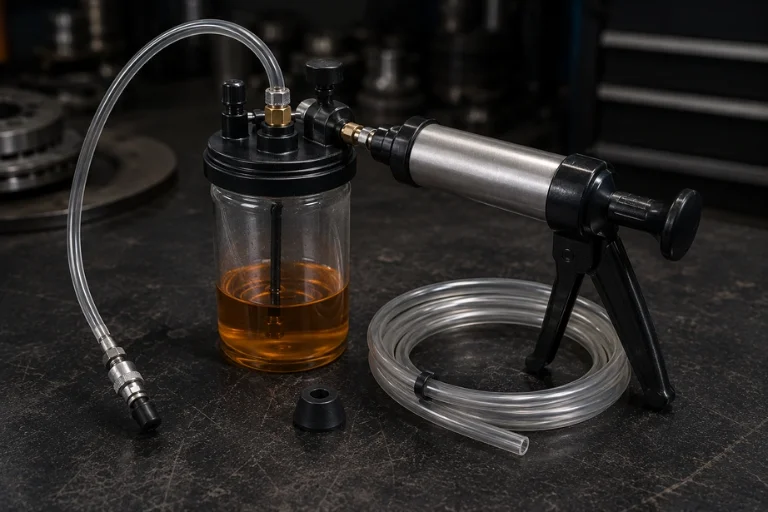
A vacuum brake bleeder uses a hand pump (or an air-compressor-powered version) to create suction at the bleeder valve, pulling fluid—and the air bubbles riding along with it—down through a hose and into a collection jar. This is probably the most popular style for DIYers because it’s a genuine one-person job. You attach the hose to the bleeder screw, crack it open, and pump the vacuum handle until you see clean, bubble-free fluid coming through.
The trade-off vacuum bleeders can sometimes pull tiny amounts of air in through the threads of the bleeder screw itself, which can trick you into thinking there’s still air in the line when there isn’t. A little thread sealant or tape around the bleeder valve threads usually solves this.
2. Power Brake Bleeder (Pressure Bleeder)
A power brake bleeder works the opposite way — instead of pulling fluid from the caliper end, it pushes fluid from the master cylinder reservoir under pressure, forcing it (and the air) out through each bleeder valve in sequence. These kits usually pressurize using a hand pump or shop air, and they’re a favorite among mechanics because they’re fast and don’t introduce the “air through the threads” problem that vacuum bleeders sometimes have. The downside is cost and setup — pressure bleeders are generally pricier and need an adapter that matches your specific reservoir cap, so they’re less of a grab-and-go option for occasional home use.
3. Manual Two-Person Bleeding
The old-school method — one person pumps the pedal, the other opens and closes the bleeder valve — still works fine and costs nothing extra. But it’s slow, it’s easy to mistime, and honestly, once you’ve used a brake bleeder pump, you’ll wonder why you ever bothered roping a family member into holding a jar under your car. For trucks and SUVs where brake system maintenance often coincides with transmission fluid service intervals, Tagore AutoParts carries quality used transmissions to support complete drivetrain maintenance at competitive prices nationwide.
Brake Bleeder Pump: What to Look For
If you’re shopping for a kit, here’s what actually matters:
- Pump quality—A hand pump that holds a vacuum steadily is worth paying a little extra for. Cheap pumps lose suction fast, and you’ll spend more time pumping than bleeding.
- Clear collection jar – You want to actually see the fluid and bubbles as they come through, so you know when to stop.
- Hose fitment – The hose needs to fit snugly over your bleeder valve nipple. A loose fit means air gets sucked in around the hose instead of through the fluid, which ruins your readings.
- Gauge – Some kits include a vacuum gauge, which is handy but not essential for basic bleeding jobs.
- Adapter variety – If you’re working on more than one vehicle, look for a kit with multiple bleeder valve adapter sizes.
Most all-in-one kits include the pump, a length of clear hose, a fluid catch jar, and a few adapter fittings—everything you need in one box. For performance vehicles and muscle cars where brake upgrades often accompany engine work, Tagore AutoParts stocks used Camaro SS engines and other high-performance engines for drivers building or restoring their vehicles from the ground up.
How to Use a Brake Bleeder Kit (Step-by-Step)
Here’s the process from start to finish, whether you’re doing a full brake job or just chasing a soft pedal.
- Gather your supplies.
- Top off the master cylinder.
- Locate the bleeder valve.
- Attach the hose.
- Crack the valve and start pumping.
- Watch for bubbles.
- Close the valve before releasing pressure.
- Repeat for each wheel.
- Top off the reservoir again.
- Test the pedal.
Bleeding Brakes With a Vacuum Bleeder: A Few Extra Tips
Bleeding brakes with a vacuum bleeder is mostly foolproof, but a few small habits make a big difference:
- Pump in short bursts rather than one long pull — it gives the fluid time to move through the line properly.
- If you keep seeing tiny bubbles that never seem to clear up, it’s very likely air sneaking in around the bleeder screw threads, not actual air in the system. Wrap the threads with a bit of Teflon tape and try again.
- Never let the vacuum pump run dry on the master cylinder — glance at the reservoir every minute or so.
- Work on a level surface with the wheels off (or the car safely on stands) so you have full access to each caliper.
- Old, dark, or cloudy fluid coming out is a sign it was well past time for a fluid change anyway — keep flushing until it runs clean and close to its original color.
Do You Really Need One?
If you change your own brake pads, do suspension work, or just want to flush old fluid every couple of years like you’re supposed to, a bleeder kit pays for itself after the first use. It also saves you from the classic problem of a spongy pedal after any brake job—even a simple pad swap can introduce a bit of air if a caliper gets pushed back carelessly. For occasional home use, a basic vacuum kit is more than enough.
If you’re working on multiple vehicles regularly or want the fastest, cleanest results, a power bleeder is worth the extra investment. For Ford F-150 and truck owners who regularly tackle their own brake and suspension maintenance, Tagore AutoParts also stocks used Ford F-150 engines for drivers whose maintenance inspections have revealed deeper mechanical wear worth addressing.
Conclusion
A soft brake pedal isn’t something to shrug off, and getting the air out of your lines doesn’t have to mean a trip to the shop. Whether you go with a vacuum pump, a pressure bleeder, or stick with the old two-person method, the goal is the same: clean, air-free fluid and a pedal that feels solid every time you press it. Once you’ve bled your own brakes with a proper kit, it’s one of those jobs you’ll never want to pay someone else for again.
For all your vehicle parts needs—from brake system components to complete used engines and transmissions—trust Tagore AutoParts, your reliable autoparts supplier serving customers nationwide.
Frequently Asked Questions
How does a brake bleeder kit work?
A brake bleeder kit removes trapped air from the brake lines using pressure or vacuum.
What are the safety precautions for using a brake bleeder kit?
Always wear safety goggles and nitrile gloves, secure the vehicle on jack stands, protect painted surfaces from brake fluid, and keep the master cylinder filled to prevent air from entering the brake system.
What are common mistakes when bleeding brakes?
Some of the common mistakes include letting air enter the system or using the wrong bleeding sequence.
What are the different types of brake bleeder?
The main types are manual, vacuum, pressure, and pneumatic brake bleeders.