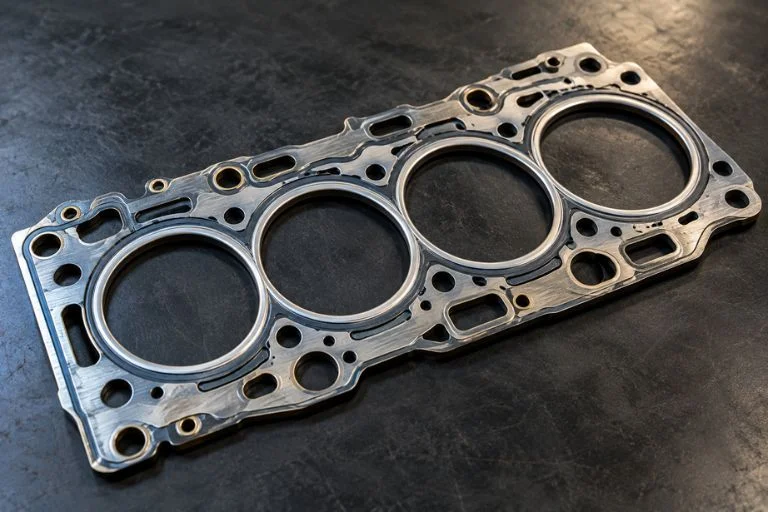
There is no part in an engine that has to endure as many stresses as the head gasket does. It is located between the cylinder head and the engine block and needs to seal the combustion pressure, coolant, and oil and withstand extreme heat cycles and mechanical stress. The multi-layer steel (MLS) head gasket is the most commonly used type in recent years and has replaced the composite and graphite head gaskets used in most vehicles in the past 20 years or more. Once owners, mechanics and enthusiasts understand the advantages of MLS technology, they will be better equipped to make a wise decision regarding engine.
Table of Contents
What Is a Multi-Layer Steel (MLS) Head Gasket?
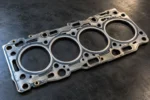
An MLS head gasket consists of multiple thin layers of stainless steel, grouped together and then covered with a rubber-like elastomer sealant. The outer layers offer structural strength and compression resistance, and embossed core layers form local sealing pressure around cylinder bores, coolant passages and oil galleys. The MLS design uses precision-formed steel dimples (embossments) and is not based on material thickness to create a seal like traditional composite gaskets which are constructed of asbestos, graphite or fiber. The engineering change is the main reason that MLS gaskets are superior to older types in almost every measurable category.
Understanding what makes an MLS head gasket superior also helps explain why engine replacement is sometimes more cost-effective than attempting a head gasket repair on a worn or overheated engine. For vehicles where head gasket failure has caused internal engine damage beyond what a gasket swap can fix, Tagore AutoParts stocks a full range of used engines for popular makes and models across the USA.
Why Automakers Have Shifted to MLS Head Gaskets
Modern engines run at higher temperatures, pressures and compression ratios and are increasingly featuring aluminum engine parts, which expand and contract at different rates, which is why automakers switched to Multi-Layer Steel (MLS) head gaskets. This leads to the repetition of movement between the cylinder head and the engine block, and can potentially cause deterioration of the traditional composite gasket. The multiple layers of thin steel in MLS gaskets offer flexibility, strength and recovery to ensure a reliable seal with thermal expansion and contraction. They also provide outstanding resistance to high combustion pressures, temperatures and repeated thermal cycling which helps to minimize coolant, oil and compression leak.
The advantages of MLS Head Gaskets include:
- Highest durability: Stainless steel heat resistance is much higher than composite material, the service life is much longer.
- High compression resistance: Embossed steel layers work well under high compression as well as in turbocharged or high performance engines.
- Thermal Cycling Resistance: MLS gaskets resist repeated heating and cooling without compromising their sealing ability.
- Compatibility with aluminum engines: Steel’s adaptability allows for the different expansion rates of aluminum heads and cast-iron or aluminum blocks.
- Low head gasket blowout rates: Less head gasket blowout means less cost to the vehicle owner in the long-term.
- Stable performance over time: The sealing embossments of MLS layers do not compress like composite materials and will not lose thickness during the gasket’s life.
For engines where a transition from composite to MLS gaskets during a rebuild has also revealed transmission wear from the same overheating event, Tagore AutoParts carries reliable used transmissions for a wide range of makes and models to support complete drivetrain restorations at competitive prices nationwide.
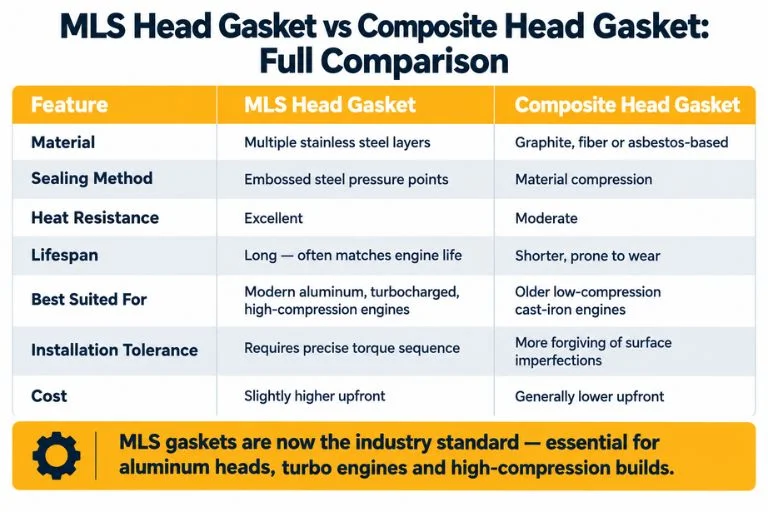
MLS vs. Composite Head Gaskets: A Comparison
To understand why MLS has become the dominant choice, it helps to compare it directly against traditional composite gaskets.
| Feature | MLS Head Gasket | Composite Head Gasket |
| Material | Multiple stainless steel layers | Graphite, fiber, or asbestos-based |
| Sealing Method | Embossed steel pressure points | Material compression |
| Heat Resistance | Excellent | Moderate |
| Lifespan | Long (often matches engine life) | Shorter, prone to wear |
| Best Suited For | Modern aluminum, turbocharged, high-compression engines | Older, low-compression cast-iron engines |
| Installation Tolerance | Requires precise torque sequence | More forgiving of surface imperfections |
| Cost | Slightly higher upfront | Generally lower upfront |
While composite gaskets remain adequate for older, lower-stress engines, MLS gaskets are essential for the performance and durability demands of contemporary vehicles. For Toyota Camry and four-cylinder owners where the transition to MLS head gaskets in later model years significantly improved long-term reliability, Tagore AutoParts stocks used Toyota Camry engines for drivers whose head gasket failure has progressed to full engine replacement territory.
Signs Your MLS Head Gasket is Failing
Even the most durable gasket isn’t immune to failure, particularly when engines overheat or are poorly maintained. Common warning signs include:
- White, milky residue on the engine oil dipstick (coolant contamination)
- Sweet-smelling white smoke from the exhaust
- Persistent engine overheating without an obvious cause
- Coolant loss with no visible external leak
- Bubbling in the coolant reservoir or radiator
- Rough idling or misfiring caused by coolant entering the combustion chamber
Catching these symptoms early can prevent more extensive and expensive engine damage. For official guidance on vehicle emissions standards related to combustion efficiency and how head gasket failure contributes to increased hydrocarbon emissions and failed emissions tests, the U.S. Environmental Protection Agency’s official vehicle emissions and engine certification page is the most authoritative USA government reference available. For Ford F-150 EcoBoost and turbocharged truck owners where MLS head gasket failure is a known high-mileage issue on aluminum block engines, Tagore AutoParts also stocks used Ford F-150 engines as a cost-effective path to restoring full engine performance after gasket failure.
Conclusion
The Multi-Layer Steel (MLS) head gasket is the most recent gasket type to be used in sealing engines due to its durability, heat resistance, withstanding high combustion pressures, and reliability with repeated thermal cycles. MLS technology offers better and more uniform sealing ability than conventional composite gaskets, especially in today’s aluminum, turbocharged and high-compression engines. But even the best gasket requires correct installation, proper torque procedures, and prepared mating surfaces to effectively perform.
If you can identify the symptoms of gasket failure, and take steps to correct them in a timely fashion, you should be able to avoid any serious engine damage or expensive repairs. Overall, choosing and installing the correct MLS head gasket is an important part of ensuring long-term engine performance, reliability, and efficient sealing.
For all your engine parts needs — from MLS head gaskets to complete used engines and transmissions — trust Tagore AutoParts, your reliable autoparts supplier serving customers nationwide.
Frequently Asked Questions
How long does an MLS head gasket typically last?
Along with proper maintenance and care the MLS head gasket can last up to 150,000–200,000 miles.
Are MLS head gaskets better?
Multi-layer Steel head gaskets is usually considered better for modern, high-pressure and high-performance engines.
Are MLS head gaskets more expensive than composite gaskets?
Yes, the MLS are often considered more expensive than the composite gasket costing around $45 and $150+.
What is the correct torque for head gasket bolts?
No, there is no correct torque for head gasket bolts as it entirely depends on engine’s make, model and year.