Is your car drifting from one side to another or is your steering wheel feel off-centered? Well, the problem can be in your wheel alignment — one of the most crucial yet overlooked component of your vehicle maintenance, that can directly affect your vehicle’s safety, fuel efficiency and tire lifespan. Most drivers often ignore these signs which might lead them to pay higher bills. In this blog we will cover everything you need to know about what is Wheel Alignment, how much it costs and what all steps to be kept in mind.
What Is Wheel Alignment?
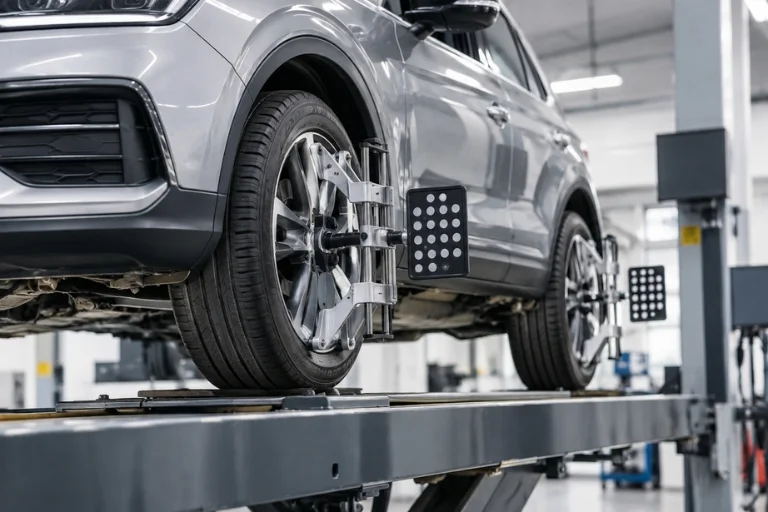
Wheel alignment is the vehicle maintenance service that adjusts your car’s suspension system so that your tires stay connected to the road at the correct angle:
- Camber – the inward or outward tilt of the tire when viewed from the front of the vehicle
- Toe – the angle at which the tires point inward or outward relative to each other when viewed from above
- Caster – the angle of the steering axis when viewed from the side, which affects steering stability and cornering
When these angles fall outside the manufacturer’s specifications, your vehicle can experience poor handling, reduced fuel economy, and accelerated tire wear.
Persistent misalignment that goes unaddressed can accelerate wear across the entire suspension system — and in older high-mileage vehicles, that wear can eventually affect engine mounts and surrounding drivetrain components. For vehicles where suspension neglect has contributed to broader mechanical wear, Tagore AutoParts stocks a full range of used engines for popular makes and models across the USA.
Why Wheel Alignment Matters
Skipping regular wheel alignment services can lead to a cascade of problems that affect both your wallet and your safety. Here’s why it deserves a spot on your maintenance checklist:
- Extends tire life – Properly aligned wheels wear evenly, helping you get the full mileage out of every tire
- Improves fuel efficiency – Misaligned wheels create additional rolling resistance, forcing your engine to work harder
- Enhances handling and safety – Correct alignment ensures predictable steering response, especially important during emergency maneuvers
- Reduces strain on suspension components – Misalignment puts uneven stress on suspension parts, leading to premature wear
- Provides a smoother ride – A well-aligned vehicle tracks straight and true, reducing vibration and driver fatigue
Signs You Need a Wheel Alignment
Most vehicles need an alignment check every 12,000 to 15,000 miles, but certain warning signs indicate you shouldn’t wait that long:
- Sudden drifting of car even if you are driving on a flat surface.
- Even while driving straight your front-wheel gets off-centred.
- Especially during high speeds, you might notice sudden vibration on the steering wheel.
- Squealing sounds of the tires while going around the corners.
These warning signs often point to suspension wear that goes beyond simple alignment adjustments. For trucks and SUVs where aggressive driving or off-road use has accelerated suspension and drivetrain wear alongside alignment issues, Tagore AutoParts carries dependable used transmissions to support complete drivetrain restorations at competitive prices nationwide.
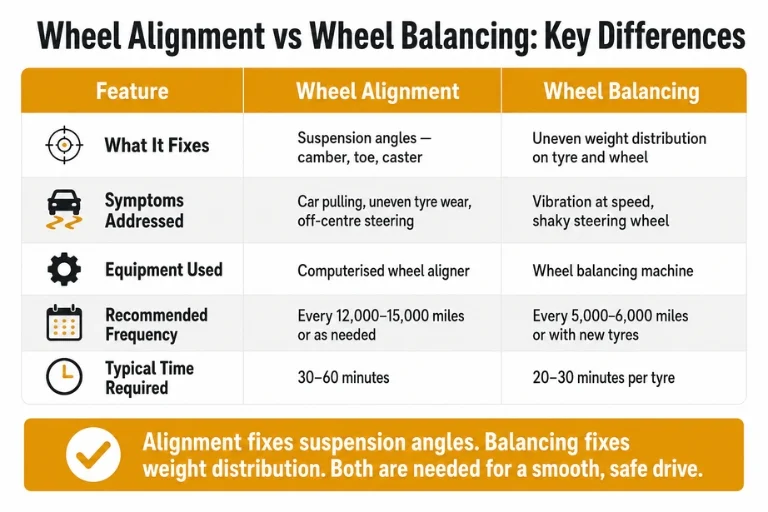
Wheel Alignment vs. Wheel Balancing: What’s the Difference?
| Feature | Wheel Alignment | Wheel Balancing |
| What it fixes | Suspension angles (camber, toe, caster) | Uneven weight distribution on tire/wheel assembly |
| Symptoms addressed | Car pulling, uneven tire wear, off-center steering | Vibration at speed, shaky steering wheel |
| Equipment used | Computerized wheel aligner | Wheel balancing machine |
| Recommended frequency | Every 12,000–15,000 miles or as needed | Every 5,000–6,000 miles or with new tires |
| Typical time required | 30–60 minutes | 20–30 minutes per tire |
How Long Does a Wheel Alignment Take?
Usually the drivers ask how long does a wheel alignment take? The answer to this question is that at an average a standard four-wheel alignment usually takes between 30 to 60 minutes depending on the few factors:
- Type of the vehicle: The vehicles with complex suspension system might take longer.
- Severity of the Misalignment: A vehicle might require more time and adjustment if it is severely out of alignment.
- Shop equipment: Modern computerised vehicles are considered to be more precised than older systems.
- Two-wheel vs four-wheel alignment: The front wheel focuses on the front axles taking 30–35 minutes and the four-wheel alignment usually takes 1 to 1.5 hours to focus on all four axles.
Wheel Alignment Cost: What to Expect
The cost of your vehicle’s wheel alignment might vary depending on the location, vehicle type and shop you choose. Understanding these factors can help you choose the correct service type and their price range.
| Service Type | Typical Price Range |
| Front-end (two-wheel) alignment | $50 – $75 |
| Four-wheel alignment | $100 – $200 |
| Alignment with additional suspension repair | $200 – $400+ |
| Wheel alignment and balancing package | $120 – $250 |
Several factors can influence the final wheel alignment cost you’re quoted:
- Vehicle make and model – Luxury or performance vehicles often cost more due to specialized equipment needs
- Shop type – Dealerships typically charge more than independent shops or tire retailers
- Geographic location – Labor rates vary significantly by region
- Additional repairs needed – Worn tie rods, ball joints, or bushings must often be replaced before alignment is possible
It’s worth noting that some tire retailers offer discounted or even lifetime alignment packages when you purchase a new set of tires, which can provide long-term savings. For Jeep Wrangler and 4×4 owners where alignment repairs frequently reveal worn ball joints and tie rod ends alongside suspension damage, Tagore AutoParts stocks used Jeep Wrangler engines for drivers whose off-road use has caused mechanical wear well beyond the alignment system.
Choosing the Right Wheel Alignment Services
Not all wheel alignment services are created equal. When selecting a provider, consider the following:
- Equipment quality – Look for shops using modern, computerized wheel aligner technology for greater precision
- Technician certification – ASE-certified technicians typically provide more reliable diagnostics and adjustments
- Warranty or guarantee – Reputable shops often stand behind their alignment work with a service guarantee
- Transparent pricing – Choose a shop that provides a detailed quote before beginning work
- Customer reviews – Online reviews can offer insight into a shop’s reliability and quality of service
For Ford F-150 and full-size truck owners where alignment repairs have also revealed worn suspension components and engine mount degradation, Tagore AutoParts stocks used Ford F-150 engines as a reliable and cost-effective engine replacement solution.
Conclusion
You might not take wheel alignment not seriously until you start noticing the warning signals. But understanding these signs before it gets too late is much important. From extending tire life to improving fuel efficiency — staying alert can let you and your vehicle stay safe for long. Whether you are dealing with a car that is drifting away or a bad wheel alignment that can lead to costly repairs, having a perfect knowledge of how these small signs can lead to serious problem can help you save a lot of time and money. So don’t wait until these small issues become expensive repairs — go and visit your trusted service provider today!
For all your vehicle parts needs — from suspension components to complete used engines and transmissions — trust Tagore AutoParts, your reliable autoparts supplier serving customers nationwide.
Frequently Asked Questions
Can an alignment be done in 20 minutes?
No, the proper alignment cannot be done in 20 minutes, as professional service can typically require 30 to 60 minutes.
Will my car drive better after alignment?
Yes, it is often noted that your car drives better after your alignment is fixed.
Do I need 4-wheel alignment or 2?
Most of the cars require a 4-wheel alignment, while older vehicles or trucks with a solid rear axle only need a 2-wheel alignment.
How often do you really need a wheel alignment?
You generally do not need a fixed time schedule for a wheel alignment if your car is driving straight without drifting.