Table of Contents
Have you ever thought what power steering fluid is until something goes? Or has your vehicle started feeling heavier than usual. The answer lies under the hood of your car — The Power Steering fluid. This fluid is doing a lot of work every time you drive and it is one the crucial component that you often forget to remember. Ignoring it for too long can lead to stiff steering, a burnt-out pump and loss of control. Well, this guide covers everything you want to know about what is a Power Steering fluid, how to check it yourself and what a faulty leak seems like.
What Power Steering Fluid Actually Does
Power Steering fluid is a specialized hydraulic oil that helps make steering moves smoother by transmitting pressure from the power steering pump to the steering gear. The main function of it is to lubricate the internal components such as pumps, valves and pistons that allows friction among itself while it is circulating. Not every car has this system as a lot of vehicles run on Electric Power System (EPS), that swaps the hydraulic setup for an electric motor and has no fluid. Not only this, its proactive additives help to prevent corrosion and harmful acid build ups while improving the fluid to stay stable and performance efficiently under different weather conditions.
Power steering system neglect is one of the more avoidable causes of costly drivetrain repairs — and when a seized pump causes broader mechanical stress on a high-mileage engine, replacement becomes the most practical path. For vehicles where power steering neglect has contributed to engine wear, Tagore AutoParts stocks a full range of used engines for popular makes and models across the USA.
What Color Is Power Steering Fluid?
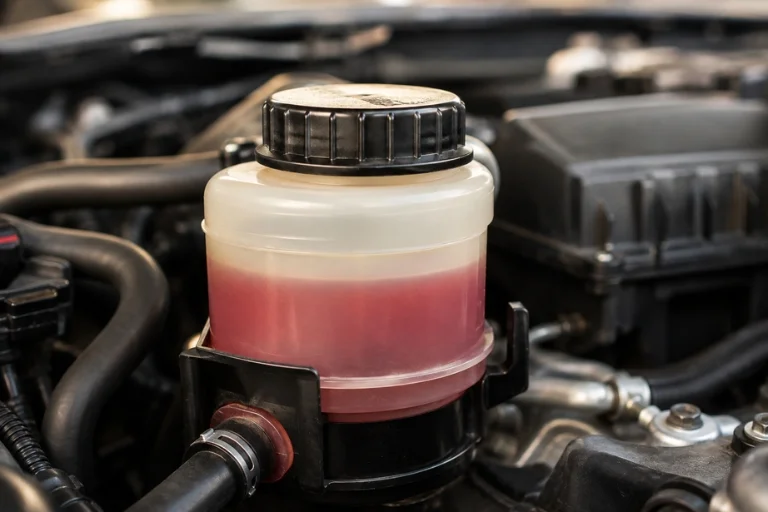
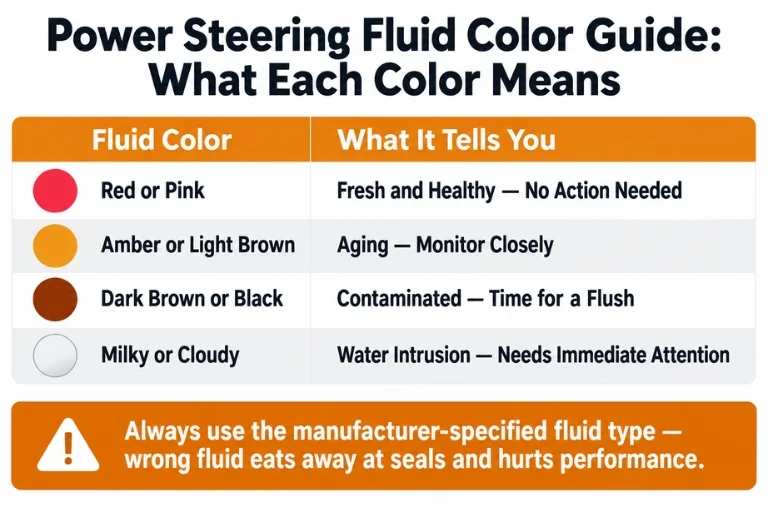
The fastest diagnostic you have is just looking at the fluid. Fresh fluid usually comes out red or pink, though a handful of manufacturers use amber, gold, or clear formulations instead. As it ages or picks up contamination, both the color and the texture shift — which gives you an early warning before anything actually breaks.
| Fluid Color | What It Tells You |
| Red or pink | Fresh and healthy |
| Amber or light brown | Aging — keep an eye on it |
| Dark brown or black | Contaminated, time for a flush |
| Milky or cloudy | Water has gotten in — needs attention soon |
How to Check Power Steering Fluid?
This takes about five minutes and doesn’t require any special tools.
- Park on level ground, and if the engine’s been running, give it a few minutes to cool.
- Find the reservoir under the hood — look for a cap with a steering wheel icon.
- Check the level against the MIN/MAX markings.
- Look at the color and clarity while you’re in there.
- If it’s low, top it off with whatever fluid your manufacturer specifies.
That last point matters more than people expect — using the wrong fluid type can eat away at seals and hurt performance, so it’s worth the thirty seconds to confirm the spec before you pour anything in. For vehicles where a routine fluid check has revealed broader mechanical concerns, including transmission performance issues, Tagore AutoParts carries reliable used transmissions for a wide range of makes and models to support complete drivetrain repairs affordably.
Signs of a Power Steering Fluid Leak
Leaks are probably the most common power steering issue out there, and catching one early is the difference between a cheap fix and an expensive one. Keep an eye out for:
- Reddish or brown puddles under where your car usually parks
- A whining or squealing sound when you turn the wheel
- Steering that feels stiffer than usual, especially at low speed
- Fluid that keeps dropping even after you’ve topped it off
Most leaks trace back to worn hoses, degraded seals, a pump on its way out, or a fitting that’s worked itself loose. The real risk isn’t just harder steering — left alone, a leak can eventually take out the whole pump, which turns a minor repair into a much bigger bill. If any of these symptoms show up, it’s worth getting looked at sooner rather than later. For Honda Pilot and full-size SUV owners where power steering pump failure is a well-documented high-mileage issue, Tagore AutoParts stocks used Honda Pilot engines for drivers whose steering system neglect has caused broader engine compartment damage.
Power Steering Fluid Flush: What It Is and Why It’s Needed
Topping off fluid and flushing the system are two different things. A flush drains everything — the old fluid, along with whatever debris, moisture, and sludge has built up over time — and replaces it with fresh fluid throughout the system.
Mechanics generally recommend one:
- At whatever mileage interval your owner’s manual lists (often somewhere between 50,000 and 100,000 miles)
- Once the fluid looks visibly dark or dirty
- After fixing a leak, just to clear out any leftover debris
Done regularly, it tends to mean quieter, smoother steering, a longer-lasting pump, and less internal wear from corrosion over time.
For official guidance on vehicle fluid maintenance standards and hydraulic system servicing recommendations, the National Highway Traffic Safety Administration’s official vehicle safety and maintenance resource page is the most authoritative USA government reference available for car owners looking to stay on top of preventive maintenance, including power steering system care. For Chevy Tahoe and full-size truck owners, whose power steering fluid maintenance is often overlooked during high-mileage service intervals, Tagore AutoParts also stocks used Chevy Tahoe engines for drivers whose inspection has revealed wear beyond what a fluid flush can address.
Cost for Power Steering Fluid Flush
Pricing depends a lot on whether you’re doing it yourself and what you drive.
| Service | Estimated Cost |
| DIY flush (fluid + tools) | $15–$40 |
| Professional flush | $80–$150 |
| Flush plus leak repair | $150–$400+ |
Conclusion
One of the major component of your vehicle, yet often overlooked is the one that helps the wheel of your vehicle to move. Doing regular check-ups of the fluid-level, color and condition can help you spot leaks or contamination before they cause serious damage to the power steering pump or other components. Understanding these changes in the color, why your steering is stiff or noisy can help you save a lot of money and time. Visiting to the authorised dealer can help to increase the life of your vehicle.
For all your vehicle parts needs — from steering system components to complete used engines and transmissions — trust Tagore AutoParts, your reliable autoparts supplier serving customers nationwide.
Frequently Asked Questions
Can I just refill my power steering fluid?
Yes, you can refill your power steering fluid but before this you should check incase if there is any leakage.
What happens when your power steering fluid is low?
Low power steering fluid can make the steering wheel stiff and difficult to turn, especially at low speeds, and may also cause whining or groaning noises when steering.
What does power steering fluid do?
Power steering fluid transfers hydraulic pressure and lubricates system components, helping reduce the effort required to turn the steering wheel.
Are power steering fluid and brake fluid the same?
No, power steering fluid and brake fluid share different chemical properties. These two shouldn’t be used interchangeably.