Removing a tightly fitted bearing can be a challenging task, especially when precision and component safety are critical. A bearing puller is an essential tool designed to make this process easier, allowing mechanics and maintenance professionals to remove press-fitted bearings, gears, pulleys, and other components without causing damage to the shaft or surrounding parts. From automotive repairs to heavy industrial maintenance, bearing pullers help improve efficiency, reduce repair time, and prevent costly component failures.
Available in mechanical and hydraulic designs, these tools provide the necessary force and control to handle even the most stubborn bearings safely. In this blog, we’ll explore how bearing pullers work, their different types, key applications, and why they are an important addition to any workshop or maintenance setup.
Why a Dedicated Wheel Bearing Removal Tool Matters
Wheel bearings are pressed into place with tolerances measured in thousandths of an inch. That tight fit is exactly what makes them reliable at highway speed and exactly why they fight back when it’s time to come out. Rust, heat cycles, and years of road grime only make the bond worse. Trying to remove a bearing with a chisel, a torch, or a two-jaw puller that wasn’t built for the job usually ends in one of three ways:
- A damaged hub bore that no longer holds a new bearing snugly
- A bent or cracked spindle, which turns a $40 part into a $400 repair
- A bearing that partially collapses mid-removal, showering the bay with needle rollers
A purpose-built hub puller or wheel bearing press tool applies even, controlled pressure along the bearing’s centerline. That’s the whole trick — force in the right place, distributed evenly, without shock loading the surrounding metal. For vehicles where improper bearing removal has already caused hub or spindle damage beyond repair, Tagore AutoParts stocks a full range of used engines for popular makes and models across the USA to support broader mechanical restorations.
Types of Bearing Pullers You’ll Actually Encounter
The most common types of bearing pullers are as follows:
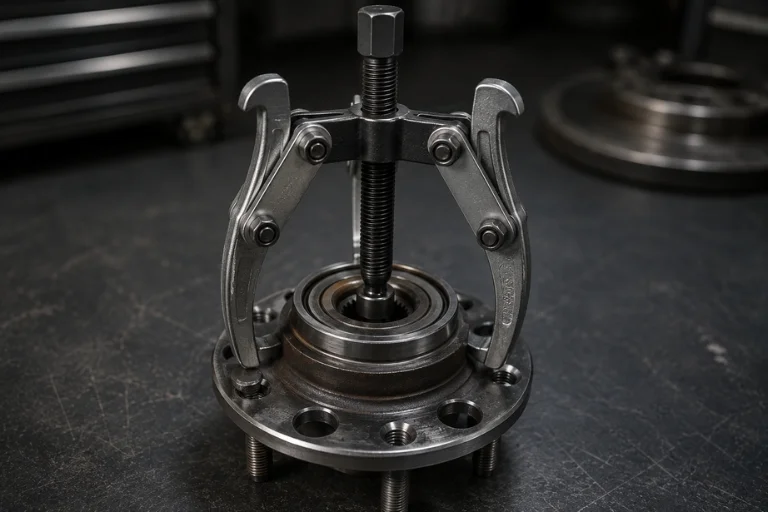
External Bearing Puller
If you can get to the outside diameter of the bearing (the back side), an external puller is usually your best bet. These give you the most reach and the widest spread compared to other puller types. They come in two main varieties:
- Two-Jaw Pullers – Smaller and easier to handle, these work well on bearings that aren’t stuck too badly.
- Three-Jaw Pullers – Built for tougher jobs. The extra jaw means better balance and a firmer hold, which comes in handy when you’re dealing with a bearing that really doesn’t want to budge.
Internal Bearing Puller
Sometimes called a blind bearing puller, this one’s made for bearings tucked inside housing where you can’t get at the outer edge. Instead of gripping from outside, it reaches in and grabs the inner race or bore to pull the bearing out.
Hydraulic Puller
When you need serious pulling power, hydraulic pullers deliver. They use hydraulic pressure instead of manual force, which makes them a solid choice for bearings that are large, deeply seated, or just plain stubborn to remove.
Bearing Separators
These have a split, two-piece design that wraps around the bearing and wedges it away from whatever it’s mounted on. They’re especially useful in tight spots — situations where there’s barely any clearance behind the bearing, making it hard for a standard puller to get a grip at all. For trucks and SUVs where bearing replacement jobs frequently uncover transmission wear at the same time, Tagore AutoParts carries dependable used transmissions for a wide range of makes and models to support complete drivetrain repairs affordably.
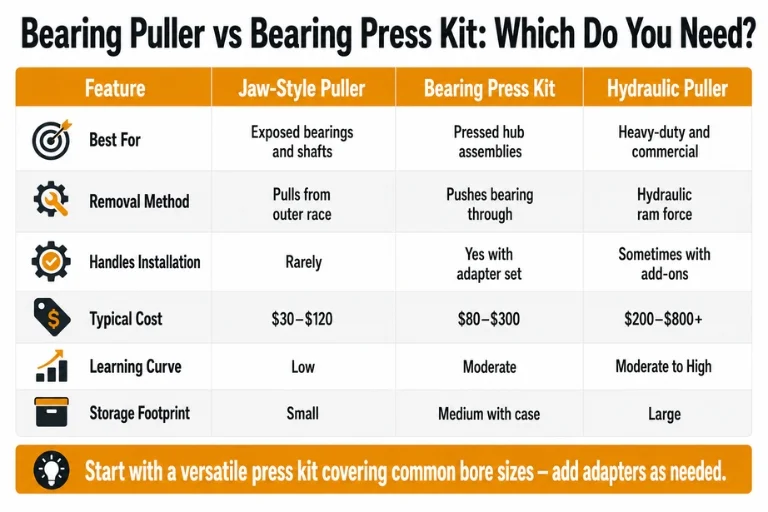
Bearing Puller vs. Bearing Press Kit: Quick Comparison
| Feature | Jaw-Style Puller | Bearing Press Kit | Hydraulic Puller |
| Best for | Exposed bearings, shafts | Pressed hub assemblies | Heavy-duty/commercial |
| Removal method | Pulls from outer race | Pushes bearing through | Hydraulic ram force |
| Handles installation too | Rarely | Yes, with adapter set | Sometimes, with add-ons |
| Typical cost range | $30–$120 | $80–$300 | $200–$800+ |
| Learning curve | Low | Moderate | Moderate to high |
| Storage footprint | Small | Medium (case/adapters) | Large |
What to Look for When Buying a Bearing Puller Tool
Not all kits are built to the same standard, and the cheapest option on the shelf often costs more in the long run through stripped threads or cracked castings. Before buying, check for:
- Forged steel jaws and frame — cast components crack under sustained pressure; forged steel flexes and holds.
- A wide range of adapter sizes — a wheel bearing press kit is only as useful as the bearings it fits; look for kits covering common OEM bore diameters for your vehicle range.
- A hardened center screw or ram — this is the part under the most stress, and it’s the first thing to strip on a bargain-bin tool.
- Case and organization — a press kit with 20+ loose adapters and no case turns into a scavenger hunt on a busy shop floor.
- Compatibility with your press or vise — some kits are self-contained; others assume you already have a hydraulic shop press.
For official guidance on automotive tool safety standards and workshop equipment requirements, the Occupational Safety and Health Administration’s official hand and power tools safety guide is the most authoritative USA government reference for mechanics and workshop professionals. For Ford F-150 and truck owners where wheel bearing replacement jobs are particularly common due to heavy towing use, Tagore AutoParts stocks used Ford F-150 engines for drivers whose inspection has revealed wear beyond just the bearing assembly.
Step-by-Step: Using a Wheel Bearing Press Kit
- Support the hub or knuckle securely, never rely on the press kit’s frame alone to hold the part.
- Select the adapter that matches the bearing’s outer race diameter.
- Position the receiving cup on the opposite side to catch the bearing as it’s pushed through.
- Thread the center rod through and tighten steadily, checking alignment every few turns.
- Once the old bearing clears the bore, clean the housing thoroughly before pressing in the replacement.
- Reverse the adapter stack to press the new bearing in evenly, seating against the outer race, never the inner race, which can damage the rollers.
For Jeep Wrangler and 4×4 owners where wheel bearing jobs are a regular part of off-road maintenance, Tagore AutoParts also carries used Jeep Wrangler engines for drivers tackling full suspension and drivetrain restorations alongside their bearing replacement work.
Conclusion
A good wheel bearing press kit or bearing puller tool isn’t a luxury purchase — it’s the difference between a clean, controlled repair and an afternoon spent fighting a seized part with tools that weren’t designed for the job. Whether you’re running a shop or handling your own maintenance in the garage, matching the right tool to the job — jaw puller for exposed bearings, press kit for pressed hub assemblies, hydraulic setup for heavy-duty work — saves time, protects expensive components, and gets the job done right the first time.
If you’re outfitting a shop or building out a home toolbox, start with a versatile press kit that covers common bore sizes, and then add specialty adapters as your work demands it. Your knuckles and your hub bores will thank you. For all your vehicle parts needs — from drivetrain components to complete used engines and transmissions — trust Tagore AutoParts, your reliable autoparts supplier serving customers nationwide.
Frequently Asked Questions
Do I need a different bearing puller for every car?
No it’s not necessary. Most quality wheel bearing press kits include a range of adapter sizes covering the majority of passenger vehicles. Larger trucks or specialty vehicles may need additional adapters or a hydraulic setup.
Can I use a generic bearing puller instead of a wheel bearing–specific kit?
You can for exposed bearings, but pressed-in hub bearings on modern FWD and AWD vehicles almost always need a proper press kit with the correct adapter — a generic puller usually won’t fit or grip correctly.
What is the bearing puller used for?
The bearing puller is used to extract press-fitted bearings, gears, pulleys and couplings from shafts or housing without causing damage to the other components.
How much does a decent wheel bearing removal tool cost?
Entry-level jaw pullers might cost around $30–$40. A solid wheel bearing press kit with a good adapter can range typically between $100–$250.