One of the most feared diagnoses in automotive repair is a blown head gasket. For many drivers, those words are like a death sentence for their car. But with the right knowledge, the correct head gasket sealer, and a clear understanding of your repair options, head gasket repair does not have to mean scrapping your car. Whether you are considering a temporary head gasket stop leak solution or planning a full mechanical repair, this guide covers everything—from understanding what is a head gasket, to diagnosing failure, choosing the best head gasket sealer, and knowing when professional repair or engine replacement is the smarter financial move.
Whether you need quality used parts or reliable guidance, Tagore AutoParts—a trusted autoparts store across the USA — has the components and expertise to help you get back on the road with confidence.
What Is a Head Gasket?
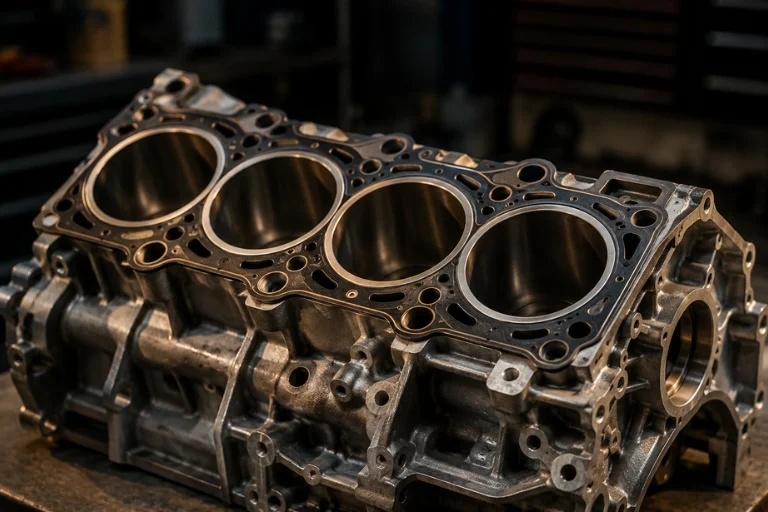
Before we get into the repair options, it is important to know what a head gasket is and why it is so critical to the survival of your engine. A head gasket is a precision made seal between the engine block (bottom half which contains the pistons and cylinders) and the cylinder head (top half which contains the valves and camshaft). It has to seal three systems simultaneously:
- Combustion chambers — keeping explosive cylinder pressure contained where it belongs
- Coolant passages — preventing engine coolant from entering the cylinders or oil galleries
- Oil passages — keeping engine oil circulating correctly without mixing with coolant or entering the combustion chamber
Modern head gaskets are constructed from multi-layer steel (MLS), composites or elastomer coated metal. They withstand extreme heat, thousands of pressure cycles per minute, and the chemical aggression of the coolant and oil — all at once. When a head gasket fails, it can quickly become a serious problem for the engine .
What Causes Head Gasket Failure?
Understanding why head gaskets fail is the foundation of any successful head gasket fix — and essential to preventing future failures:
- Engine overheating — The single most common cause. Extreme heat causes the aluminium cylinder head to expand beyond its design tolerance, crushing and cracking the gasket permanently
- Detonation and pre-ignition — Abnormal combustion events generate sudden pressure spikes that exceed the gasket’s mechanical limits
- Age and high mileage — Gasket materials degrade over time, especially in engines beyond 150,000 miles
- Improper installation — Incorrect torque sequencing or reusing old head bolts causes uneven clamping load and premature failure
- Neglected coolant — Old, acidic coolant corrodes the sealing surfaces and degrades gasket materials over time
Warning Signs: How to Know Your Head Gasket Is Failing
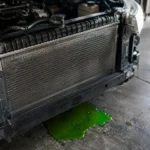
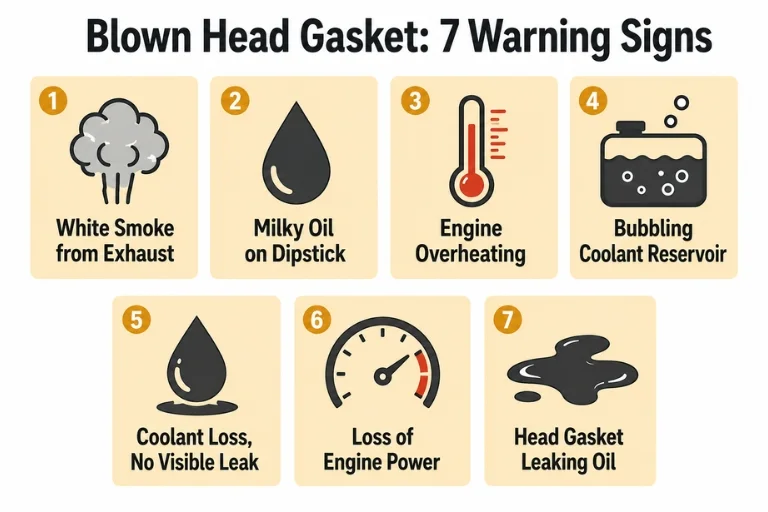
Identifying a head gasket leaking oil or coolant early can save thousands in repair costs. Here are the critical warning signs every driver must know:
| Symptom | What It Indicates | Urgency |
| White smoke from exhaust | Coolant burning in combustion chamber | Immediate — stop driving |
| Milky oil on dipstick | Coolant mixing with engine oil | Immediate — stop driving |
| Engine overheating | Coolant loss or combustion gas in coolant | Immediate — stop driving |
| Bubbling coolant reservoir | Combustion gases entering cooling system | Immediate — stop driving |
| Coolant loss with no visible leak | Coolant burning internally | Urgent |
| Head gasket leaking oil externally | External gasket seal failure | Monitor closely |
| Loss of engine power | Compression escaping past failed gasket | Urgent |
Pull over immediately if you see white smoke, milk in the oil, or constant overheating. If you keep running with a blown head gasket, you can warp the cylinder head, score the cylinder walls, and do catastrophic internal damage. At that stage, sourcing a quality used engine is often the most economical path forward — Tagore AutoParts stocks a wide range of used engines for all makes and models at competitive prices nationwide.
Head Gasket Repair Options: From Sealer to Full Engine Replacement
Once you have confirmed head gasket failure, several repair paths are available. The right choice depends on leak severity, your vehicle’s value, and your budget.
Option 1: Head Gasket Sealer — Chemical Stop Leak
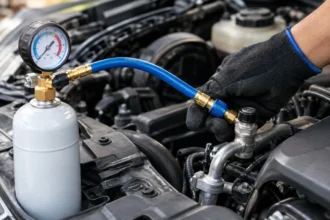
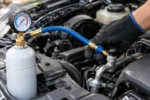
A head gasket sealer — also called a gasket sealer or sealant coolant leak product — is a chemical compound added directly to the cooling system. It circulates through the coolant and bonds with metal surfaces around the leak point, sealing small breaches without mechanical disassembly. These products are designed for minor leaks and hairline cracks, not catastrophic multi-point failures.
Most quality head gasket stop leak products use sodium silicate, copper particles, or fiber-based polymers that polymerize when exposed to the high temperatures around a leak, effectively plugging small gaps from the inside.
Choosing the Best Head Gasket Sealer
| Product Type | Best For | Durability | DIY Friendly |
| Sodium silicate formula | Coolant-to-combustion leaks | Moderate | Yes |
| Copper particle formula | Small internal cracks | Moderate–High | Yes |
| Fiber/polymer blend | External gasket seeps | Low–Moderate | Yes |
| Steel seal permanent formula | Moderate internal leaks | High | Yes |
Always flush your cooling system completely before applying any head gasket sealer. Old coolant, rust, and debris prevent proper bonding and risk clogging your heater core or radiator.
Option 2: Professional Mechanical Head Gasket Fix
A full mechanical head gasket is the gold standard for a permanent fix. This involves taking off the cylinder head, having it surfaced or replaced if warped, installing a new head gasket, and reassembling to manufacturer torque specs.
What professional head gasket repair involves:
- Draining coolant and engine oil completely
- Removing intake and exhaust manifolds and all head hardware
- Lifting the cylinder head and checking for warpage with a precision straightedge
- Resurfacing the head at a machine shop if warped beyond tolerance
- Installing a new OEM or premium aftermarket head gasket
- Torquing head bolts to specification in the correct sequence
- Refilling with fresh coolant and oil, then pressure-testing the entire system
Professional head gasket repair typically costs $1,200 to $2,500 depending on vehicle make, local labor rates, and whether head machining is required. For older or high-mileage vehicles, this cost can approach or exceed the car’s market value — at which point a quality used engine replacement becomes the financially smarter decision. Browse Tagore AutoParts’ used Honda Civic engines and dozens of other popular models to find the right replacement at a fraction of dealer repair costs.
Option 3: Used Engine Replacement
When a blown head gasket has caused secondary damage — a warped head, scored cylinder walls, hydrolock, or bearing failure from oil contamination — full engine replacement is often more cost-effective than mechanical repair on a heavily compromised block. This is particularly true when labor costs for head gasket repair approach or exceed $2,000 on an older vehicle.
For vehicles where the drivetrain has also been stressed by prolonged overheating, inspecting the transmission is equally important. Tagore AutoParts maintains a comprehensive inventory of used transmissions for all vehicle types to support complete drivetrain restorations at affordable prices.
How Can You Fix a Blown Head Gasket: Step-by-Step DIY Process
For drivers asking how you can fix a blown head gasket at home using a chemical sealer, here is the complete practical process:
- Confirm the diagnosis first — Use a combustion leak block tester or have a compression test done before purchasing any products. According to Mobil’s official engine maintenance guide, confirming the exact failure mode is critical to choosing the right repair approach
- Allow the engine to cool completely — Never open a pressurized hot cooling system
- Drain and flush the cooling system — Remove all old coolant; never mix sealer with degraded fluid
- Follow sealer product instructions precisely — Dosage, idle time, and temperature requirements vary by brand
- Idle the engine at full operating temperature — Most products require 30–50 minutes of sustained idling to circulate and bond properly
- Refill with fresh coolant — Use the correct coolant specification for your vehicle
- Monitor closely for 500 miles — Check coolant level daily and watch for any returning symptoms
Head Gasket Sealer vs. Mechanical Repair vs. Engine Replacement
| Factor | Head Gasket Sealer | Mechanical Repair | Used Engine Replacement |
| Leak severity | Minor leaks only | Minor to severe | Severe or secondary damage |
| Cost | $20–$100 | $1,200–$2,500 | $800–$2,000 |
| Durability | Temporary | Permanent | Permanent |
| DIY friendly | Yes | Advanced | Professional recommended |
| Risk to engine | Low if done correctly | None if done correctly | None |
| Best for | Budget or older vehicles | Newer or valuable vehicles | Heavily damaged engines |
For vehicles where a head gasket leaking oil externally has been caught early, a quality external gasket sealant applied during a routine oil change can often manage the seep without any disassembly. If your Ford F-150 or truck is showing these symptoms, Tagore AutoParts also carries used Ford F-150 engines for drivers who determine that a full engine swap is the better long-term investment.
Preventing Head Gasket Failure: Long-Term Engine Protection
The best head gasket repair is the one you never need. Here are the most effective preventive measures every driver should follow:
- Never ignore the temperature gauge — Pull over and shut off immediately if the needle climbs. Driving even a short distance on an overheating engine can destroy a head gasket within minutes
- Flush coolant on schedule — Replace every 30,000–50,000 miles. Old acidic coolant attacks gasket materials and corrodes sealing surfaces
- Check coolant level monthly — A slow, unexplained drop in coolant level is an early warning of internal leakage
- Service the thermostat regularly — A stuck thermostat is a leading cause of overheating. Replace it every 50,000–70,000 miles as preventive maintenance
- Use the correct coolant type — Mixing incompatible coolants causes chemical reactions that degrade gasket materials and cooling system components
- Address small leaks immediately — A minor sealant coolant leak fix today prevents a catastrophic blown gasket tomorrow
For high-mileage vehicles that have experienced repeated overheating, a quality used engine from a low-mileage donor vehicle often represents better long-term value than repeated head gasket repairs. Tagore AutoParts stocks used Chevy Tahoe engines and engines for dozens of popular makes across the USA, with every unit inspected before sale.
Conclusion
Head gasket repair is one of the most serious challenges a vehicle owner can face — but it is far from hopeless when approached with the right information. Understanding what is a head gasket, catching the warning signs early, selecting the best head gasket sealer for your specific leak, and knowing when a mechanical repair or used engine replacement makes better financial sense puts you firmly in control of the outcome.
Whether you reach for a quality head gasket stop leak product for a minor internal seep or decide that a low-mileage used engine is the smarter investment for a heavily damaged motor, the right decision starts with the right knowledge. Keep your cooling system healthy, respect the temperature gauge, and address leaks the moment they appear — your engine’s longevity depends on it.
Tagore AutoParts has all your engine and drivetrain needs covered, from individual parts to complete used engine and transmission assemblies. As your trusted autoparts supplier, we serve customers nationwide.
Frequently Asked Questions
What is a head gasket and why does it matter?
A head gasket is the precision seal between your engine block and cylinder head. It simultaneously seals combustion pressure, coolant passages, and oil passages. When it fails, these systems mix, causing rapid and severe engine damage if not addressed immediately.
What is the best head gasket sealer available?
The best head gasket sealer for you depends on your leak type. Leaks to combustion: Sodium silicate or copper-particle formulas work well. Fiber-blend sealants are effective for external oil seeps. Always choose the product that is right for your mode of failure.
How do you change a blown head gasket without removing the engine?
For small leaks , a good head gasket stop leak added to the cooling system will seal small breaches without disassembly . Professional mechanical repair with cylinder head removal is the only dependable permanent fix for serious failures.
Can I drive with a head gasket leaking oil?
A minor external oil seep may be manageable short-term with careful oil level monitoring. However, any internal leak—where coolant or combustion gases are mixing—requires immediate attention. Driving with an active internal head gasket leak risks catastrophic engine failure.
How long does a head gasket sealant stay?
Most chemical head gasket sealers will only be a temporary fix for a period of some weeks to a few months depending on the severity of the leak, the driving conditions, and the formula of the product. They are not a permanent replacement for mechanical repair.
Is head gasket repair worth it on a high-mileage vehicle?
Professional repair costs of $1,200–$2,500 often are at or above the vehicle’s market value on vehicles with more than 150,000 miles. In such cases, the most cost-effective and reliable choice is generally to find a good used engine.