Have you ever wondered what a Quarter Panel is until the day you see your car standing in a parking lot with a dent on it? Well, a Quarter Panel is placed on the rare side of the car, roughly between the back door, that accumulates a lot of dust particles that can lead to minor accidents. Well, in this blog we will walk you through what is the Quarter Panel, what causes it and how much does it cost.
What Is a Quarter Panel on a Car?
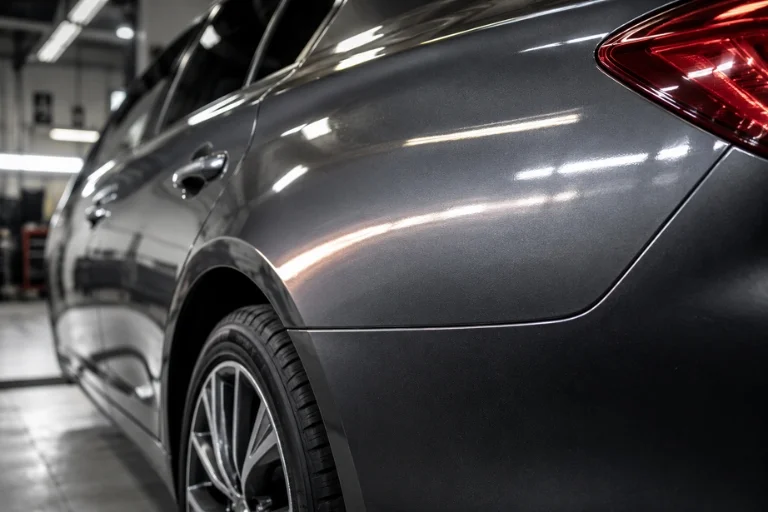
The quarter panel is made up of the metallic, steel, aluminum alloy or plastic that provides structure to the vehicle. Some drivers don’t worry about it getting damaged or dented as it doesn’t affect the performance of the vehicle directly. Located on the sides of the car, between the rear door and the trunk (rear hatch) the quarter panel gives dimension to the car. The quarter panel can block the dust particles and road debris from entering the vehicles interior.
If you’re unsure where the panel is you can look for the seams or bolts that mark it. The Quarter panels are crucial as it gives proper shape to the car by serving as an added layer of protection to the engine, transmission and car parts against collision and road debris.
Quarter panel damage from collisions or rust can sometimes mask deeper structural and mechanical issues underneath — particularly in older vehicles. For cars where collision damage has extended beyond the body panel to the engine bay, Tagore AutoParts stocks a full range of used engines for popular makes and models across the USA to support complete vehicle restorations.
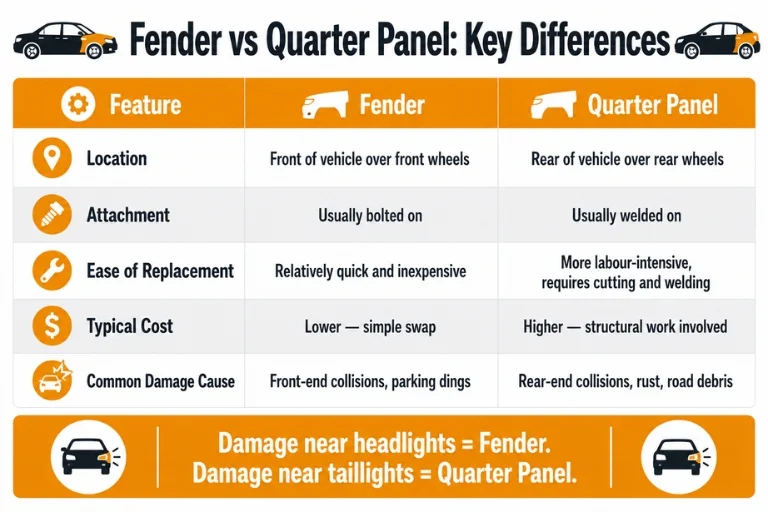
Fender vs Quarter Panel: What’s the Difference?
This is one of the most common points of confusion, and honestly, it trips up even people who’ve owned cars for decades. Here’s the simple distinction:
| Feature | Fender | Quarter Panel |
| Location | Front of the vehicle, over the front wheels | Rear of the vehicle, over the rear wheels |
| Attachment | Usually bolted on | Usually welded on |
| Ease of replacement | Relatively quick and inexpensive | More labor-intensive, often requires cutting/welding |
| Typical cost | Lower, since it’s a simple swap | Higher, due to structural work involved |
| Common damage cause | Front-end collisions, minor parking dings | Rear-end and side collisions, rust, road debris |
So while a front quarter panel and a fender sit in roughly the same general area of the car, they aren’t interchangeable terms — the front quarter panel is a rear-facing structural piece, while the fender is the removable panel up front.
What Causes Quarter Panel Damage?
Quarter panels take a beating just because of where they’re located on the car. Here’s what usually does the damage:
- Collisions. Even a slow bump in a parking lot can leave behind a dent or crease you didn’t expect. Side-impact hits and rear-end accidents tend to cause the worst of it.
- Rust and corrosion. The panel sits right by the wheel well, so it’s constantly getting hit with road salt, moisture, and whatever debris the tires kick up. Once the paint chips or scratches away and bare metal is exposed, rust doesn’t waste much time setting in.
- General wear from the elements. Sun, rain, and snow slowly wear down paint and clear coat, and that speeds up corrosion, especially for cars that live outside year-round.
- Road hazards. A blown tire or a piece of flying debris can hit the panel hard enough to dent or even puncture it.
Signs Your Quarter Panel Needs Attention
A few things worth watching for:
- Dents or creases along the rear body line
- Scratched or chipped paint near the wheel well
- Bubbling paint or rust-colored discoloration
- Small holes, or spots that feel soft and flaky when you press on them
For vehicles where rust has spread from the quarter panel area into the wheel well and surrounding chassis components, it is also worth inspecting the drivetrain. Tagore AutoParts carries reliable used transmissions for a wide range of makes and models to support broader mechanical restorations alongside body repair work.
Fender vs. Quarter Panel: Why the Mix-Up Happens
It’s an easy mistake to make. Both panels sit near the corners of the car, both catch more than their fair share of parking lot abuse, and to most drivers, they honestly just look like “the metal on the side of the car.” But an estimator sees them very differently, and that difference affects both the repair process and the bill.
Here’s the actual distinction:
- Fenders sit up front, above the wheels near the headlights. Most are bolted in place, so a banged-up fender can often come off and get replaced in a single afternoon.
- Quarter panels are in the back, above the rear wheels, near the taillights. These are welded, not bolted — so there’s no quick swap. A technician has to cut out the damaged section and weld a new one in.
Rough rule of thumb: damage near the headlights, think fender. Damage near the taillights, you’re probably looking at a quarter panel.
So What Actually Damages a Quarter Panel?
More than people expect, honestly. A part nobody thinks about until it’s dented tends to take a lot of hits over the years:
- Rear-end and angled hits. Someone clipping your back corner in a lot, or at a stop sign, tends to crumple the quarter panel first — it’s usually the point of impact.
- Backing into things. Poles, shopping carts, low curbs or walls, other cars — a huge chunk of quarter panel dents come from simple backing-up mistakes.
- Rust. This one’s sneaky. The wheel well holds onto moisture, road salt, and grime, and in colder climates where roads get salted, rust can eat through the metal from the inside before you ever see it on the surface.
- Door dings and cart strikes. Not every hit is a big one. Small dents and scrapes near the rear doors and wheel arches just pile up over time from everyday parking lot wear.
For Dodge Charger and muscle car owners, where quarter panel restoration is often part of a broader vehicle rebuild, Tagore AutoParts stocks used Dodge Charger engines to support complete mechanical and body restorations at competitive prices nationwide.
Quarter Panel Repair vs. Replacement
For small dents, you’ve usually got two solid options: a paintless dent repair kit or a trip to a body shop where someone works it out with a hammer and dolly. Either way, the goal is the same — get the panel back to its original shape without spending a fortune. The paintless method usually comes down to sticking a suction cup or glue tab right on the center of the dent, then pulling steadily until the metal pops back into place.
Panel replacement is a whole different animal. You’re looking at:
- Cutting out the damaged section with a cutoff wheel
- Grinding away old spot welds and leftover adhesive
- Test-fitting the new panel until it lines up just right
- Welding or bonding it into position
- Blending the paint so it matches the rest of the car
Since this kind of work can affect how the car holds up structurally, it’s really not something to tackle in a weekend unless you’ve already got real experience with auto body repair.
Quarter Panel Replacement Cost
This is usually the number people care about most, and unfortunately there’s no single answer — quarter panel replacement cost varies widely depending on your vehicle, the extent of damage, labor rates in your area, and whether you use OEM or aftermarket parts. As a general range, drivers can expect anywhere from a few hundred dollars for a straightforward repair up to $3,000 or more for a full replacement with paintwork on a larger vehicle. Getting quotes from a couple of reputable auto body shops is the best way to know what you’re actually looking at.
For vehicles where the total repair bill is approaching the car’s market value, sourcing a quality used engine alongside the body repair can sometimes make the rebuild financially worthwhile — Tagore AutoParts stocks used Chevy Camaro engines and other performance and everyday vehicle engines for drivers committed to a full restoration.
Conclusion
Your car’s quarter panels might not affect horsepower or fuel economy, but they play a real role in your vehicle’s structure, safety, and resale value. Catching dents, rust, or scratches early can save you from a much larger repair bill down the road. If you notice any of the warning signs above, don’t put it off — get a professional opinion and decide whether a simple repair or a full replacement is the smarter move for your car and your wallet.
For all your vehicle parts needs — from body repair components to complete used engines and transmissions — trust Tagore AutoParts, your reliable autoparts supplier serving customers nationwide.
Frequently Asked Questions
Where is a Quarter Panel located?
The quarter panel is located on the exterior surface of the vehicle near the rear door.
How to fix rear Quarter Panel damage?
Fixing a rear quarter panel leads to cutting the metal, applying body filler and painting. The key steps are assessing and pulling the dent, smoothing with body filler and priming and painting the surface.
How many Quarter Panels are on a car?
There are 2 quarter panels on a car that are near the rear wheel on the right-hand side or the left-hand side.
Where is the front quarter panel?
The front quarter panel is located either on the rear door or the hood of the car.
Is quarter panel damage fixable?
Yes, damage in the quarter panel is fixable as long as it has no creases or damage caused.