Table of Contents
Your car’s engine cooling system is a critical component that’s essential for the vehicle to operate. The cooling system of your car is one of the most important systems that keep your vehicle running. A battle takes place under the hood, and it is no battle of prowess, but one of heat — every time the key is turned and your car’s engine starts. A good engineer’s best creation will fail within a few minutes of hard driving without the proper cooling mechanism.
Knowing the way that an engine is cooled in a vehicle is not only helpful to the mechanic, but it is important knowledge for any car owner that wants to keep their car running longer and avoid expensive breakdowns. In this guide, we’ll explore each of the major components of the car cooling system, how coolant benefits a car, and how to look for signs of trouble early and avoid costly repairs.
Why Cooling Matters So Much in Modern Engines
The large amounts of heat produced by internal combustion engine. Inside the combustion chamber, the fuel burns at temperatures as high as 4,500°F, and if there is not adequate cooling of the metal parts, they will warp, expand unevenly and will fail. Rather, a well-designed cooling system motor setup maintains engine temperatures in a safe operating zone — usually between 195°F and 220°F — and ensures the engine operates efficiently, while ensuring the protection of delicate engine components such as pistons, cylinder walls, and gaskets. Cooling is a part of the energy process and cooling is effective not only because it prevents overheating. It also contributes to the following:
- Keeping the fuel economy at peak levels
- Reducing harmful emissions
- Keeping engines from wearing prematurely
- Ensuring even heating in the cabin
- Covering valuable parts such as the cylinder heads, and head gasket
When cooling system neglect causes prolonged overheating and results in warped heads or a seized engine, repair costs can quickly exceed the vehicle’s value. For drivers in that situation, Tagore AutoParts stocks a full range of used engines for popular makes and models across the USA as a cost-effective path back to reliable transportation.
Key Components of the Engine Cooling System
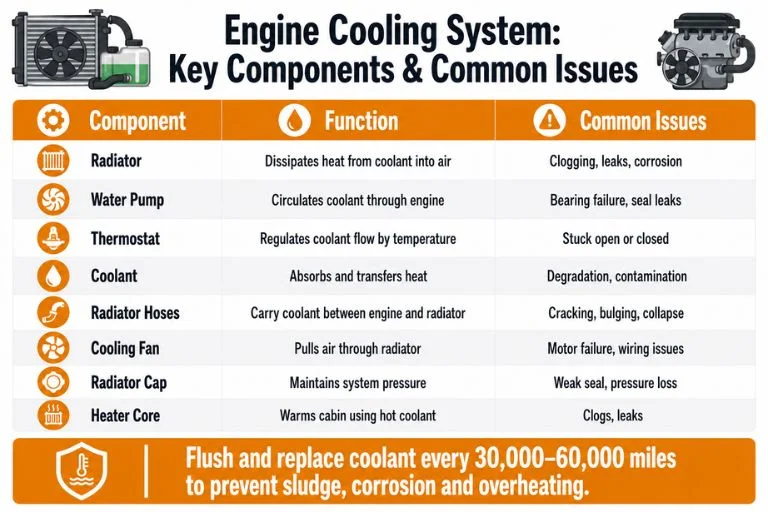
A modern engine cooling system is made up of several interconnected car cooling parts, each with a specific job. Here’s a breakdown of the essentials:
| Component | Function | Common Issues |
| Radiator in car | Dissipates heat from coolant into outside air | Clogging, leaks, corrosion |
| Water pump | Circulates coolant through the engine and radiator | Bearing failure, seal leaks |
| Thermostat | Regulates coolant flow based on engine temperature | Stuck open or closed |
| Coolant (antifreeze) | Absorbs and transfers heat, prevents freezing/boiling | Degradation, contamination |
| Radiator hoses | Carry coolant between the engine and radiator | Cracking, bulging, collapse |
| Cooling fan | Pulls air through the radiator when airflow is low | Motor failure, wiring issues |
| Radiator cap | Maintains system pressure | Weak seal, pressure loss |
| Heater core | Uses hot coolant to warm the cabin | Clogs, leaks |
Each of these parts must work together seamlessly. Failures in just one — say, a cracked hose or a stuck thermostat — can compromise the entire system and lead to overheating. For vehicles where repeated overheating events have also stressed the automatic transmission cooler lines that run through the radiator, Tagore AutoParts carries reliable used transmissions for a wide range of makes and models to support complete drivetrain restorations.
What Does Coolant Do for a Car?
Coolant, also known as antifreeze, is the blood that circulates through the cooling system. But what is the purpose of coolant in a car? It serves multiple vital purposes at once:
- As it moves through the system, absorbs heat from the engine block and head.
- Thermal transfers that heat up and vent into the air to the radiator.
- In cold climates prevents freezing by reducing the freezing point of fluid.
- Increases the boiling point and thus prevents the system from boiling at high temperatures. Includes extra corrosion inhibitors which help in preventing corrosion inside the engine and radiator.
- Fills the water pump and other moving parts in the system with lubrication. Pre-mixed formulas are available, or most manufacturers suggest a 50/50 coolant and distilled water mixture.
- Improperly specified or aging coolant can cause sludge, corrosion and a drop in cooling ability, which increases the overall workload on the cooling system.
How the Cooling System Works: A Step-by-Step Overview
It is important to note that all parts of the automotive engine cooling system are relevant, and a clear knowledge of the cooling system’s operation can help explain the relevance.
- Coolant circulates from the water pump, through engine block passages.
- Heat absorption takes place because of the movement of the coolant around the cylinders, absorbing excess heat generated in the combustion process.
- Once the engine is hot, the thermostat opens, and hot coolant flows towards the radiator.
- With car systems, heat dissipation occurs in the radiator as air flow (assisted by the cooling fan) removes heat from the coolant.
- The cooled fluid is then brought back to the engine to start the cycle again, thus keeping the temperature in a safe and stable range.
Proper maintenance means your engine can run reliably for hundreds of thousands of miles, because of this continuous cycle of cooling and reheating. For Toyota Camry and sedan owners whose cooling system maintenance has been deferred and resulted in engine damage, Tagore AutoParts stocks used Toyota Camry engines as a reliable and affordable engine replacement solution.
Signs Your Cooling System Needs Attention
Ignoring early warning signs can turn a minor cooling issue into a major engine repair. Watch for:
- High-temperature gauge indicates that the needle moves towards the red zone.
- Sweet smelling odour of the chemical that indicates that burning antifreeze from a hidden leak.
- The bright colored fluid pool on the ground is where you park your vehicle.
- Steam or smoke — white vapor rises from the bay indicating that the fluid is boiling over.
- Coolant might look sludgy, rusty or murky instead of bright and transparent.
Maintaining Your Cooling System
Routine maintenance is the single best way to avoid cooling-related breakdowns. Recommended practices include:
- Flushing and replacing coolant every 30,000–60,000 miles (check your owner’s manual for specifics)
- Inspecting hoses and belts for cracks or wear at every oil change
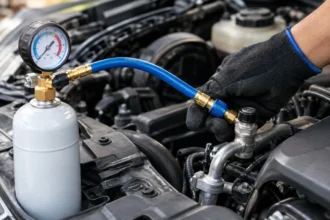
- Checking coolant levels monthly, especially before long trips or extreme weather
- Replacing the thermostat proactively if it’s more than 5–7 years old
- Using manufacturer-approved coolant types to avoid chemical incompatibility
Proactive cooling system care is far less expensive than reactive repairs. A radiator flush or hose replacement typically costs a fraction of what it takes to repair a blown head gasket caused by prolonged overheating. For Ford F-150 and truck owners whose cooling system wear is accelerated by towing and heavy load driving, Tagore AutoParts also stocks used Ford F-150 engines for drivers whose cooling-related engine damage has progressed beyond what a flush or hose replacement can address.
Cooling System Myths Worth Debunking
- “Water works just as well as coolant.” Water alone lacks corrosion inhibitors and has a lower boiling point, making it a poor long-term substitute.
- “You only need to worry about cooling in summer.” Cooling systems also prevent freezing in winter — year-round performance matters.
- “Any coolant color works the same.” Coolant formulations vary by chemical composition, not just color, and mixing incompatible types can cause gel-like buildup.
Conclusion
Your car’s cooling system may not be the flashiest part of the vehicle, but it’s one of the most important. Each component is important in helping maintain the engine’s safe and efficient operating temperature — from the radiator to the water pump and to the coolant itself. Learning the answer to what does coolant do for a car and knowing the signs of trouble early can save you thousands of dollars in repairs, and keep you safe on the road.
If you’ve not had a cooling system check or coolant flush in a long time, it may be time to get an appointment for one. Invest a little in preventive maintenance today and you’ll save yourself a lot of big engine repair jobs tomorrow.
For all your vehicle parts needs — from cooling system components to complete used engines and transmissions — trust Tagore AutoParts, your reliable autoparts supplier serving customers nationwide.
Frequently Asked Questions
How often do I need to test my cooling system?
Always check coolants for levels every month, and get the system checked as part of regular maintenance approximately every 30,000 miles.
What if your car’s cooling system stops working?
Drifting will cause the engine to overheat quickly, leading to possible warping, head gasket blowout, or engine failure if continued driving.
Are different coolant colors and/or types allowed to be blended?
No. Compatible coolant formulas will react with each other and lead to reduced cooling efficiency and damage to internal components.
Is there a reason that my car’s radiator is leaking?
Leaks can happen because of corrosion, damage, a bad radiator cap, or poor hose connections.
Does the engine cooling system come with a warranty?
Again, it depends on the make and model of your car and your warranty—make sure to read the details; usually routine maintenance is not covered.