
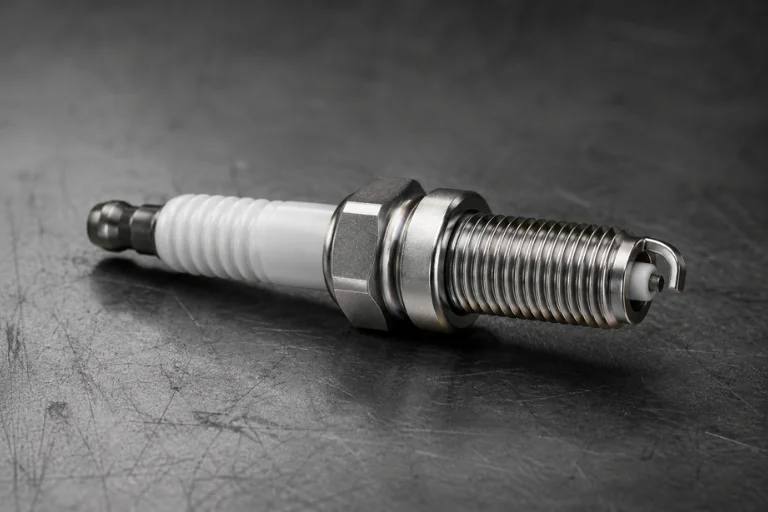
There are lots of component working under the hood of your car that gets you moving. Among most important of these is the spark plugs one of the smallest yet the most important component in your engine. The main function of the spark plug is ignited the air-fuel mixture inside the engine cylinder to help your car achieve the optimal performance. Despite it being one of the most crucial component it is often ignored and overlooked. Knowing when to replace your spark plug will help your engine at its best. In this blog we will come across everything you need to know about how often to change spark plugs, what are the signs of its failure and much more.
What do spark plugs actually do?
One of the most essential part of your car’s ignition system is the Spark Plugs. It ignites a small electrical spark that ignites the air-fuel mixture inside the engine’s combustion chamber. It creates a controlled explosion that requires to create the power to move the piston. Every time your engine works, the spark plugs fire thousands of time per minute, ensuring to offer you hassle free acceleration. If the component is working properly it helps you maintain better fuel efficiency, reliable engine starts and better performance whereas the worn out spark plug leads to misfire, poor acceleration and difficulty in starting the vehicle.
Warning Signs: How to Know When to Change Spark Plugs
The following are the warning signs you should keep in mind:
- Difficulty in acceleration — The unresponsive throttle is when you press the gas pedal.
- Engine misfire— with a strange odor sometimes accompanying the engine misfire.
- Rough idle — A bouncy or shaken engine operation while the car is at a standstill
- Hard Starts — Engine starts multiple times without firing or with a delay between the start attempts.
- Loss of fuel economy — An unexplained decrease in miles per gallon (MPG) Illuminated
- Check Engine Light — One of the most common reasons for the check engine light to turn on is misfiring due to bad spark plugs.
If you notice one or more of these symptoms, then it’s time to check your spark plugs and perhaps, the time to change spark plugs will save you from further engine damage. If your engine has already suffered damage from delayed maintenance, you may also want to explore a quality used Honda Accord engine replacement as a cost-effective solution.
How Often to Replace Spark Plugs: Recommended Intervals
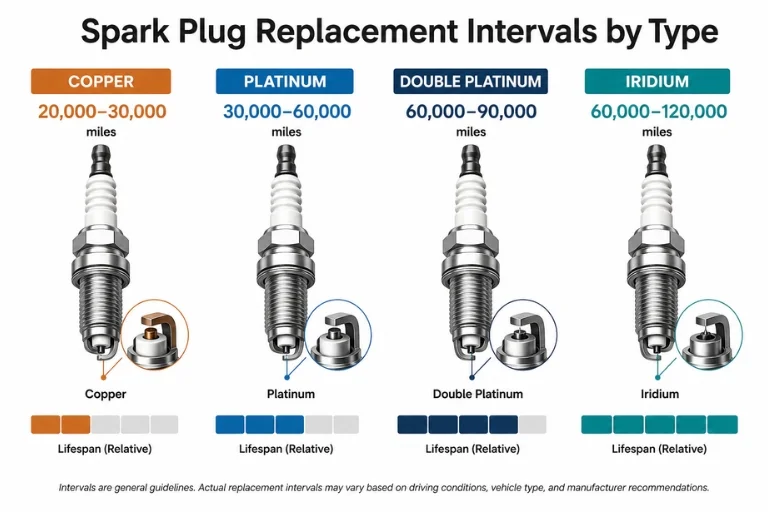
So, how often should spark plug be changed? The answer depends largely on the type of spark plug fitted to your vehicle. The table below summarises the typical service intervals recommended by most automotive manufacturers:
| Spark Plug Type | Material | Typical Replacement Interval |
| Standard | Copper core | Every 20,000 – 30,000 miles |
| Silver | Silver tip | Every 30,000 – 40,000 miles |
| Platinum | Platinum tip | Every 60,000 – 100,000 miles |
| Double Platinum | Dual platinum tip | Every 60,000 – 100,000 miles |
| Iridium | Iridium tip | Every 60,000 – 120,000 miles |
So the question is how often to replace spark plugs? The answer to it is that most of the manufacturer typically suggest to change it after every 30,000 miles for standard plugs. However, premium iridium or platinum spark plugs can last up to four times longer than the basic copper plugs, making them a cost-effective options for many drivers.
How Often Should Spark Plugs Be Changed Based on Driving Conditions?
While mileage recommendations are important, driving conditions can also affect how long spark plugs last. You may need to inspect or replace your spark plugs more frequently if you:
- Regularly drive in heavy stop-and-go city traffic.
- Frequently tow trailers or carry heavy loads.
- Operate your vehicle in extremely hot or cold weather conditions.
- Primarily take short trips that prevent the engine from reaching its optimal operating temperature.
- Notice that your vehicle is running rich, meaning it is burning excess fuel.
Under these demanding conditions, spark plugs can wear out faster than expected. Even long-life spark plugs may require replacement sooner than the manufacturer’s recommended interval to maintain optimal engine performance and fuel efficiency.
Why Replacing Spark Plugs on Schedule Matters
Knowing when to change spark plugs is important, but so is knowing why. Here are the major advantages to keeping up this upkeep chore:
- Improved Fuel Economy: The National Institute for Automotive Service Excellence says that spark plug misfires can lower a vehicle’s fuel economy by up to 30%. New spark plugs will help the engine start the combustion process correctly and can often mean an almost instant gain in miles per gallon.
- Optimal Engine Performance Uses new spark plugs to achieve complete and efficient combustion. This directly means more fluid acceleration, better throttle response and the driving experience you wanted.
- Reduced Harmful Emissions Systematic engine tuning, including regular spark plug changes, can significantly reduce the pollutants emitted from engines, EPA has said. Correctly firing spark plugs mean that there are less unburned hydrocarbons in the exhaust.
- Preventation of larger, costlier repairs: Worn sparks plugs require the ignition coils to produce more sparks and the catalytic converters to run at a higher temperature. It is important to know when to change the spark plugs and take action to prevent failure of these much costlier components. According to Car and Driver’s engine maintenance guide, staying on top of small components like spark plugs is one of the most impactful ways to extend overall engine life.
- Smooth, Reliable Starts: Nothing can match the confidence of turning the key and your engine will fire right away and cleanly. New spark plugs ensure easy starts.
How Often to Change Spark Plugs: A Quick Summary
| Vehicle / Scenario | Recommended Action |
| Standard copper plugs, normal driving | Inspect and replace every 30,000 miles |
| Iridium/platinum plugs, normal driving | Replace every 60,000 – 120,000 miles |
| High-mileage or hard-working vehicle | Inspect annually regardless of mileage |
| Check engine light or misfires present | Inspect spark plugs immediately |
| No service records available | Inspect and replace as a precaution |
For high-mileage vehicles where spark plug wear has led to deeper engine problems, browsing our range of reliable used Toyota Camry engines could save you thousands compared to a new engine purchase.
Conclusion
One of the most crucial thing that can make difference is the Spark plugs. Replacing them at certain period of time can help you save lot of money and increase the life of your engine. You can follow the instruction of your manufacturer, schedule your inspection and check for worn spark plugs and get them thoroughly checked. Hence, timely replacement is one of the effective and best decision that can have a prolong effect on the performance of your vehicle providing better fuel efficiency, improved reliability and a smoother driving experience.
Frequently Asked Question’s
How often should u change spark plug if you mostly drive in the city?
Generally, it is recommended to change your spark plug after every 30,000 to 50,000 miles if you mostly drive in the city.
What kills spark plug quickly?
Spark plug are usually worn out by oil fouling, carbon buildup or engine overheating.
Is it okay to replace just one spark plug?
It is generally recommended to replace all spark plug at the same time. Spark plug wear at a similar rate, so replacing only one risks uneven performance and means you will need to repeat the job soon anyway.
What spark plugs are best for Lexus?
Mostly, OEM Denso or NGK Iridium plugs are often considered best for Lexus.