Table of Contents
Honda Motor Company has announced a significant brake pedal recall affecting more than 259,000 vehicles across its Honda and Acura lineups. This Honda brake pedal recall stems from a manufacturing defect that could compromise one of the most critical safety systems in your vehicle—the braking mechanism, which works in coordination with core drivetrain components such as the Honda Accord transmission. The National Highway Traffic Safety Administration (NHTSA) has classified this issue as a serious safety concern, prompting immediate action from the automaker.
If you own a recent-model Acura TLX, Acura MDX, or Honda Pilot, this recall directly impacts you and requires your immediate attention. Owners planning long-term reliability can also explore options like a tested Honda Pilot engine if major repairs are ever required. In this blog, we will dive deeper into the details of the recall, including the affected models, the root cause of the defect, potential safety risks, and the steps owners should take to get the issue resolved as quickly as possible.
Which Vehicles Are Affected by the Honda Brake Pedal Recall?
The recall encompasses three popular models manufactured between 2021 and 2025: This recall encompasses three popular models manufactured between 2021.
| Vehicle Model | Model Years Affected | Estimated Units |
| Acura TLX | 2021–2025 | Approximately 95,000 |
| Acura MDX | 2023–2025 | Approximately 82,000 |
| Honda Pilot | 2023–2025 | Approximately 82,000 |
Total vehicles affected: Over 259,000 units across North America
The Root Cause: What Went Wrong with the Brake Pedal Assembly?
The Honda brake pedal recall originated from a manufacturing error at a now-closed U.S. supplier facility. During the assembly process, technicians failed to properly stake the pivot pin that secures the brake pedal mechanism. This seemingly small oversight has significant safety implications.
Key Technical Issues:
- Inadequate staking process: The pivot pin was not securely fastened during installation
- Pin migration risk: Over time and with repeated use, the unsecured pin may shift position
- Compromised pedal integrity: Movement of the pivot pin can affect the entire brake pedal assembly
While Honda estimates that only approximately 1 percent of affected vehicles actually exhibit the defect, the potential consequences are severe enough to warrant a comprehensive recall campaign.
Warning Signs: How to Identify Brake Pedal Problems
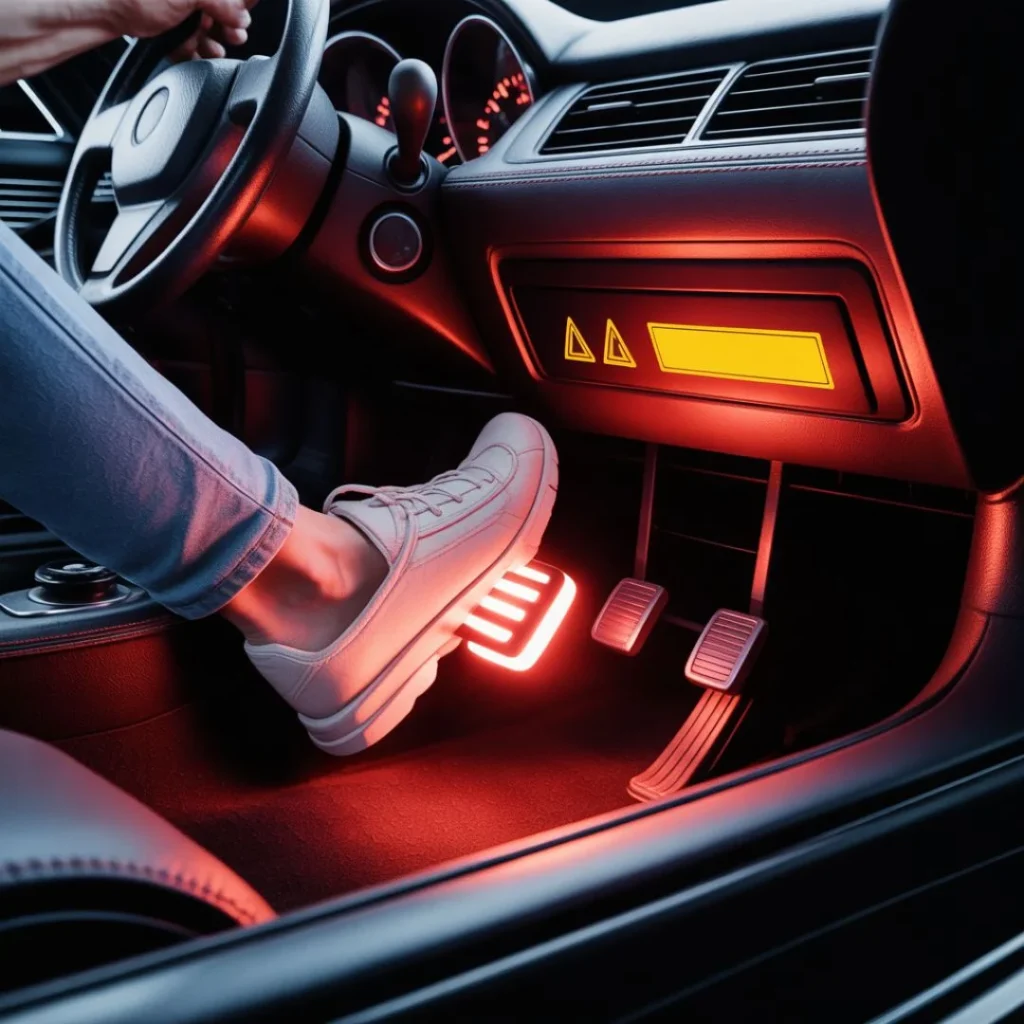
Vehicle owners should remain vigilant for these symptoms indicating potential brake pedal issues:
- Unusual pedal feel: The brake pedal may feel loose, spongy, or exhibit abnormal movement
- Inconsistent braking response: Variations in how the brake responds to pressure
- Dashboard warning lights: The brake malfunction indicator may illuminate and remain on
- Increased stopping distance: Your vehicle may require more distance to come to a complete stop
- Strange noises: Clicking, rattling, or unusual sounds when applying the brakes.
If you experience any of these symptoms, discontinue driving the vehicle immediately and contact your nearest authorized Honda or Acura dealership for emergency service.
Honda’s Recall Response and Timeline
Honda has implemented a comprehensive recall procedure to address this safety concern related to the honda acura vehicles brake pedal recall:
- June 13, 2025: Dealer notifications distributed
- July 28, 2025: Owner notification letters begin mailing
- Ongoing: Free inspections and repairs available at all authorized dealerships
What the Repair Involves:
- Complete inspection of the brake pedal assembly
- Replacement of the entire brake pedal mechanism if necessary
- Verification testing to ensure proper function
- No cost to vehicle owners for parts or labor
Steps to Take: Your Action Plan
1. Verify Your Vehicle Status: Visit the NHTSA Recall Lookup Tool at nhtsa.gov/recalls and enter your 17-character Vehicle Identification Number (VIN). This will confirm whether your specific vehicle is included in the Honda brake pedal recall.
2. Schedule Your Free Repair: Once you receive your notification letter (or if the online check confirms your vehicle is affected), contact your local Honda or Acura dealership immediately to schedule your complimentary inspection and repair.
3. Seek Reimbursement If Applicable: If you previously paid out-of-pocket for repairs related to this brake pedal issue before the recall announcement, you may qualify for reimbursement.
4. Stay Proactive About Vehicle Safety: Make it standard practice to check for open recalls, even beyond this specific Honda brake pedal recall. Comparing long-term dependability, such as in this Toyota vs Honda reliability analysis, helps owners make informed decisions. The NHTSA database covers all vehicle manufacturers and can alert you to safety issues across any vehicle you own.
Conclusion
The Honda brake pedal recall represents a serious safety matter that demands immediate attention from affected vehicle owners. Brake system failures are too significant to ignore, especially in daily-driven vehicles where dependable components—such as a well-maintained Honda Civic engine play a vital role in overall safety. Don’t wait for symptoms to appear, take proactive steps to verify your vehicle’s status and schedule your free repair today.Your safety, and the safety of everyone on the road, depends on properly functioning brakes—particularly in family vehicles that rely on dependable systems like the Honda Odyssey transmission. Act now to ensure your Honda or Acura vehicle receives the necessary attention to keep you protected on every journey.
Frequently Asked Question
Are rental cars provided during the repair?
Rental car availability varies by dealership. Contact your service center directly to inquire about loaner vehicle options.
How long will the recall repair take?
Most brake pedal assembly replacements can be completed within 2-3 hours, though timing may vary based on dealership scheduling and parts availability.
Can I still drive my vehicle safely while waiting for repair?
If you’re experiencing no symptoms, cautious driving is generally acceptable until your repair appointment. However, if you notice any warning signs, stop driving immediately.
Will this recall affect my vehicle’s resale value?
Completed recall repairs typically have minimal impact on resale value. Having documentation showing the recall was properly addressed may actually be beneficial.