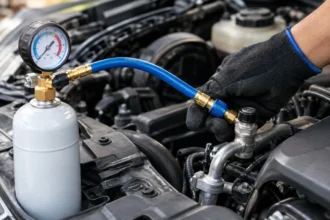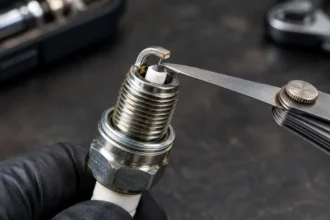

Wait! Are you wondering what is the tune up cost for your car, then you are not alone. We focus on oil changes but most often forget about the tune-ups. Understanding what these tune-ups cover and what it should cost, it can help you save yourself from overpaying and keep your vehicle keep going for longer. In this guide we cover what is the cost of vehicle tune up, what are the factors that can charge you much and how you can do it without pinching your pocket.
Table of Contents
What Is a Tune-Up?
A tune-up is a broad term for preventive maintenance on the parts most likely to wear out. Exactly what gets inspected or replaced depends on your vehicle’s age, your driving conditions, and your habits. That is why the question “how much is a tune up?” has no single answer.
Regular maintenance has clear benefits:
- Longer vehicle life.
- Better fuel economy and engine performance.
- Fewer costly repairs caused by neglected basics.
- Lower emissions.
Many drivers still associate tune-ups with spark plugs, since older cars needed new ones almost every year. Modern platinum and iridium plugs can last up to 100,000 miles, but they still need to be checked and replaced when necessary. When routine tune-up maintenance is consistently skipped, the accumulated wear on spark plugs, filters and ignition components can eventually cause misfires and internal engine damage that goes well beyond a simple tune up cost. For vehicles where deferred maintenance has led to engine damage, Tagore AutoParts stocks a full range of used engines for popular makes and models across the USA.
What Does a Tune-Up Include?
A typical service covers several key components:
- Air filter: Keeps dirt out of the engine. A clogged filter makes the engine run rich, wasting fuel. Replace it about once a year, or more often on dusty roads.
- Spark plugs: Ignite the air-fuel mixture. Worn plugs cause misfires, rough idling, and poor mileage.
- Fuel filter: Protects injectors from contaminants and prevents stalling or poor performance.
- PCV valve: Part of the emissions system. A faulty valve can raise oil consumption and emissions.
- Distributor cap and rotor: Found only on older vehicles with manual ignition systems.
- Oxygen sensor: Helps the engine computer balance the air-fuel mix.
- General system checks: Brakes, cooling system, clutch, and air conditioning.
An oil change is not technically part of a tune-up, but many drivers book both in one visit. Oil should be changed far more often, typically every 3,000 to 7,500 miles, while a full tune-up is usually needed once a year or less.
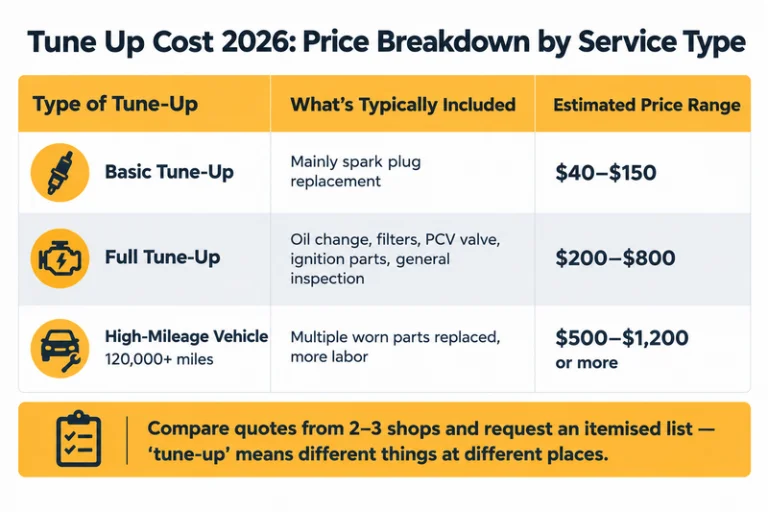
How Much Does a Tune-Up Cost? Auto Tune Up Prices Explained
Auto tune up prices vary widely depending on how comprehensive the service is. Here is a general breakdown:
| Type of Tune-Up | What’s Typically Included | Estimated Price Range |
| Basic tune-up | Mainly spark plug replacement | $40 – $150 |
| Full tune-up | Oil change, air and fuel filter checks, PCV valve, ignition parts, general system inspection | $200 – $800 |
| High-mileage or older vehicle (120,000+ miles) | Multiple worn parts replaced, more labor | $500 – $1,200 or more |
These tune up prices are estimates. The final cost of vehicle tune up work depends on your location, your vehicle, and what the technician finds. For high-mileage vehicles where the tune up cost is approaching the vehicle’s total value, it may be more economical to pair the service with a quality engine replacement — Tagore AutoParts carries reliable used transmissions for a wide range of makes and models alongside their engine inventory to support complete drivetrain refreshes at competitive prices.
Factors That Affect Tune Up Cost
Several variables push your quote up or down:
- Make and model: Luxury and high-performance cars often need pricier parts.
- Mileage and condition: Higher-mileage vehicles may need extras like belts, hoses, or fuel system cleaning.
- Labor rates: Mechanic hourly rates differ by region.
- Parts quality: Premium spark plugs and filters cost more but may last longer.
- Where you go: An independent repair shop is usually cheaper than a dealership.
Older and classic cars generally cost more to service because they need more frequent part replacement and more labor-intensive inspections. Newer cars with electronic ignition need fewer tune-ups, and the focus shifts to electronic components such as the oxygen sensor, throttle body, and fuel injectors. For Chevy Tahoe and full-size SUV owners where a comprehensive tune-up on a high-mileage V8 can approach $800 or more, Tagore AutoParts stocks used Chevy Tahoe engines for drivers whose tune-up inspection has revealed engine wear worth addressing with a quality used engine replacement.
Signs Your Car Needs a Tune-Up
Do not wait for the annual schedule if you notice any of these symptoms:
- A noticeable drop in gas mileage.
- An illuminated check engine light.
- Frequent stalling.
- Rough idling or difficulty starting.
- Knocking noises from the engine.
- General loss of power while driving.
Ignoring these signs can turn a modest tune-up into a major repair, so acting early often saves money.
DIY Tune-Up: A Budget-Friendly Option
Basic maintenance can be done at home for a fraction of the shop price.
Replacing spark plugs: You will need a spark plug socket, ratchet, torque wrench, and gap tool. Remove the ignition coils or wires, unscrew the old plugs, check the gap on the new ones, and hand-thread them before torquing to spec. Apply dielectric grease when reinstalling coils or wires.
Replacing the air filter: Locate the airbox, open it with a screwdriver, swap in the new filter, and secure the housing.
Let the engine cool before you start. Most modern cars also support OBD-II scanning, so an inexpensive scan tool can reveal misfire codes that point to worn or fouled plugs. Keep in mind that complex jobs, like replacing an oxygen sensor or diagnosing deeper issues, are often best left to a professional. For Ford F-150 owners where a high-mileage tune-up has revealed worn ignition coils and broader engine concerns, Tagore AutoParts stocks used Ford F-150 engines for drivers whose service inspection has uncovered engine wear beyond what a standard tune-up can address.
Tips to Get the Best Price on a Tune-Up
- Compare quotes: Call several shops before booking.
- Ask what is included: “Tune-up” means different things at different shops, so request an itemized list.
- Look for discounts: Many shops offer coupons, especially for new customers.
- Check your owner’s manual: It tells you which services your vehicle actually needs, so you avoid paying for unnecessary work.
- Consider independent shops: They typically charge less than dealerships.
Why Regular Tune-Ups Matter
For newer vehicles, tune-ups keep advanced systems like electronic fuel injection and ignition working efficiently. For older vehicles, they matter even more, because wear accumulates faster and small problems can become breakdowns. Over time, regular service improves fuel efficiency and helps you avoid expensive emergency repairs, which more than offsets the upfront tune up cost.
Conclusion
The cost of vehicle tune up service can range from up to $40 for basic spark plug to $800 or more for a comprehensive service. Not only this but for high mileage or classic cars it might cost up to $1,200. The final tune up prices may vary depending on the vehicle condition, location and the shop you choose. Acknowledging the fact that what a tune up includes and what are warning signs can save you from overpaying and can keep your car running smooth without any hesitation.
For all your vehicle parts needs — from tune-up components to complete used engines and transmissions — trust Tagore AutoParts, your reliable autoparts supplier serving customers nationwide.
Frequently Asked Questions
What is included in a full tune-up?
A full tune-up usually includes spark plug replacement, air and fuel filter inspection or replacement, ignition and fuel system checks, and inspection of components like belts and hoses.
How often should I get a tune-up?
Every 30,000 to 50,000 miles, or as your manufacturer recommends.
Why do auto tune up prices run higher for older cars?
Older vehicles often need more frequent replacement of parts like spark plugs, distributor caps, and fuel filters, and the inspections take more labor.
Can I do a tune-up myself?
Yes. Basic jobs like changing spark plugs and air filters are manageable with the right tools and some care.
How much is a tune up for a basic service?
A basic, spark-plug-focused tune-up typically runs between $40 and $150.