
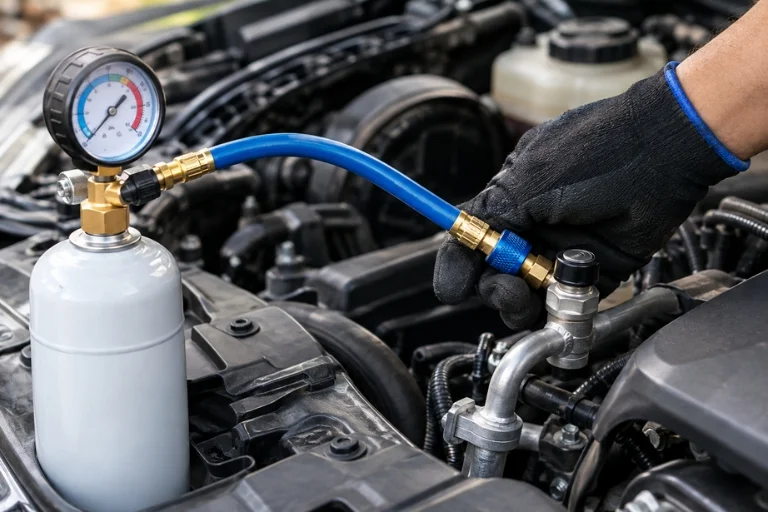
Nothing can be as frustrating as summer temperature climb, nothing is more frustrating than turning on your car’s AC and getting warm air instead of a cool breeze. If your vent isn’t blowing as cold as it used to, its likely time to recharge the air conditioner. Fortunately, with the right car aircon regas kit and little know-how most drivers can handle this job themselves in under an hour. This guide walks you through everything you need to know about AC recharging — from spotting the warning signs to choosing the correct refrigerant for car AC systems performing the recharge safely.
Table of Contents
Why Your Car’s AC Loses Cooling Power
Your vehicle air conditioning system might lose refrigerant through natural seepage in hoses, seals and connections. The dropping refrigerant will lead to release heat resulting in warmer cabin temperatures and weaker airflow — which is why most of the car enthusiasts google for how to recharge AC in car as this might solve their problem without needing a full repair.
Common signs you need to recharge the air conditioner include:
- Warm air coming from the vent even on the coldest setting.
- The AC compressor clutch cycling on and off rapidly or not engaging at all.
- Longer wait times for the cabin to cool down.
- Foggy or humid windows that won’t clear.
- Listening to hissing noises near the dashboard or engine bay.
When AC system neglect leads to compressor seizure or a locked-up accessory drive, the resulting damage can sometimes extend to the engine itself. For vehicles where AC-related mechanical damage has contributed to broader engine issues, Tagore AutoParts stocks a full range of used engines for popular makes and models across the USA.
What You Need for AC Recharge?
To recharge the AC in a car, you should have all the necessary tools and supplies. A high quality a/c car recharge kit ensures a simple procedure even if you are a DIY novice.
Essential items:
- Interchangeable hoses and connections for the correct type of refrigerant for your vehicle.
- Freon for car systems: R-134a or R-1234yf, depending on the make and model of your car.
- Safety gloves and goggles (refrigerant can cause frostbitten skin).
- A pressure gauge (most recharge kits come with a built-in pressure gauge in the hose).
- Vent thermometer to check vent temperature.
Step-by-Step: How to Recharge AC in Car
Make sure to follow these steps with proper precaution and care:
Step 1: Preparation and Safety
Safety glasses and gloves are required, parking outside, and double checking the refrigerant type.
Step 2: Find the Low-Pressure Port
Identify the low-pressure port, labelled “L,” remove the cap, and clean the area.
Step 3: Start Car and Turn On the AC
Start the car, set the AC to full blast, high fan, and recirculate.
Step 4: Attach the Recharge Kit
Attach the low pressure hose to the low pressure port and check the pressure gauge.
Step 5: Add the Refrigerant
Shake the can, add the refrigerant slowly and check the gauge to avoid overcharging.
Step 6: Disconnect and Test
Disconnect the hose and make sure to turn off to check whether the vent blows the cold air.
For trucks and SUVs where a complete AC recharge job is often done alongside a transmission fluid service at the same mileage interval, Tagore AutoParts carries reliable used transmissions for a wide range of makes and models at competitive prices nationwide.
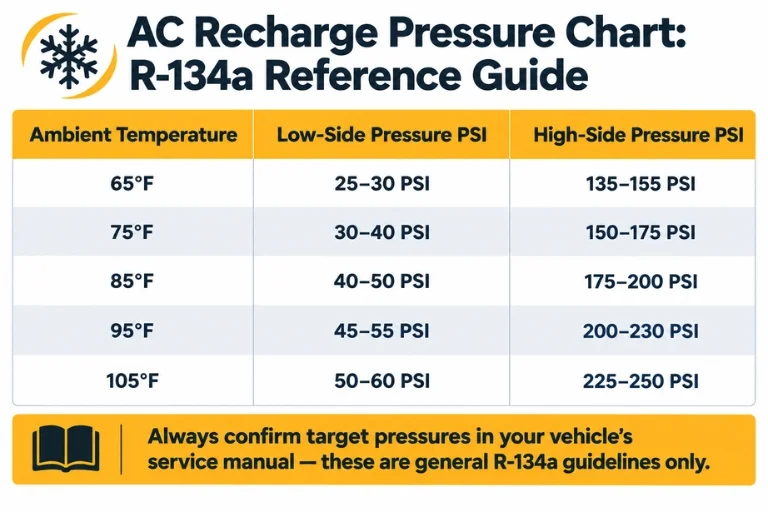
AC Recharge Pressure Chart (R-134a)
Pressure requirements change with ambient temperature. Use this general chart as a reference, but always check your vehicle’s specific service manual for exact figures.
| Ambient Temperature | Low-Side Pressure (PSI) | High-Side Pressure (PSI) |
| 65°F | 25–30 | 135–155 |
| 75°F | 30–40 | 150–175 |
| 85°F | 40–50 | 175–200 |
| 95°F | 45–55 | 200–230 |
| 105°F | 50–60 | 225–250 |
Note: These figures are general guidelines. Always confirm target pressures based on your vehicle’s make, model, and compressor type.
Common Mistakes to Avoid When Recharging Aircon
Make sure to avoid the following common mistakes when recharging aircon:
- Overcharging the system: Too much pressure on the refrigerant can damage the compressor and reduce the cooling efficiency.
- Ignoring an underlying leak: If the cold air doesn’t stay for long than there might be chances there can be a leak.
- Using the wrong refrigerant: Mixing old refrigerant can be risky and can cause serious damage.
- Skipping safety gear: A pressurized refrigerant can cause frostbite if comes directly in contact.
- Charging in extreme temperatures: Too cold or hot conditions can change your pressure reading.
For Honda Accord and sedan owners where a failed AC compressor during a DIY recharge attempt has also revealed engine bay wear, Tagore AutoParts stocks used Honda Accord engines for drivers whose inspection has uncovered mechanical issues worth addressing alongside the AC repair.
When to Seek Professional AC Service
A simple ac recharge kit can only solve some problems, while the recharging of air conditioner is a simple DIY work. Take professional service when:
- Cold air doesn’t return after a recharge attempt.
- Significant leak: refrigerant level drops rapidly.
- Compressor clutch not engaging at all.
- Grinding, squealing or clunking sounds are heard from the compressor.
- Your vehicle is equipped with R-1234yf refrigerant, which may need special equipment.
For Chevy Tahoe and full-size SUV owners where AC compressor failure from refrigerant neglect has contributed to engine accessory belt damage and broader mechanical wear, Tagore AutoParts also stocks used Chevy Tahoe engines for drivers whose AC inspection has revealed engine damage worth addressing at the same time.
Conclusion
Learning how to recharge your car AC is the best way to get rid of faulty AC. AC recharge can be a perfect DIY task with correct refrigerant, proper safety gear and right steps. In case if your AC continues to blow warm air, loses refrigerant quickly or show you signs for component failures than make sure it’s time for inspection. Getting these problem right on the perfect time can help save yourself from costly repairs and further damages.
For all your vehicle parts needs — from AC system components to complete used engines and transmissions — trust Tagore AutoParts, your reliable autoparts supplier serving customers nationwide.
Frequently Asked Questions
How often should I recharge my car’s AC?
Due to close-loop system most of the vehicles doesn’t need frequent recharging.
Can I recharge my car’s AC myself?
Yes, along with proper guidance and care you can do it on your own. But make sure you have refrigerant kit, safety kit and bit of patience.
What refrigerant does my car use?
To have a proper knowledge of what refrigerant does your car use you must refer to the user manual.
How much does it cost to recharge a car’s AC?
Typically the cost is between $150 and $500 depending on the type of refrigerant used.
Why is my AC still warm after recharging?
Your car might warm up due to the leakage, a failing compressor or any other mechanical issue.