There are other such factors that are responsible for letting your car move. Behind every smooth acceleration there is a combination of essential fluids working together to boost the performance of your engine, maintain the safety and keep different systems operating properly. Engine oil helps to reduce the friction between moving parts, controlling engine temperature and brake fluid. Many drivers ignore this issue until the problem arises or the car starts showing warning lights. Regular fluid check-ups is a simple habit that can save you from costly repairs and help your vehicle last longer. In this guide, we’ll cover the most important car fluids-type to check, how to inspect them, and the signs why they need attention.
Why Checking Car Fluids Regularly Matters
Many drivers often ignore certain symptoms that can trigger the condition of their car until they see warning light turning on or steering suddenly getting stuck. There are some of the most important fluids that are worth keeping an eye on. Therefore, it is very important to check the engine oil, coolant, brake fluid, transmission fluid, and power steering fluid under consideration. Regular fluid-checkups can protect your engine, ensure reliable braking and prevent you from costly repairs. A quick look under the hood every month can catch the issues early, before it turns into something expensive. Doing it more often will help you go miles ahead without any hesitation.
Neglecting fluid levels over time is one of the leading causes of premature engine failure — and once internal damage sets in, a fluid top-off won’t undo it. For vehicles where long-term fluid neglect has already caused engine damage beyond repair, Tagore AutoParts stocks a full range of used engines for popular makes and models across the USA.
The Essential Car Fluids You Should Check
1. Engine Oil
It keeps everything inside the engine moving smoothly instead of grinding itself apart. Low or old oil is responsible for a large share of engine problems that can lead to complete engine failure or a seized engine.
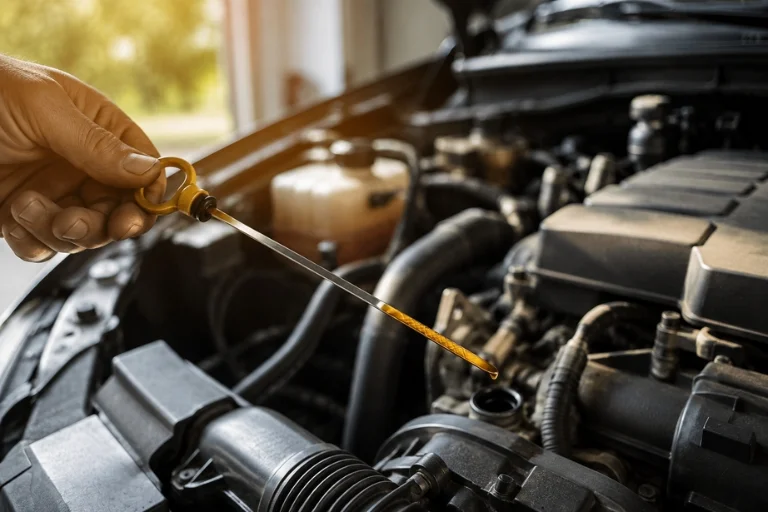
How to check it: Park on flat ground and give the engine a few minutes to cool down if you’ve just been driving. Pull the dipstick out, wipe it clean with a rag, then push it all the way back in and pull it out again — that second reading is the real one. The oil should sit somewhere between the min and max marks. If you see amber or light brown colors that mean it’s doing its job, while something dark and gritty is telling you it’s overdue for a change.
2. Coolant
Coolant also known as antifreeze, need to be checked after every 50,000 miles. The main function of coolant is to save the engine from overheating or freezing. This water-based fluid circulates within your engine to maintain its temperature.
How to check it: Wait until the engine is fully cool before you go near this one — an important detail, since a hot radiator cap can genuinely hurt you if you open it. Once it’s cool, look at the coolant reservoir; it’ll have min and max lines molded right into the plastic. If it’s below the line, just add fluid to prevent your engine from overheating.
3. Brake Fluid
Brake fluid is a hydraulic fluid that turns the pressure from your foot on the pedal to directly stopping the wheels of your car. If the level’s dropping, it usually means one of two things: your brake pads are wearing down, or there’s a leak somewhere in the line.
How to check it: The reservoir is usually near the back of the engine bay, and it’s translucent so you can see the level against the marked lines without opening anything. Healthy fluid looks clear or light gold. If it’s turned dark or cloudy, that’s your sign a flush is probably due.
4. Power Steering Fluid
This hydraulic fluid turns the power from the steering wheels to the front wheels. Making it comfortable for you to accelerate.
How to check it: If your car does have it, the reservoir is usually labeled clearly enough to spot at a glance. Match the level to the min/max lines. If your steering has started feeling stiff or you’re hearing a whine when you turn, low fluid is a likely culprit. For vehicles where power steering issues have been accompanied by other drivetrain symptoms, Tagore AutoParts carries reliable used transmissions for a wide range of makes and models to support broader mechanical repairs affordably.
5. Transmission Fluid
This one keeps gear changes smooth, whether you’re driving stick or automatic. When it gets low or worn out, you’ll feel it in the shifting — jerky, delayed, or just off.
How to check it: Some cars want the engine running and warmed up for this check, others want it off entirely, so this is genuinely worth confirming in your manual rather than guessing. Where there’s a dedicated transmission dipstick, you check it the same way as engine oil. Fresh fluid is reddish; anything dark or with a burnt smell means it needs attention soon.
6. Windshield Washer Fluid
The lowest-stakes item on this list, but not one to ignore — this fluid is formulated to clean the dirt, grime, bugs from your windshield.
How to check it: Find the reservoir (usually marked with a little windshield icon on the cap) and top it off when it’s low. No dipstick, no guesswork — just pour and you are good to go.
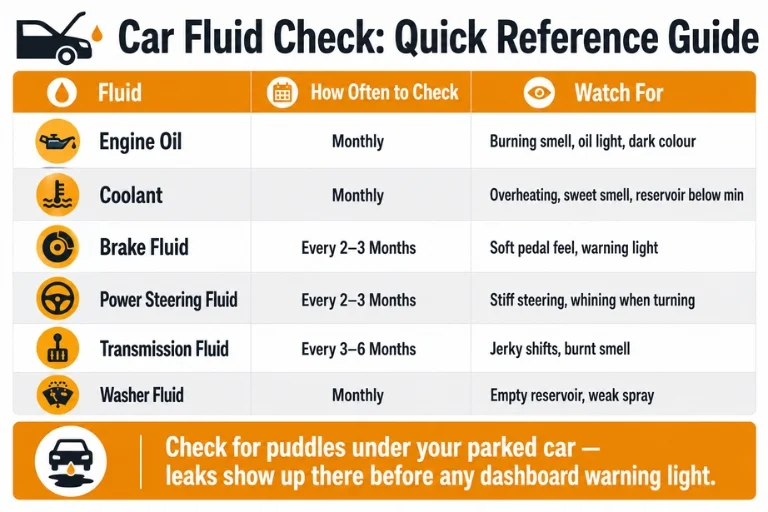
Quick Reference Table: Car Fluid Checks at a Glance
| Fluid | How Often to Check | Watch For |
| Engine Oil | Monthly | Burning smell, dashboard oil light, dark color |
| Coolant | Monthly | Overheating, sweet smell, reservoir below min |
| Brake Fluid | Every 2–3 months | Soft pedal feel, warning light on dash |
| Power Steering Fluid | Every 2–3 months | Stiff steering, whining when turning |
| Transmission Fluid | Every 3–6 months | Jerky or delayed shifts, burnt smell |
| Washer Fluid | Monthly | Empty reservoir, weak or no spray |
For vehicles where multiple fluid systems have been neglected simultaneously — particularly older high-mileage cars showing both oil and coolant issues — engine replacement is sometimes the most practical solution. Tagore AutoParts stocks used Honda Accord engines and other popular sedan engines for drivers whose maintenance inspection has revealed wear beyond what a fluid change can fix.
Tips to Keep Your Car Fluid Levels in Check
Keep a quick note on your phone logging when you last checked and topped anything up — it sounds excessive until it saves you from wondering whether it’s actually been three months or just one.
- Stick to whatever fluid your user manual recommends; mixing fluids can cause severe damage.
- Glance under your parked car every so often for puddles or stains — a slow leak often shows up there long before any dashboard light notices.
- Check for stains or puddles when your car is parked. They reveal leaks before the dashboard lights do.
- If a fluid keeps dropping quickly, don’t just top it up. Get the underlying cause checked.
For Toyota Camry and sedan owners whose regular fluid checks have revealed deeper engine wear over time, Tagore AutoParts also stocks used Toyota Camry engines as a reliable and cost-effective engine replacement option.
Conclusion
Checking your car’s fluids isn’t glamorous, and it’s easy to put off. But it’s genuinely one of the cheapest forms of insurance you have as a car owner. A monthly once-over — oil, coolant, brakes, steering, transmission, washer fluid — takes less time than your coffee break and can save you from the kind of repair bill that ruins a week. Set a reminder — keep a checklist in the glove box if that helps, and get ahead of the problems before they get ahead of you. Your car tends to fail at the worst possible moment so give it one less reason to.
For all your vehicle parts needs — from routine maintenance components to complete used engines and transmissions — trust Tagore AutoParts, your reliable autoparts supplier serving customers nationwide.
Frequently Asked Questions
How do I check my fluids in my car?
You need to follow these steps to check fluid in your car:
- Park your vehicle on a flat surface
- Turn off the engine and let it cool
- Open the hood
- Locate the dipstick
- Check the levels against the minimum and maximum lines
What are the 7 fluids in a car?
There are few fluids to keep your eyes on namely: coolant, engine fluid, transmission fluid, power steering, windshield washer fluid, brake fluid and differential fluid.
What happens if car fluids get low?
You might experience grinding sensations and the gear of your car might miss.
Can I drive with low fluid?
No, it is not safe to drive with low fluid, as it can cause total system failure, engine seizure and loss of braking.
How long can I drive with low fluid?
You can generally drive between 10 to 15 miles with low fluid.