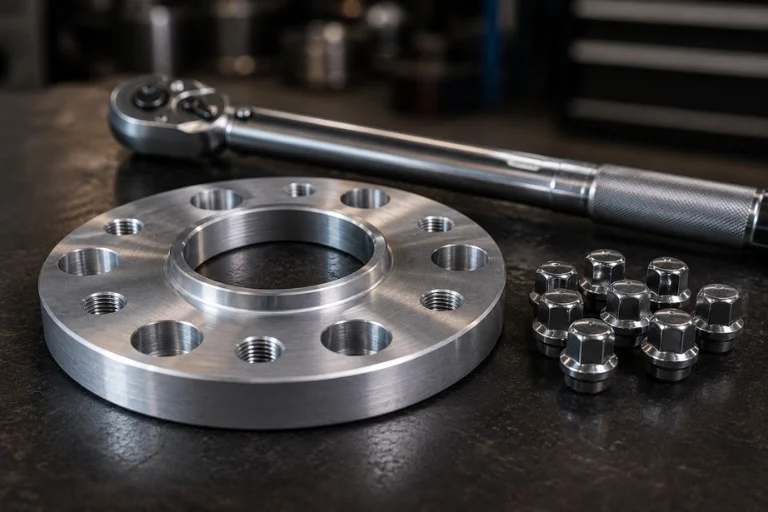
Are you questioning about how to improve your vehicle’s appearance or create an extra clearance for larger brakes, well, wheel spacer can be a perfect solution for it. These metal discs can fit between the wheel hub and the pushes the wheels outwards to increase the track width. It sounds like a small tweak, but the right spacers can seriously improve handling and fitment — and let’s be honest, they also give your car a much more aggressive stance. As picking the right spacers matters. Selecting it wrong might lead to safety issues, fitment problems, or premature wear. In this guide, we’ll break down what wheel spacers actually do, the different types available, and how to install them properly.
What Wheel Spacers Actually Do
At their core, wheel spacers are discs (usually aluminium, sometimes forged steel) that mount between your wheel hub and the wheel itself. They push the wheel outward, away from the vehicle, which changes the offset and widens your stance. That’s really the whole idea — a simple piece of hardware that shifts where the wheel sits relative to the suspension.
People add them for a few different reasons:
- To clear larger brake calipers that won’t fit behind stock wheels
- To fix rubbing issues when running wider aftermarket tires
- To widen the track for a more aggressive, flush look
- To improve cornering stability, since a wider stance generally means a lower center of gravity relative to the track width
They’re not a magic fix for everything, though. Go too thick, and you’ll start putting extra strain on wheel bearings, ball joints, and lug studs — parts that weren’t designed to handle the added leverage. That’s the trade-off nobody selling them online tends to mention. For vehicles where suspension and drivetrain components have already accumulated wear alongside these kinds of modifications, Tagore AutoParts stocks a full range of used engines for popular makes and models across the USA.
Types of Wheel Spacers (And Why It Matters)
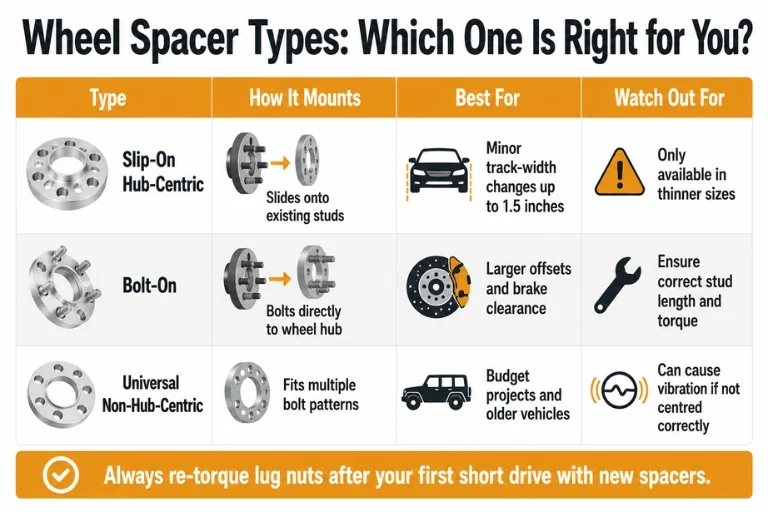
Not every spacer works the same way, and picking the wrong type is one of the most common mistakes people make on their first install.
| Type | How It Mounts | Best For | Things to Keep in Mind |
| Slip-on (Hub-Centric) | Slides into the existing wheel studs and uses lug nuts to secure the wheel | Minor track-width changes and improving wheel fitment (typically up to about 1.5 inches) | Only available in thinner sizes, so they’re not suitable for large spacing adjustments |
| Bolt-on | Bolts directly into the wheel hub using the hardware and the wheel then mounts onto the spacer’s built-in studs | Creating larger wheel offsets, clearing brake components, and improving stability | Make sure the studs or bolts are the correct length and are properly torqued during installation |
| Universal (Non-Hub-Centric) | Designed to fit multiple bolt patterns instead of being made for one specific hub | Budget-friendly projects and some older vehicles with less precise fitment requirements | If not centered correctly, they can lead to wheel vibration and uneven wear |
Choosing the right spacer type also depends on your vehicle’s suspension configuration. For trucks and SUVs running larger aftermarket setups where drivetrain components absorb additional stress from wider track widths, Tagore AutoParts carries dependable used transmissions for a wide range of makes and models to keep your drivetrain performing reliably.
How to Install Wheel Spacers Step-by-Step
Installing wheel spacers isn’t a complicated job mechanically, but it does demand patience and the right torque specs. Rushing this is where people run into trouble later.
Here’s a straightforward breakdown of how to put on wheel spacers correctly:
- Loosen the lug nuts slightly while the car is still on the ground, then jack it up and support it on stands.
- Remove the wheel completely and set it aside.
- Clean the hub surface. Rust, dirt, or old brake dust between the hub and spacer can throw off the fit and cause vibration.
- Mount the spacer onto the hub, lining it up with the studs. For bolt-on types, torque the spacer bolts to the manufacturer’s spec before moving on.
- Re-install the wheel over the spacer, making sure it sits flush against the surface.
- Hand-tighten the lug nuts in a star pattern, then torque them properly with a calibrated torque wrench, again in a star pattern, in two or three passes.
- Lower the car and re-torque the lug nuts one more time after driving a short distance — this catches any settling that happens once the wheel takes on real load.
A quick note on tools: a basic install of spacers foundation work like this needs a torque wrench, a jack and stands rated for your vehicle’s weight, and possibly a breaker bar for stubborn lug nuts. Skipping the torque wrench and just “getting it tight” is a genuinely common cause of loose wheels down the road. For classic muscle cars and trucks where wheel spacer installs often go hand-in-hand with broader restoration work, Tagore AutoParts stocks used Chevy Camaro engines and other performance engines to support complete builds from the ground up.
Common Mistakes When Installing Spacers
Even people who’ve done plenty of DIY work at home sometimes get tripped up on this one, mostly because it looks simpler than it is. A few things worth avoiding:
- Using lug nuts or studs that are too short once the spacer adds extra thickness
- Skipping the re-torque after the first short drive
- Ignoring hub-centric rings on universal spacers, which leads to vibration at highway speed
- Going with the thickest spacer available “for looks” without checking suspension and fender clearance first
- Buying unbranded, ultra-cheap spacers with no load rating listed anywhere
If you’re new to this kind of work, it’s worth having a shop double-check the torque and fitment the first time around, even if you did the physical installation yourself. For a trusted independent reference on wheel spacer safety standards, load ratings, and fitment guidance, Tire Rack’s official wheel spacer buyer’s guide is one of the most thorough and reliable resources available for both DIY enthusiasts and professional installers. For Jeep and off-road vehicle owners where spacer installs are particularly common, Tagore AutoParts also carries used Jeep Wrangler engines for drivers tackling full builds or restorations alongside their wheel and suspension upgrades.
Conclusion
The wheel spacers is a perfect fit for your vehicle if you want a well improvised drive. Getting the right size and proper fit can help you get the perfect fit for your wheels. Knowing what size will suit your wheels, how to install it and what are the pros and cons will help you save lot of money and time. Get ready to get the reputable set built for your exact vehicle all you need to do is to measure the hub bore and bolt pattern first.
For all your vehicle parts needs — from suspension and drivetrain components to complete used engines and transmissions — trust Tagore AutoParts, your reliable autoparts supplier serving customers nationwide.
Frequently Asked Questions
Are wheel spacers safe?
Yes, wheel spacers are considered to be safe when installed correctly, of good quality and are properly maintained.
Do I need longer wheel studs for spacers?
Your choice of needing a longer wheel stud for spacers equally depends on the type and thickness of the wheel spacer.
Can I install wheel spacers myself at home?
Yes, you can install wheel spacers at home manually.
Do you need longer bolts with wheel spacers?
Yes, generally you would be requiring longer bolts if you are using slip-spacer.