
Table of Contents
Have you ever came across customizing your car’s exhaust system or have your ever wondered why some cars sound smoother and swift? Well, the answer to it is the “resonator”. This component plays a major role in shaping the sound of your vehicle. The main job of this component is to reduce the unwanted engine noises and making you experience a peaceful drive. In this blog, we’ll make sure to cover everything you need to understand what is a resonator, how does it works and what is the key difference between a muffler and resonator.
Whether you are replacing a worn exhaust component or exploring an upgrade, Tagore AutoParts — your quality autoparts store across the USA — has you covered with dependable used parts at the best prices.
What Is a Resonator?
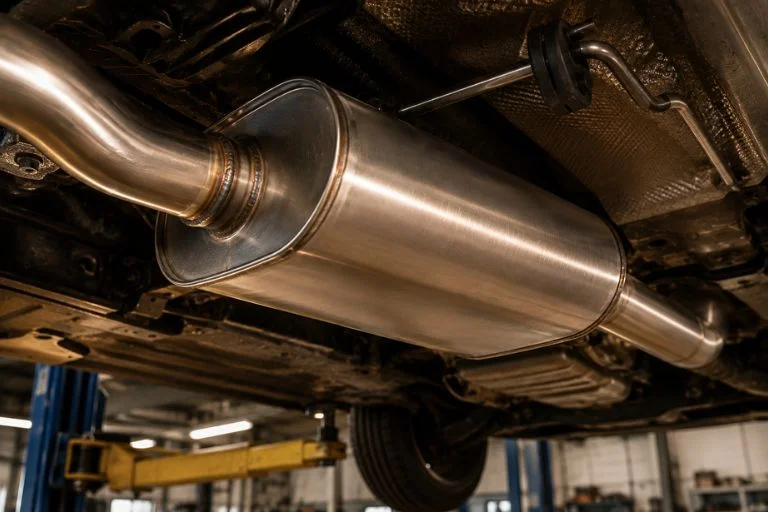
A resonator is a part of a vehicle’s exhaust system which is specifically shaped to alter and adjust the frequency of the exhaust sounds. A resonator is designed to remove specific sound waves that are generated by the engine and, unlike a muffler, will not be used to reduce the overall noise of the system. The concept behind the exhaust resonator is to cancel out sound waves.
The exhaust gases are passed through the chamber, where certain frequencies get neutralized and the exhaust note is smoother and more refined. Many modern vehicles have both a resonator and a muffler to ensure that the best possible noise control is achieved without compromising on engine performance.
What Does a Resonator Do?
Many vehicle owners ask, what does a resonator do exactly? The primary functions of a resonator include:
- Eliminating unwanted exhaust frequencies
- Reducing drone noise during highway driving
- Creating a smoother exhaust tone
- Improving cabin comfort
- Complementing the muffler’s noise reduction capabilities
Instead of simply making the exhaust quieter, a resonator shapes the character of the sound. This is why performance vehicles often use carefully engineered resonators to maintain an aggressive exhaust note without producing unpleasant noise.
How Sound Waves Are Controlled
When exhaust gases leave the engine, they create pressure waves that travel through the exhaust system. Some frequencies can become irritating or create a constant humming sound inside the cabin. The resonator uses chambers and carefully calculated dimensions to reflect and cancel these frequencies before they reach the tailpipe. This process results in a cleaner and more enjoyable exhaust sound.
Key Benefits of an Exhaust Resonator
- Enhanced Sound Quality: A resonator refines the exhaust note by removing harsh frequencies while preserving the desired engine sound.
- Reduced Cabin Drone: Many vehicles experience low-frequency vibrations during highway cruising. A resonator helps minimize these sounds, making long-distance driving more comfortable.
- Improved Driving Experience: By creating a balanced exhaust tone, the resonator contributes to a more premium driving experience.
Muffler and Resonator: What’s the Difference?
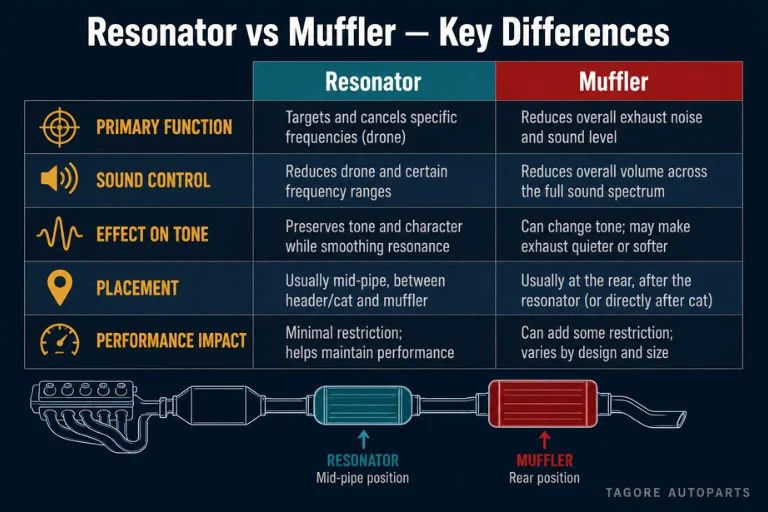
One of the most common questions among car enthusiasts involves the difference between a muffler and resonator. While both components influence exhaust sound, they serve different purposes.
| Feature | Resonator | Muffler |
| Primary Function | Tunes exhaust frequencies | Reduces overall exhaust volume |
| Sound Control | Targets specific frequencies | Suppresses broad noise levels |
| Effect on Tone | Refines sound character | Makes exhaust quieter |
| Placement | Before muffler | Near rear of exhaust system |
| Performance Impact | Minimal | Minimal |
Want to know the basic difference between a muffler and resonator? Ok let’s break it down for you a resonator is a sound tuner and a muffler is a sound reducer. Altogether, these both offer sound acceleration and balanced exhaust acceleration that meets performance and comfort requirement.
Exhaust system health is closely tied to engine performance. If you’re doing exhaust work and suspect deeper issues, our guide on Signs of a Blown Motor can help you rule out internal engine damage before investing in exhaust upgrades.
Should You Remove Your Resonator?
To achieve a louder or more aggressive exhaust sound many car lovers choose to remove resonator often termed as a “resonator delete”. This modification can make the exhaust note more noticeable. However, there can be few disadvantages without it, as the exhaust system can produce an unpleasant noise commonly known as drone. If your goal is a louder exhaust sound and you don’t mind the extra cabin noise, a resonator delete may be worth considering but if you want a peaceful and comfortable driving experience, than keeping resonators is often a better choice.
Advantages of Removing a Resonator
- Louder exhaust note
- More aggressive sound
- Lower exhaust system weight
Potential Disadvantages
- Increased cabin drone
- Harsh exhaust frequencies
- Reduced driving comfort
- Possible legal or local noise compliance concerns
Before removing an exhaust resonator, it’s important to understand how it may affect your vehicle’s sound characteristics.
Signs of a Failing Resonator
Like any exhaust component, a resonator can wear out over time. Common symptoms include:
- Rattling noises underneath the vehicle
- Increased exhaust volume
- Vibrations from the exhaust system
- Visible rust or corrosion
- Reduced sound quality
A damaged resonator may not significantly affect engine performance, but it can negatively impact noise control and driving comfort. If you need a replacement part, browse our used engines for sale and full range of used auto parts at shop.tagoreautoparts.com.
Choosing the Right Exhaust Resonator
When selecting an aftermarket exhaust resonator, consider the following factors:
- Vehicle Compatibility — Always choose a resonator designed for your vehicle’s exhaust configuration.
- Sound Preferences — Different resonator designs produce different sound characteristics. Some prioritize quiet operation, while others enhance performance-oriented exhaust tones.
- Build Quality — Stainless steel resonators generally offer superior durability and corrosion resistance compared to aluminized steel alternatives.
How Resonators Contribute to Modern Vehicle Design
Automakers invest significant resources into exhaust tuning because sound plays a major role in the driving experience. A properly engineered resonator allows manufacturers to meet noise regulations while preserving the vehicle’s character. Luxury vehicles often use sophisticated resonator designs to create a quiet cabin environment, while sports cars use performance-focused resonators to maintain an exciting exhaust note. As vehicle technology continues to evolve, resonators remain an important component in balancing comfort, compliance, and performance.
Conclusion
Understanding what does a resonator do helps drivers appreciate the engineering behind modern exhaust systems. An exhaust resonator is all featured to reduce the unwanted sound frequencies, working alongside muffler to create a comfortable and enjoyable driving experience.
To understand the basic difference between a muffler and resonator you should know that a muffler reduces the volume whereas the resonator shapes the sound. Altogether, these component allow the driver experience a smooth ride without any hassel. No matter you are upgrading your exhaust system or troubleshooting excessive noise, knowing their basic function can help you make a smarter decision.
Frequently Asked Question’s
What is a resonator used for?
A resonator is a device that is generally used to amplify specific tones, or filter unwanted frequencies.
What will happen if I remove the resonator?
Your car exhaust might sound louder and aggressive, if the resonator is being removed.
How much HP will a resonator delete add?
A resonator delete can add up to 1 to 5 horsepower, as removing it can’t lead to noticeable power gains.
What is the cost of a muffler?
Basically a muffler can cost up to $50 and $400, depending on what kind you are looking for.