
Table of Contents
Thinking what is ABS and how it works than you are not alone. One of the most important but not widely noticed safety features of today’s cars is called Anti-Lock Braking System (ABS). If you’re a new driver or a seasoned motorist, knowing what ABS stands for on a car can make a difference when you’re behind the wheel, and save lives. In this extensive guide, we will delve into its applications, its working and how to identify the symptoms of a failing system when dealing with ABS. Well, if you were looking for more information regarding ABS, the benefits of its use and its functionality, then this article will cover all of that.
What Is ABS? Breaking Down the Basics
The Anti-Lock Braking System (ABS) is among the most advanced feature designed to prevent a vehicle wheels from locking up during sudden or hard braking. Locking up of the wheels means that the driver loses steering ability and skids without any warning. This system allows to quickly take a hold of brake pressure, enabling the driver to control braking direction, even in emergency braking situations. In simple terms, the ABS system helps the vehicle to stop safely while still allowing the driver to steer around obstacles, by reducing the risk of accidents and improving overall road safety.
ABS is one of several critical electronic safety systems working together in modern vehicles. Just as the Electronic Stability Control (ESC) system monitors vehicle yaw and lateral movement to prevent skids, ABS focuses specifically on wheel rotation during braking — both systems share the same fundamental goal of keeping the driver in control during emergency situations.
How Does the ABS Mechanism Work?
The car ABS brake system comprises sensors, a control unit and hydraulic valves. Let’s take a closer look at the ABS mechanism:
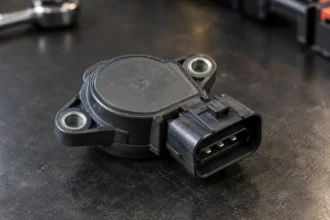
- The Wheel Speed Sensors are fitted to each wheel and continually monitor wheel speed and provide a signal to the ABS control unit.
- Electronic Control Unit (ECU): The computer that controls the system “brain”. The modulation process is when it senses that one wheel is decelerating more than other wheels, meaning that the wheel may be approaching lockup.
- Hydraulic Pump & Valves: These will be operated by the ECU and will switch between releasing and applying brake pressure many times a second, typically 10-15 times per second.
- Driver Feedback: Driver may feel pulsations in the brake pedal – This is normal and the ABS is working.
This is the description of a fast pressure modulation, called ABS mechanism. It works much faster than a human’s manual braking action so that in critical situations it can prove to be much more effective.
The ECU at the heart of ABS operates on the same principle as the broader engine management system. Understanding how a bad ECM symptoms manifest helps illustrate why the ABS control module is equally critical — both are electronic brains that process sensor data in real-time, and both produce warning lights and performance failures when their circuits develop faults.
Key Components of the ABS Car Brake System
| Component | Function | Location | Failure Impact |
| Wheel Speed Sensor | Monitors wheel rotation | Each wheel hub | Loss of ABS function |
| ECU / Control Module | Processes sensor data | Engine bay / firewall | Full ABS shutdown |
| Hydraulic Pump | Modulates brake pressure | Brake master cylinder | Inconsistent braking |
| ABS Warning Light | Alerts driver to faults | Dashboard | No direct brake impact |
Key Benefits of ABS Brakes
Some of the major advantages of the ABS brakes is listed below understanding it can help you a lot in driving your car:
- Shorter Stopping Distance: Under certain conditions such as dry and wet roads, ABS will reduce braking distance.
- Enhanced steering Control: During sudden braking it stops the wheels from locking
- Better grip on slippery roads: The ABS system works well on slippery roads that are wet, icy or have loose gravel.
- Insurance and Resale benefits: These systems are designed to ensure safety, that can lead to better resale values and lower insurance rates.
- Enhanced Road Safety: Less risk of accidents during panic braking.
- Reduces Tire Wear: It reduces tire damage caused due to regular skidding
The steering control benefit of ABS is particularly important when combined with proper driving technique. The rules of the road guide covers emergency braking scenarios, wet weather driving laws, and following distance requirements — understanding these legal frameworks helps drivers know when and how ABS is most likely to engage, allowing them to respond correctly when they feel the characteristic pedal pulsation.
Warning Signs Your ABS May Be Failing
There are certain warning signs that you must need to know:
- ABS Warning Light ON: Check the system immediately incase if the ABS warning light stays “ON” on the dashboard.
- Brakes Locking UP: Incase during baking with the wheels stays locked, the ABS may not be functioning properly.
- Unusual Brake Pedal Feel: A Spongy, stiff or unresponsive brake pedal may indicate problems with the ABS Sensors or hydraulic system
- Longer Stopping Distances: Increased stopping distance is a sign of ABS malfunctioning or poor brake conditions.
Recognizing ABS warning signs connects directly to broader vehicle diagnostic awareness. The oil pressure gauge similarly serves as a critical dashboard warning instrument — both the ABS light and oil pressure gauge are warning systems that demand immediate attention rather than being ignored. Any illuminated dashboard warning light represents the vehicle’s electronic systems flagging a condition that requires professional diagnosis.
ABS vs. Non-ABS Braking: A Quick Comparison
| Feature | With ABS | Without ABS |
| Wheel Lockup | Prevented | Common during hard braking |
| Steering During Braking | Maintained | Lost |
| Wet Road Performance | Significantly better | Higher skid risk |
| Stopping Distance | Optimized | Can be longer |
| Driver Skill Required | Minimal (system assists) | Higher (pump braking needed) |
Maintaining Your ABS Brakes
Your ABS brake system needs to be maintained regularly and there are few things to be kept in mind:
- Regular Brake Fluid Checks: ABS Hydraulics can have issues with contaminated brake fluid. So, it becomes necessary to flush it out and replace it after every 2 years.
- Wheel Speed Sensor Cleaning: Dirty, rusty or debris on wheel speed may lead to inaccurate readings. Therefore, the sensors have to be cleaned and checked during periodic brake maintenance.
- For professional diagnostics: If the ABS warning light is on, use professional diagnostics equipment to diagnose and repair faults.
- Brake pad inspection: Worn brake pads can decrease braking effectiveness and impact the ABS response time.
Proper ABS maintenance is part of a complete vehicle care schedule. The car maintenance checklist provides a structured framework for tracking brake fluid changes, sensor inspections, and brake pad wear intervals — keeping your ABS system in peak condition alongside every other vehicle system that requires periodic attention.
For authoritative ABS safety standards and testing requirements, the NHTSA’s official braking systems safety page provides federally-validated information on anti-lock braking requirements, compliance standards, and consumer safety data that supplements this guide.
When ABS components fail and require replacement — including wheel speed sensors, hydraulic pumps, or control modules — quality parts from Tagore Auto Parts provide reliable replacement components. For vehicles requiring more extensive brake system restoration or complete drivetrain work, remanufactured engines and transmissions are also available to support comprehensive vehicle rebuilds.
Conclusion
If you understand ABS and its importance as one of the most important safety systems in your vehicle, you’ll be better and safer informed, and as an informed driver, you’ll be a better and safer driver. From coming to a stop from a slide to avoiding wheel lockup during emergency braking, you’ll never have a day that goes by without this ABS system performing without complaint. ABS brakes as in any other car are not a luxury, they are a necessity. Be sure to regularly check your ABS and don’t ignore the ABS warning light on your dashboard.
Frequently Asked Question’s
What does ABS stand for?
Antilock braking system (ABS) keeps wheels from locking and allows for safe braking.
On the dashboard of a car, what is ABS?
When the ABS warning light is illuminated, it is generally an indicator of a problem in the anti-lock braking system.
Can a car be driven with a glaring ABS warning light?
Driving without ABS is considered to be less safe, especially in a slippery road conditions.
Does ABS reduce stopping distance?
ABS helps to keep the wheels on the road and is usually more effective on wet and slippery surfaces, and always insures steering control during hard braking. Stopping distance may be slightly extended on loose gravel or deep snow, but steering control will still be maintained.
How to Test ABS?
This is normal and indicates the brake pressure is being modulated by ABS during a hard stop – feel a rapid pulse or vibration in the brake pedal. The system should be inspected if this does not occur during emergency stops.