Table of Contents
Recalls and safety investigations are not new to the automotive industry, however, calling attention to possible engine failures impacting over 1.4 million vehicles, needs immediate action when the federal regulators are involved. The National Highway Traffic Safety Administration (NHTSA) has allowed investigation into Honda and Acura engine failure, that follows earlier recalls and growing number of consumer complaints. This probe has raised a serious concern about long-term reliability, vehicle’s safety and owner’s trust over some of the models of the most popular brands.
In this blog we will take you through what caused the NHTSA probe, the types of Honda and Acura models that could be impacted, what risk the potential owners might face, and what prospective the owner should consider before making a purchase. We shall also give you a description of the red flags you should look for and how this investigation may affect resales values, and what actions the drivers can take to remain covered.
Understanding the Honda Acura NHTSA Engine Failures Probe
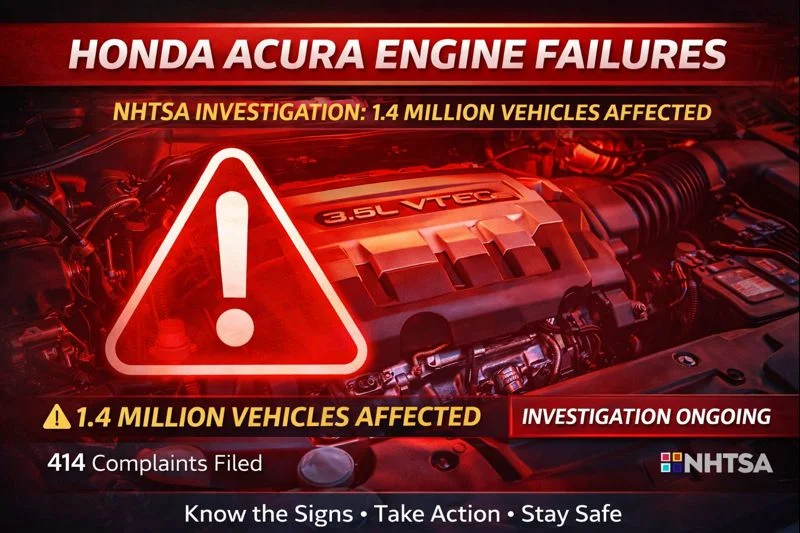
The Honda Acura NHTSA engine failures investigation is based on an alarming trend of mechanical problems that were initially reported at the end of 2023. The federal safety regulators were presented with 414 reports of connecting rod bearing issues, which were first suspected to be caused by the crankshaft manufacturing defects. Though the preliminary probe was halted after they found out that these failures were beyond the recall scope in November 2023 (23V-751), the number of complaints being extensive led NHTSA to open a new investigation in August 2025.
What Makes This Investigation Significant?
This probe differs from the previous recall in several key aspects:
- Broader Scope: The investigation now encompasses 1.4 million vehicles, significantly more than the original recall
- Different Root Cause: Engine failures appear unrelated to the crankshaft manufacturing defect addressed in recall 23V-751
- Multiple Vehicle Models: Both Honda and Acura TSX Honda vehicles are included in the investigation
- Ongoing Assessment: NHTSA continues to evaluate the severity and potential safety implications
Affected Vehicles and Reported Issues
| Investigation Aspect | Details |
| Total Vehicles Affected | 1.4 million Honda and Acura vehicles |
| Primary Issue | Connecting rod bearing failures |
| Reports Filed | 414 complaints to NHTSA |
| Deaths/Injuries | Zero reported incidents |
| Investigation Status | Preliminary evaluation ongoing |
| Previous Recall | 23V-751 (November 2023) |
Common Symptoms of Engine Failure
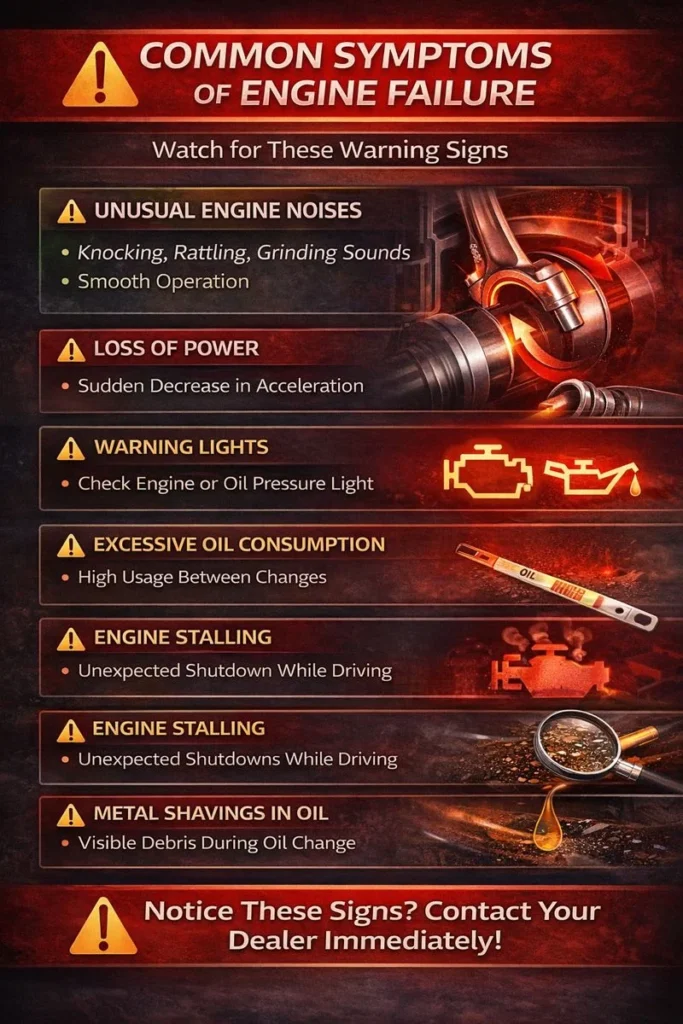
Owners of affected Honda and Acura vehicles should be vigilant for these warning signs:
- Unusual Engine Noises: Knocking, rattling, or grinding sounds from the engine compartment
- Loss of Power: Sudden or gradual decrease in acceleration capability
- Warning Lights: Check engine light or oil pressure warning illumination
- Oil Consumption: Excessive oil usage between scheduled changes
- Engine Stalling: Unexpected engine shutdown while driving
- Metal Shavings in Oil: Visible debris during oil changes indicating internal wear
If you are experiencing any of these symptoms, especially metal shavings or unusual knocking noises, it may be time to consider a Honda Pilot engine replacement or consult with your local dealer about repair options.
What the Investigation Means for Owners
The fact that the NHTSA chose to begin this fresh probe is actually a pointer that the federal regulators are taking these engine failure reports seriously. There are no reported deaths and injuries, however, engine failures are known to be inherently unsafe particularly when they occur when vehicles are on the move along the highways or in heavy traffic.
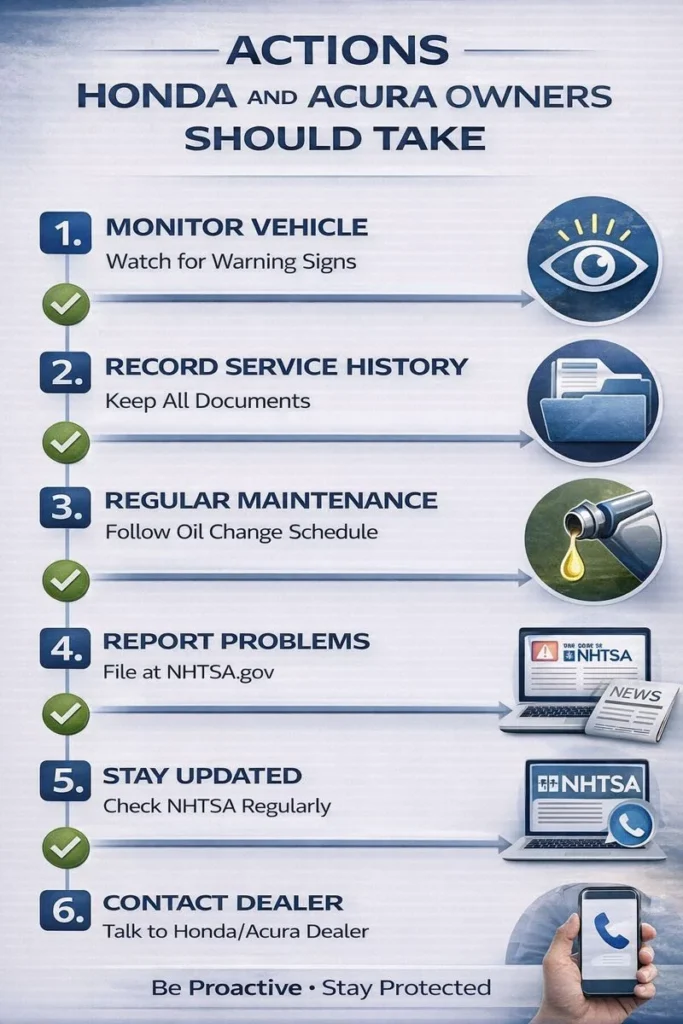
Actions that the Honda and Acura owners should take
There are proactive measures to consider in case you own a vehicle which is affected:
- Keep an eye on your car: Be alert to all the strange sounds, performance issues, and alertness indicators.
- Record Service History: Store an extensive record of maintenance records and repairs.
- Regular maintenance: Strictly follow recommended oil change and service intervals. Following a proper how to change oil routine is especially critical for affected vehicles to monitor for metal shavings and maintain engine health.
- Report Problems: Report a problem with your engine at
- Stay updated: Visit the NHTSA site frequently to find out about the investigation.
- Contact Your Dealer: Call certified Honda or Acura dealers regarding issues.
The Road Ahead: Investigation Timeline and Potential Outcomes
NHTSA investigations typically follow a structured process that can take months or even years to complete. The preliminary evaluation phase focuses on gathering data, analyzing failure patterns, and determining whether a safety defect exists. Depending on findings, potential outcomes include:
- Expanded Recall: If a widespread defect is confirmed, NHTSA may require Honda to issue a recall
- Technical Service Bulletins: Honda might release repair procedures for dealers to address issues
- Closure: If no safety defect is found, the investigation could close without further action
- Extended Warranty: Honda may voluntarily extend warranty coverage for affected components
This investigation follows a similar pattern to other recent Honda brake pedal recall safety concerns, highlighting the importance of staying informed about your vehicle’s safety status.
Conclusion
The NHTSA investigation on Honda and Acura engines collapse is a significant step for both the owners and potential buyers like. No injuries or fatalities have been reported, but given the high potential impact on over 1.4 million vehicles, it is appropriate to take into account the issue of long-term reliability and on-road safety in the long run. Failure of engines, particularly internal ones, may be unanticipated and should attract strict regulations.
In the meantime, owners of Honda and Acura vehicles are advised to keep a watchful eye on the warning signs, regularly monitor the maintenance schedule, and keep abreast of the official announcements of NHTSA. This probe should also be considered in the decision making process by the prospective buyers. Finally, the most effective method to curb the performance, safety, and resale value of vehicles is to be informed and proactive as the regulators decide on the course of action.
Frequently Asked Question’s
Will Honda be able to automatically repair my car since it is a part of this investigation?
Not necessarily. It is not necessarily the case that an investigation would lead to a recall. NHTSA has to decide whether there is a safety defect or not. Follow the official announcements of both NHTSA and Honda.
Does this probe cover all Acura TSX Honda models?
The research encompasses the years of certain models in the 1.4 million vehicles that have been impacted. Visit NHTSA or call Honda with your VIN to see whether your vehicle is one of the vehicles.
Is that the reason I should stop driving my Honda or Acura car?
You may continue to drive unless you have particular engine issues or are notified of the issue by Honda or NHTSA. Nonetheless, you should be mindful of possible red flags and solve the problems with your dealer at once.
How much time is this investigation going to last?
NHTSA investigations are different in time. Initial assessments may only require some months and more complicated investigations may not last more than a year depending on the result and complication.
Is it possible to make a complaint in case of engine problems?
Experience that you had, report it to NHTSA. The report you produce will be part of the general investigation and will assist the regulators in discerning patterns.