
Table of Contents
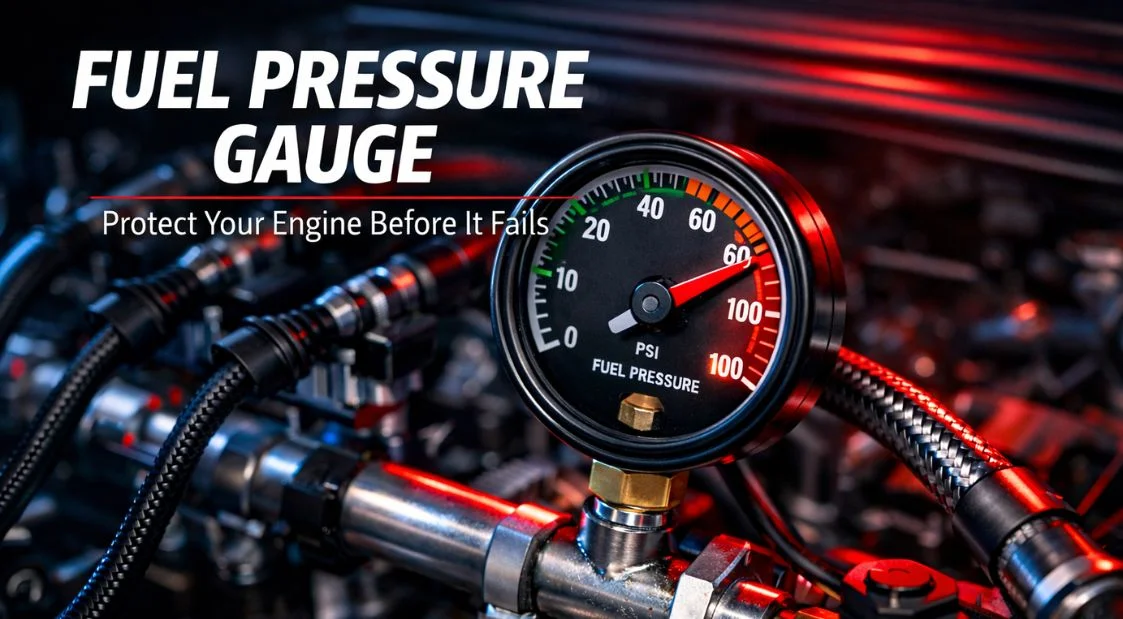
Fuel Pressure Gauge is one of the most important indicators that a serious car enthusiast must not disregard especially in high-performance builds powered by engines like the GM LS9 engine, where precise fuel delivery is critical. A fuel pressure gauge is an indispensable diagnostic instrument, whether you are refining the high-performance sports car or troubleshooting a rough idle in your daily driver, analyzing the fuel pressure is a valuable exercise that can give meaningful information about the health of your engine. Without it, one is driving blindfolded.
The abrupt loss of pressure usually indicates a failing fuel pump or a plugged filter, a common issue in trucks that rely on components like the Ford F-150 fuel pump to maintain stable fuel pressure, whereas the sudden rise of pressure would indicate a locked regulator. In this guide we will learn about fuel pressure gauge including information on the liquid-filled type, which is mechanical and digital, so that you can make an informed choice on the fuel pressure gauge to use in your vehicle.
Why You Need to Monitor Fuel Pressure?
The fuel system of your engine will work only in a very tight range of pressure (in PSI). When fuel pressure varies, the air-fuel mixture becomes unstable, often causing symptoms similar to ignition issues explained in this ignition coil guide.
- Low Pressure: It produces lean condition. It may stutter, get hesitant or even detonate (knock) in your engine and this can shatter pistons in seconds.
- High Pressure: Will result in a rich condition. This not only wastes gas but it also fouls spark plugs and it also washes the oil off your cylinder walls resulting in early wear.
With an effective automotive fuel pressure gauge, you can notice these problems before it turns out to be a costly repair. It is not only about appearing cool, but also preserving engines.
Types of Fuel Pressure Gauges: Which One Do You Need?
In the market buying a fuel psi gauge you are usually faced with two broad sub categories which are mechanical and electrical.
1. Liquid-Filled Mechanical Fuel Pressure Gauges
These represent the simplest and most reliable option for under-hood installations. They connect directly to your fuel line or fuel rail. Premium models from manufacturers like Marshall Instruments feature liquid-filled designs. This isn’t merely cosmetic the internal liquid (usually silicone or glycerin) dampens needle movement, preventing vibration-induced bouncing. This shock resistance makes them exceptionally durable and ensures accurate readings even during engine vibration at idle.
Pros:
- No wiring required.
- Very precise and shock resistant.
- Cheap (particularly a simple fuel pressure gauge set)
Cons:
Safety Warning: You must never fit a mechanical fuel gauge in the cabin without an isolator. The use of live fuel lines that bring them in the dashboard poses a fire risk.
2. Fuel Pressure Gauges Electric.
An electrical fuel pressure gauge consists of a sensor (sending unit) that is attached to the engine and transmits an indicator to a digital or analog gauge on your dashboard.
Pros:
- Safe for cabin mounting.
- Data logging (on higher models).
- Cool, modern look.
Cons:
- More expensive.
- Installation of wiring may be complicated.
Fuel Pressure Gauge Mounting Options: Inline vs. Regulator
After you have your gauge, you must determine where to place it.
- Fuel Pressure Regulator with Gauge: There are many aftermarket adjustable fuel pressure regulators (FPR) that have a gauge port. This is the least messy installation and the gauge is placed close to the adjustment screw so that you can tune it up.
- In Line Fuel Pressure Gauge: You do not need an adjustable regulator as it can be installed in your hose of fuel. A fuel pressure gauge is ideal where the fuel rail does not have any test port as in carbureted engines or for measuring the pressure on older vehicles.
Choosing the Right Fuel Pressure Gauge Kit
In choosing a fuel pressure gauge kit, you should take into account the “Keyword Difficulty” of your particular installation- i.e. how difficult is it to install?
- In case of a Carbureted Engine: You usually require a gauge that goes 0-15 PSI. The 0-100 PSI gauge will be practically useless here due to the fact that the needle will be moved minimum.
- In case of Fuel Injected Engines: A high-pressure gauge, typically 0-100 PSI is required since most injection systems of the days operate at 40-60 PSI.
When you only require a temporary diagnostic tool, a simple gauge to measure fuel pressure (a loaner item in auto parts stores) can be attached to the Schrader valve on your fuel rail. However, regarding permanent monitoring, the gold standard is a dedicated Marshall Instruments liquid-filled gauge that is durable.
Fuel Pressure Gauge Comparison: Dry vs. Liquid-Filled
This is a brief overview of why the liquid-filled versions available on the websites of such retailers as Marshall Instruments are being favored by a number of enthusiasts.
| Feature | Liquid-Filled Gauge | Standard Dry Gauge |
| Vibration Resistance | High (Needle remains still) | Low (Needle can vibrate) |
| Durability | Excellent (Lubricated internals) | Moderate (Gears can wear) |
| Readability | Needle can vibrate | Difficult to read when engine vibrates. |
| Temperature Stability | Anti-condensation/ fogging | Prone to fogging in cold |
| Best Use Case | Under-hood / Rail Mounted | Dashboard / Cabin Interior |
Conclusion

Whether you’re installing a new fuel pressure regulator with a gauge on your drift car or adding an inline gauge for diagnostics, quality should never be an afterthought. Cheap plastic gauges often rattle, fade, or fail under constant heat and vibration. Instead, choose a shock-resistant, liquid-filled gauge designed to survive the harsh conditions of an engine bay. Your engine and your budget will benefit in the long run. A fuel pressure gauge isn’t just another add-on, it’s vital protection for your engine’s performance and longevity. Make the smart investment and ensure your vehicle is equipped with reliable fuel pressure monitoring.
Frequently Asked Questions
Why is my liquid-filled gauge not reading zero?
Sometimes, temperature changes cause the liquid inside to expand, creating internal pressure that pushes on the mechanism. Most Marshall gauges have a small vent plug or “burp” valve you can open to equalize the pressure and reset the needle to zero.
Can a fuel pressure gauge diagnose a bad fuel pump?
A fuel pressure gauge kit allows you to catch this before the pump quits completely and leaves you stranded. No, it is highly unsafe to run fuel lines into the passenger compartment. If you want a dashboard display, use an electrical fuel pressure gauge that uses a wire to send the signal, keeping the fuel safely in the engine bay.
What pressure range do I need?
Always match the fuel psi gauge scale to your engine’s operating range for the most accurate reading. You can use the following pressure range:
- Fuel Injection: 0–100 PSI
- Carburetor: 0–15 PSI
Do I need Teflon tape for installation?
Yes, but be careful. Use a small amount of Teflon tape or liquid sealant on the NPT threads of the gauge, but ensure the first thread is bare so no tape fragments get into your fuel system and clog your injectors.
Can a fuel pressure gauge diagnose a bad fuel pump?
Yes, it is the best tool for the job. If you see the pressure, drop significantly under load (like when accelerating hard) or bleed down instantly after turning the car off, it is a strong sign that your fuel pump is failing or the check valve inside it is defective.