When it comes to tire safety and performance, most drivers make sure the tire depth and tire pressure are right, but there is one more important specification that should capture your attention and it is the “Speed Rating”. Knowing the tire speed rating chart is not only knowing how fast you can drive but making sure that your car works as safely as possible, in all driving conditions.
If your changing tires are wearing out and you are in need of better performance or just wish to make informed choices regarding the safety of your vehicle, than this extensive guide will enable you to understand the tire speed ratings as well as select the correct tires to suit your driving requirements.
What Are Tire Speed Ratings?
Tire speed ratings are achieved by expressing how high a tire can safely support its recommended load capacity over a long time. These marks are not some arbitrary numbers: these marks are the outcomes of intensive testing of tire manufacturers under laboratory conditions. Tires undergoes to a certain performance tests to find out the maximum speed tire can handle without compromising the safety, grip, and integrity.
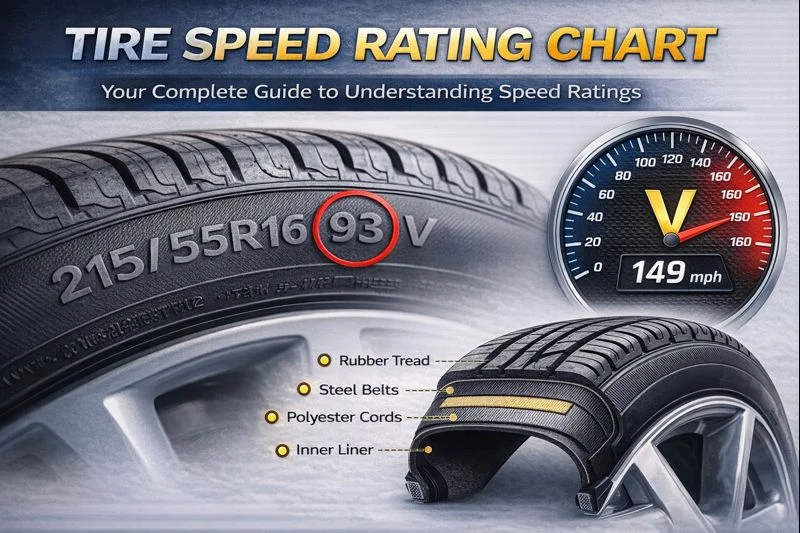
The speed rating appears as a letter code on your tire’s sidewall, displayed usually at the end of your tire size designation. As an example, in a mark such as 215/55R16 93V, a letter V represents the rating of the speed. This letter is apparently simple, but it has great implications on the performance of your car and your safety on the road. Understanding these ratings is especially important when selecting tires for performance vehicles, whether you drive a Ford F-150, Chevrolet Silverado, or sports sedan.

Understanding the Tire Speed Rating Chart
The tire speed rating chart translates letter codes into maximum speed capabilities. Here’s a comprehensive breakdown of the most common speed ratings you’ll encounter:
| Speed Rating | Maximum Speed (km/h) | Maximum Speed (mph) | Typical Application |
| N | 140 | 87 | Temporary spare tires |
| P | 150 | 93 | Light truck tires |
| Q | 160 | 99 | Winter/snow tires |
| R | 170 | 106 | Light truck tires |
| S | 180 | 112 | Family sedans, vans |
| T | 190 | 118 | Family sedans, minivans |
| H | 210 | 130 | Sport sedans, coupes |
| V | 240 | 149 | Sports cars, performance sedans |
| W | 270 | 168 | High-performance vehicles |
| Y | 300 | 186 | Exotic sports cars |
| (Y) | 300+ | 186+ | Ultra-high performance |
Familiarizing yourself with this tire speed rating chart helps you select tires that match your typical driving patterns and vehicle requirements. City drivers might find S or T ratings sufficient, while highway commuters and performance enthusiasts should consider H, V, or higher ratings.
The Relationship Between Load Index and Speed Rating
To know the speed rating of tires, one should have knowledge of the interaction of these ratings with load index ratings. Load index shows the maximum acceptable weight of each tire. These two specifications, commonly abbreviated as 95V or 91H, determine your tire performance envelope in total. The tires may have a high speed rating, but when the load index does not suit the weight of your car; then you will be driving within unsafe limits. This is to make sure that the speed rating and the load index are as high as that of the vehicle manufacture. For more information on vehicle weight ratings and their importance, read our comprehensive guide on GVWR meaning.
Why Speed Rating on Tires Matters for Everyday Driving
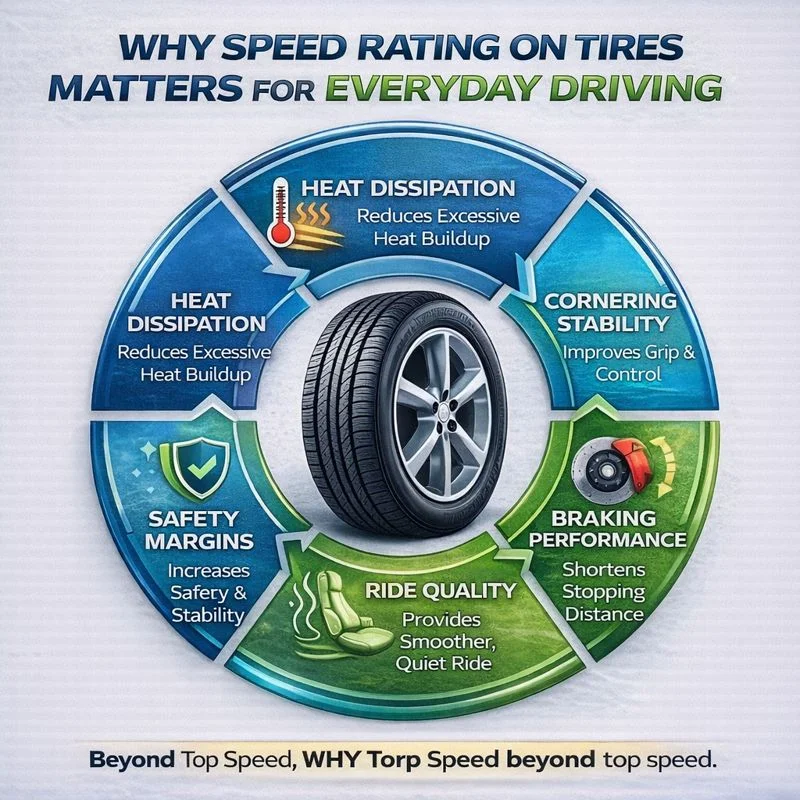
You may be thinking, “I do not drive fast so why should the speed rating of tires be a matter? The solution is way beyond breakneck speed. Tire speed rating is a reflection of the overall engineering quality of a tire such as:
- Heat dissipation capacity: The tires of high rating can cope with heat better.
- Stabilizing corners: Higher quality construction offers more handling in turn.
- Braking performance: Strengthened grip properties result in a reduction of stopping distances. For optimal braking, quality components like brake calipers work in tandem with proper tires.
- Ride quality: Quality materials can make the ride smoother and quieter.
A well rated tire will provide a superior overall performance, safety and driving comfort even at moderate speeds. Also by fitting tires that do not match the recommended tires as suggested by your vehicle manufacturer, you may not be covered by warranty coverage or with insurance claims in the case of accidents.
Speed ratings are part of the broader Uniform Tire Quality Grading (UTQG) system that helps consumers compare tire performance characteristics.
Is it possible to fit Tires of lower speed rating?
Although feasible, the installation of tires with lesser tire speed rating than the manufacturer-recommended ones is not advisable. The suspension, braking system and electronic stability control fitted in your vehicle are set to operate with a certain type of tires.
Downgrading compromises:
- Handling characteristics of vehicle.
- Braking emergency response.
- High-speed stability
- Overall safety margins
Never change your tire types without consulting tire experts or following the instructions of the manufacturers.
Real-World Factors Affecting Tire Performance
While the tire speed rating chart provides valuable guidance, actual tire performance depends on several variables:
- Tire condition: Worn tread significantly reduces capabilities
- Inflation pressure: Underinflated tires generate excessive heat
- Road surface: Rough or damaged roads limit performance
- Weather conditions: Rain, snow, and extreme temperatures affect grip
- Driving style: Aggressive acceleration and hard cornering increase stress
Maintaining proper tire pressure, rotating tires regularly, and replacing worn tires ensures your tires perform according to their ratings. For comprehensive vehicle upkeep, check our car maintenance checklist 2025.
Seasonal Considerations and Speed Ratings
Seasonal temperature variations affect tire performance regardless of speed ratings. Summer heat increases road temperatures, affecting how tires manage heat buildup. Winter cold causes rubber compounds to stiffen, reducing flexibility and grip. Winter tires typically carry lower speed ratings (often Q or T) because they’re engineered with softer compounds optimized for cold-weather traction rather than high-speed performance. This trade-off is intentional and appropriate for winter driving conditions.
Speed Ratings and Tire Longevity
Higher-speed-rated tires often utilize softer rubber compounds that provide superior grip but may wear faster than lower-rated alternatives. However, they also feature advanced construction techniques and materials that can enhance durability in other ways. The key is matching tire speed ratings to your actual driving needs. If you primarily drive at moderate speeds, ultra-high-performance tires represent unnecessary expense and potentially reduced tread life.
Conclusion
Knowing the tire speed rating chart gives you the ability to make the correct choice concerning your vehicle safety and performance. These grades are not merely the top speed potentials, they are the overall performance of the tires, engineering standards of excellence and safety margins that have been incorporated into your tires. In choosing the replacement tires, check the tire speed rating table, check what your vehicle manufacturer recommends, and take into account your usual driving conditions. Choose not only according to the price or brand recognition, but it is also the letters and numbers on the sidewall and these are important specifications that directly affect your driving experience.
Are you prepared to have the correct tires on your car? Go to your nearby certified tire service store and the experts will guide you to the meaning tire speed ratings and then choose tires that are exactly suited to your driving needs. Note that selecting the right rate on tires is not about exceeding expectations, it is about driving safely and at the right speed no matter which time you are on the road.
Frequently Asked Questions
Can I mix tires with different speed ratings on my vehicle?
This practice is not recommended. All four tires should have identical or higher speed ratings than manufacturer specifications to ensure balanced performance and safety.
Do all-season tires have lower speed ratings than summer tires?
Not necessarily. All-season tires are available across various speed ratings. However, dedicated summer performance tires often carry higher ratings due to their specialized compounds.
Will using higher-rated tires than recommended improve my vehicle’s performance?
Higher-rated tires may offer improved handling and grip characteristics, but gains will be limited by your vehicle’s other systems. Always ensure compatibility with your vehicle’s specifications.
How often should I check my tire’s speed rating?
Verify speed ratings when purchasing replacement tires and ensure they meet or exceed manufacturer recommendations found in your vehicle’s documentation.
Do electric vehicles require special speed ratings?
Electric vehicles often require tires with higher load indexes due to battery weight, but speed rating requirements depend on the vehicle’s performance characteristics.
Do I need to match the exact speed rating when replacing tires?
You should match or exceed the manufacturer’s recommended speed rating. Installing higher-rated tires is safe, but never go lower than specified.
How does tire pressure affect speed ratings?
Speed ratings assume proper tire inflation. Underinflated tires generate excess heat and cannot safely maintain their rated speed, even if technically capable.
Are winter tires safe with lower speed ratings?
Yes, winter tires often have lower ratings (typically Q) due to specialized compounds. However, they’re designed for cold weather performance, not high-speed driving.
Will higher speed-rated tires improve my fuel economy?
Not necessarily. Higher-rated tires may use softer compounds and have more rolling resistance, potentially reducing fuel efficiency slightly.