Table of Contents
Your braking system is one of the most important safety parts of the vehicle in terms of its maintenance. With time, the rotors holding the brakes might develop some flaws which affect the braking power and most vehicle owners may wonder: what does it mean to resurface rotors? Renewing the surface of your braking rotor is a low cost maintenance process that will give your brakes the ability to perform again, at a fraction of the cost of replacement. This is a complete guide on all you should know in regards to brake resurfacing to make sound choices in regards to the safety and maintenance of your car.
Understanding Brake Rotor Resurfacing
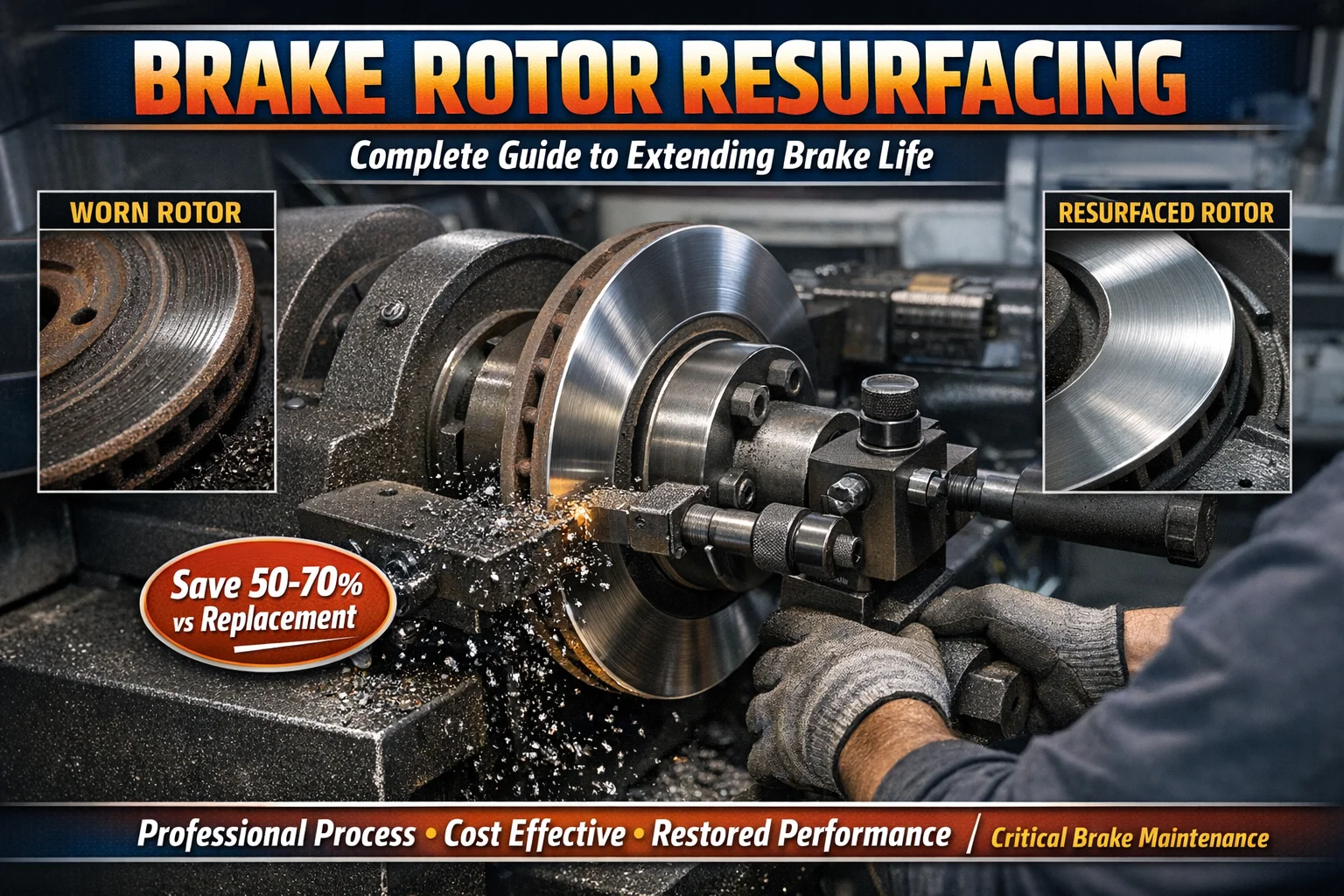
Brake rotor resurfacing, sometimes called brake disc machining or turning, is an accurate operation that involves the removal of a thin metallic coating of the rotors surface, to form a smooth, clean braking surface. What is the practicality of resurrecting rotor? This operation removes a thin coating of mating surface of the rotor so that it is again smooth and flat all the way across, preventing some of the common problems of warping, scoring and uneven wear that are normal in the process of daily operating the brakes.
Whenever, you press the brake pedal, brake rotors are pushed between two brake pads, and it is natural that such a metal disc should wear out due to sharp friction and the effect of on and off usage. When brakes are applied, the contact between rotor and brake pads produces a lot of heat and over a period of time the surfaces become uneven resulting in vibration and noise as well as inefficient braking. For more comprehensive information on brake system components, check out our detailed guide on brake calipers.
Signs That Indicate the Need for Resurfacing
Recognizing the symptoms that indicate your rotors need attention is crucial for maintaining safe braking performance. As soon as they’re installed on a vehicle, brake rotors are exposed to the harsh reality of friction, heat, and corrosion. Several warning signs suggest that brake rotors resurfacing might be necessary:
- Steering wheel vibration when you press the brake pedal, especially at high speeds, caused by thickness variance in one or both front rotors
- Shimmying or shaking in the vehicle body, often felt through the seat or brake pedal, typically due to rear rotor surface irregularities
- Grinding noise when the brakes are applied, resulting from contact between brake pads and rust or corrosion on the rotor
- Squealing noises during application, indicating contaminated or glazed rotors that can also cause longer stopping distances
- Visible grooves around the circumference of the rotor surface that can be felt by hand
- Worn brake pads requiring replacement, which presents an ideal opportunity for brake resurfacing to give new pads a good, flat, uncontaminated surface to grip
Any one of these symptoms can be the nudge you need to think about brake rotor resurfacing for your vehicle.
Critical Factors to Consider Before Resurfacing Your Rotors
It’s not always advisable to resurface a rotor, sometimes replacement is the better option. Understanding what does it mean to resurface rotors also means knowing when it’s not appropriate. Several key factors must be evaluated before proceeding with brake resurfacing:
Rotor Thickness Specifications
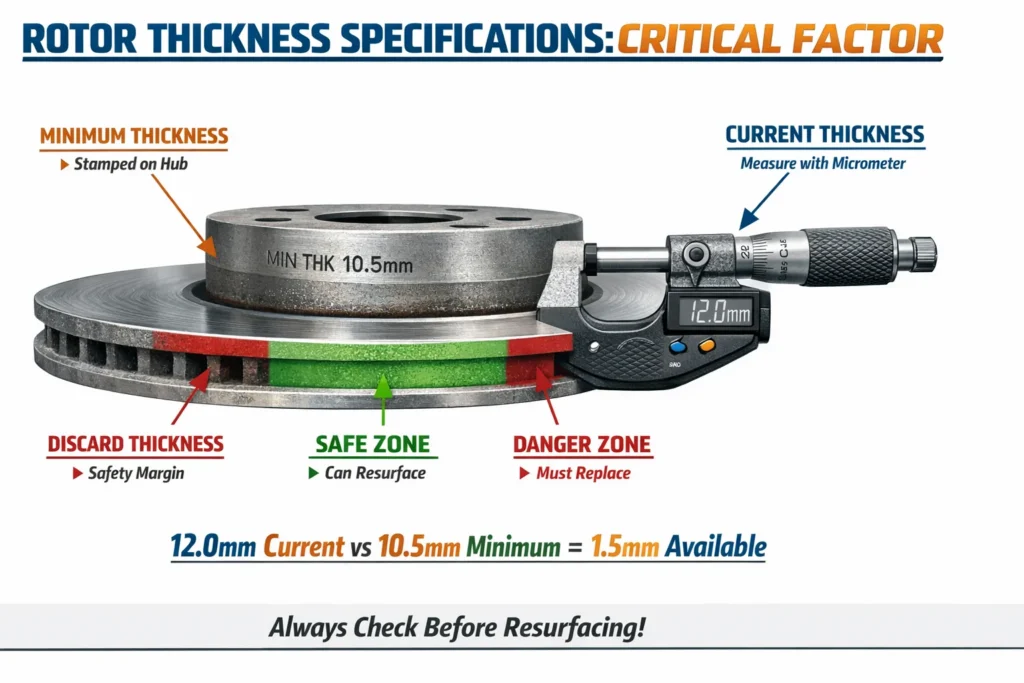
Each rotor is manufactured with a minimum thickness specification that determines whether resurfacing is possible. You’ll find this spec stamped on the rotor hub, or you might need to look it up with automotive software. Use a micrometer to determine the current thickness, then compare it with the minimum specification. If there’s sufficient difference, the rotor may be able to be resurfaced safely. If your rotor is thinner than the minimum specification, or if it will be after the resurfacing process, replacement becomes necessary.
Overall Rotor Condition Assessment
Beyond thickness measurements, you should evaluate the rotor’s overall condition by asking these critical questions:
- Is there lots of flaky rust along the edge or in the vents?
- Did the rotor require forceful removal from the hub, potentially warping it?
- Are the grooves deep on the rotor’s surface?
- Is the runout on the rotor too great to cut away without surpassing the discard thickness level?
Answering ‘yes’ to any of these questions could mean replacements are the better option, as some rotors simply can’t be saved through brake resurfacing.
Benefits of Properly Resurfaced Rotors
When done correctly by qualified professionals, brake rotor resurfacing can be a successful way of saving money since it’s often lower cost than replacing the rotor entirely. The advantages of brake rotors resurfacing extend beyond immediate cost savings:
- Extended brake pad lifespan: A rough rotor surface can eat up brake pads prematurely, often tens of thousands of miles sooner than a fresh rotor surface
- Smooth, efficient braking performance: Experience shorter stopping distances and a smoother, less fatiguing drive when you resurface rotors
- Reduced noise and vibration: Eliminate the embarrassing feeling of squealing or grinding brakes in traffic
- Cost-effectiveness: Save money compared to complete rotor replacement when conditions are appropriate
- Environmental benefits: Reduce metal waste by extending the life of existing components
- Maintained vehicle safety: Ensure proper braking system function through restored surface quality
Brake Resurfacing vs. Replacement: Making the Right Decision
| Factor | Brake Rotor Resurfacing | Rotor Replacement |
| Cost | Lower cost option | Higher upfront investment |
| Rotor Condition | Good condition, adequate thickness | Below minimum thickness or severe damage |
| Surface Issues | Minor to moderate wear, shallow grooves | Deep grooves, excessive runout |
| Expected Results | Restored performance with existing rotor | Brand new component lifespan |
| Best Application | Regular maintenance, minor imperfections | Significant damage, insufficient material |
Common Misconceptions About Rotor Resurfacing
If you planning to resurface your rotors resurfaced, then there are several misconceptions that might line-up. Understanding what does it mean to resurface rotors can also mean dispelling common myths about the process.
Myth 1: Resurfacing is always necessary whenever replacing Brake pads
The first misconception is that it is always necessary to resurface the rotors every time brake pad is changed. As a matter of fact, when the rotors are seen to be plain and in good shape and there are no vibrations or other symptoms, one can just fit new brake pads without having to resurface the brake.
Myth 2: Every Rotor can be saved
No, it is impossible to save every rotor through brake rotor resurfacing. Sometimes, the runout on the rotor is so extensive that it is not safe to cut away without venturing to less than the discard thickness level, or the grooves are so deep that it is not safe to be machined out safely. In such situations, the only thing that can be done is through replacement.
Myth 3: Resurfacing is always cheaper
You should know when to re-surface and when to change rotors. Re-surfacing of rotors is not always cheaper than actually replacing them, particularly in the context of the life-span of the repair. When a rotor is close to its minimum thickness, resurfacing can only offer a temporary solution before replacement become necessary anyway.
The Professional Resurfacing Process
Professional brake resurfacing follows a systematic approach to ensure optimal results. Technicians begin by measuring rotor thickness using precise instruments, then carefully remove the wheel and caliper assembly to access the rotor. The rotor is secured onto a specialized brake lathe machine, where precision cutting tools remove material uniformly from both rotor faces. A proper non-directional finish is applied to prevent noise and ensure optimal brake pad break-in. Finally, rotors are measured again to verify proper thickness specifications before cleaning and reinstallation.
Conclusion
If you are looking for a valuable maintenance option than the Brake Rotor surfacing would be a good option. Knowing what resurface rotors means and how it enables you to make informed decisions about the vehicle braking system is crucial. By often realizing issues like vibration noise, uneven wear, or glazed surfaces, resurfacing contributes to the better performance of the new or existing pads.
Nevertheless, resurfacing is not always the right choice as the badly worn, rusty or thin rotors must be changed in order to ensure good and safe braking performance. Proper checks and measurement is the right key to perform this action. When done at the right time, resurfacing your rotors can smoothen your driving experience by improve braking feel, reduce noise, and durable brake pad performance, letting you gain the confidence of braking power without pinching your pocket.
Frequently Asked Question
What does it mean to resurface rotors?
Brake rotor resurfacing is the process of removing the thin layer of metal from the rotor’s surface using the specialized lathe machine to restore a uniformly flat, smooth braking surface by eliminating imperfections like grooves, wrapping and uneven wear that develops within time.
How often should brake rotors be resurfaced?
The frequency of brake resurfacing usually depends on your driving habits and rotor quality. Rotors may need resurfacing during brake pad replacement or when the vibration or the squeaky sound appears. Incase if the rotors are in good condition than it is not necessary to perform the brake job.
Can all rotors be resurfaced?
No, not all rotors can be resurfaced. Rotors must have sufficient thickness above the minimum specification to allow material removal. Severely damaged rotors with deep grooves, excessive rust, extreme warping, or those already at minimum thickness require replacement instead of brake rotor resurfacing.
Is it better to resurface or replace brake rotors?
The Decision depends on the thickness and the condition of the rotors. Brake resurfacing is preferable when rotors have adequate thickness and minor imperfection. Replacement is necessary when rotors are below minimum specification. Severely damaged or when resurfacing would compromise safely.