Table of Contents
Have you ever thought Plymouth Cuda is the shorter name for Plymouth Barracuda or have you wondered that Plymouth Barracuda and Plymouth Cuda are the same? Well, no—both cars are not the same. Although all Cudas are technically Barracudas, not all Barracudas are Cudas. The 1969 addition of the ‘Cuda went a step further as a more performance-oriented version that was designed to be serious in its power and speed.
In this blog we will explain the differences between these two legendary nameplates, take a look at how both models evolved and make it clear how one can recognize each of them.
A Brief History of the Plymouth Barracuda
The Plymouth Barracuda started as an option package that was available on the Plymouth Valiant in 1964. The Plymouth Barracuda had become a model of its own by 1965, becoming a serious contender in the pony car niche of the market. The model has been released in 3 different generations:
1st Generation (1964-1966): Was offered as a Valiant variant, with fastback styling and limited engine choices.
2nd Generation (1967-1969): The A-body Barracuda was styled as a model of its own, had a more sports-oriented image and offered a wider range of powertrain options, including the renowned Chrysler 426 HEMI engine which debuted in 1968.
3rd Generation (1970-1974): Was the largest E-body car. The base engine available until the late 1960s was the 273 V8 and the 383 cubic inch big-block V8. By the 1970 and 1971 model years, the fearsome 440 Six Pack was added to the line-up, solidifying the Plymouth Barracuda as a true performance machine.
Plymouth Barracuda vs Cuda: What’s the Real Difference?
The name Cuda was first used in 1969 as a performance-oriented trim package of the Plymouth Barracuda—think of it the same way you would consider a Chevrolet Camaro to its Z28 version, or a Ford Mustang to the Shelby GT500. That is, all Cudas are Barracudas, but not all Barracudas are Cudas. The easiest method to differentiate them on a third generation vehicle is to verify the VIN:
- Plymouth Barracuda VINs start with BH
- Plymouth ‘Cuda VINs start with BS
In addition to the VIN, the Cuda car was distinguished by more aggressive graphics, badged hood scoops which advertised the engine beneath and access to the most powerful engine options that Chrysler had to offer. The 1970 and 1971 model years are regarded as the best, and a palette of 25 rich exterior colors were used—names like Lemon Twist, Vitamin C, and Lime Light are iconic.
Plymouth Barracuda vs. Cuda: Side-by-Side Comparison
The table below summarizes the key differences between the Plymouth Barracuda and the ‘Cuda at a glance:
| Feature | Plymouth Barracuda | ‘Cuda | Key Notes |
| Production Years | 1964–1974 | 1969–1974 | ‘Cuda was a Barracuda sub-model |
| Platform | A-body / E-body | E-body only | Shared E-body from 1970 |
| Focus | Daily/Performance | High Performance | ‘Cuda = max power |
| VIN Prefix | BH | BS | Easy identification tool |
| Base Engines | 273 V8, 383 V8 | 340, 383, 440 V8 | 426 HEMI optional on both |
| 426 HEMI Option | Yes (from 1968) | Yes | Most coveted engine option |
| Graphic Packages | Limited | Bold / Vibrant | Lemon Twist, Vitamin C, etc. |
Power That Set Them Apart: The ‘Cuda’s Legendary Engine Line-up
The engine choice was the heartbeat of what separated a normal Plymouth Barracuda from the top-shelf Cuda car. The high-performance Cuda trim offered customers the broadest—and the most powerful—lineup of V8 powerplants Chrysler ever built:
- 340-cubic-inch V8 – A small-block that was nimble and rev-happy and offered an excellent power-to-weight ratio
- 383-cubic-inch V8 – The most popular engine ordered in the Plymouth Barracuda cars of this period, balancing performance and driveability
- 440-cubic-inch V8 (Six Pack) – The triple two-barrel carburetor configuration was available on the 1970 and 1971 models, and produced frightening torque
- 426 HEMI – The crown jewel. Still celebrated today, the HEMI remains one of the most celebrated engines of all time
Unfortunately, 1972 marked the beginning of the downfall. Tightening emission controls depowered the big-block engines, leaving nothing but small-block V8s. The Plymouth Barracuda—and the ‘Cuda trim with it—was dropped completely after 1974.
Understanding Classic Muscle Car Context and Value
The Plymouth Barracuda vs Cuda comparison represents peak American muscle car engineering, similar to how understanding how many cylinders your car has helps identify engine specifications and performance potential. Just as the BMW 330i vs Mercedes C300 comparison helps luxury car buyers choose between German sedans, the Barracuda vs Cuda distinction helps classic car collectors identify authentic high-performance variants.
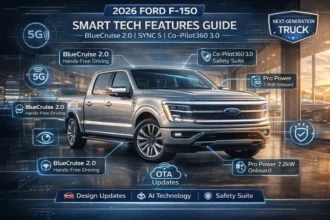
Similar to how the 2026 F-150 smart tech features represent modern truck evolution, the 1970-71 Cuda models represented the pinnacle of muscle car development. Following a comprehensive car maintenance checklist is crucial for preserving these valuable classic cars. When restoration or engine rebuilding becomes necessary, quality aftermarket suppliers like Tagore Auto Parts provide reliable remanufactured engines and transmissions suitable for classic muscle car restoration projects.
Collectability and Value of Plymouth Barracuda Cars
Original Plymouth Barracuda cars, particularly 1970 and 1971 Cudas, are some of the most expensive American muscle cars at auction today. The values are greatly dependent on a number of factors:
- Engine: A 426 HEMI-powered 1970 Barracuda Cuda will fetch millions at auction. Small-block cars are much less expensive.
- Numbers Matching: Cars whose original, documented engines and transmissions match factory records command large premiums.
- Color: Unusual factory finishes such as Vitamin C Orange or Plum Crazy Purple can add exponentially to the value of a car.
- Documentation: Build sheets, window stickers and broadcast sheets verify the original configuration of the car.
A non-HEMI Barracuda automobile with solid provenance can be a valuable investment. A 1970 Plymouth Barracuda ‘Cuda with a 340 V8 recently did not fetch its reserve of $47,777—an indication of how seriously collectors take these machines.
Conclusion
The Plymouth Barracuda represents one of the most thrilling periods in American muscle car history. From its early days as a Valiant option package to the thunderous, HEMI-powered Cuda car of 1970, it has developed into a true performance icon.
Appreciating the difference between Plymouth Barracuda cars and the Cuda is not only important when you appreciate the car, but it can also make a difference in terms of buying and selling or just appreciation of the vehicle. Whether you are dreaming of owning a numbers-matching 1970 Barracuda or just want to identify one at a car show, the information in this guide provides the basis to engage with confidence.
The era of Barracuda cars may be over; however, their legacy screams as loudly as it did in the minds of those who drove them and in the prices they fetch at auction.
Frequently Asked Questions
Is the ‘Cuda the same as the Plymouth Barracuda?
No. The Cuda was a high-performance trim package of the Plymouth Barracuda, launched in 1969. All ‘Cudas are Barracudas, but not all Barracudas are ‘Cudas. The VIN is the best method of verifying which one you have.
How do I tell if I have a real Cuda or a regular Plymouth Barracuda?
Check the first two characters of the VIN. Plymouth Barracuda VINs begin with ‘BH’ and Plymouth ‘Cuda VINs begin with ‘BS’. Other indicators include badged hood scoops and the bold graphics that are exclusive to the ‘Cuda trim.
What was the most powerful engine available in the 1970 Barracuda?
The most powerful engine available in the 1970 Barracuda was the 426 cubic inch (7.0L) Hemi V8 that produced approximately 425 hp and 490 lb-ft of torque. This engine is the most sought-after by collectors today.
When was the Plymouth Barracuda discontinued?
The Plymouth Barracuda was discontinued after the 1974 model year, exactly 10 years after its production began in 1964.
Are Plymouth Barracuda cars a good investment?
Yes, Plymouth Barracuda cars can be considered an excellent investment choice due to their iconic performance status and strong market demand. HEMI-powered and numbers-matching examples command the highest values, often appreciating significantly over time.
What was the fastest muscle car in 1971?
The Ford Torino Cobra 429 SCJ is often cited as one of the quickest and fastest muscle cars of 1971, though the 426 HEMI Cuda was also among the top performers of that era.