Table of Contents
A radiator cap is most commonly known as a pressure cap or coolant pressure cap. Is your vehicle’s cooling system acting up? You might expect the water pump, thermostat or radiator is to blame. However, one of the most overlooked culprits is the radiator cap a simple low-cost element that serves an over-sized purpose in maintaining the safe operating temperature of your engine. In this blog post we will delve into what are the signs that causes this trouble, how you can identify a bad radiator cap and when to seek a radiator cap replacement would save you lot of time and money in the future.
What Does a Radiator Cap Actually Do?
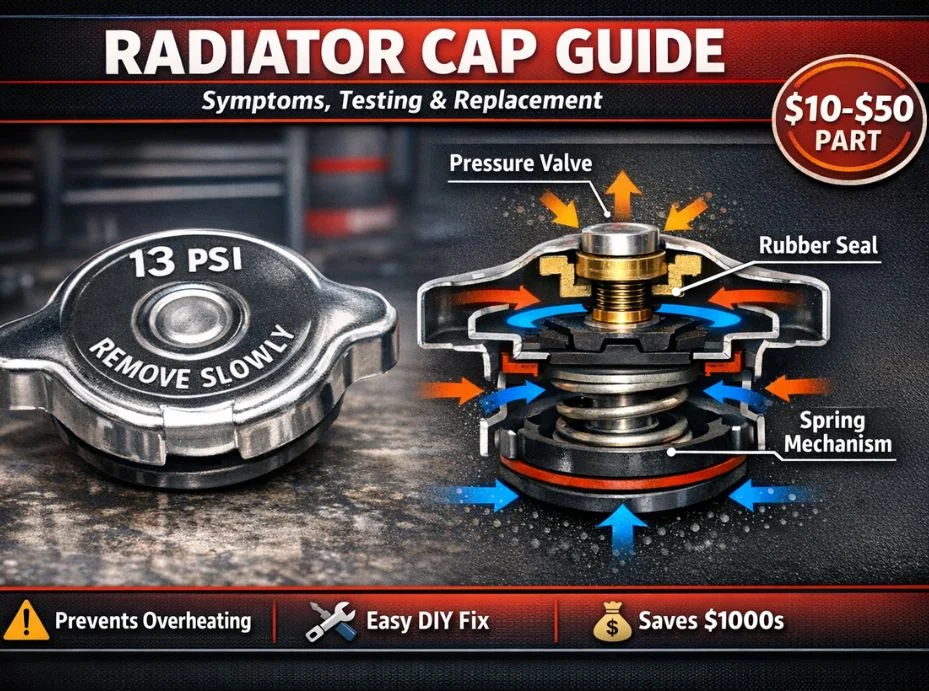
A radiator cap plays a crucial role in your cooling system by ensuring the right amount of pressure inside the radiator. It seals the system to avoid the spillage of the coolant and higher pressure which raises the boiling point of the coolant and this assists in avoiding overheating. The excess pressure is also controlled by the cap, which has the ability to release the coolant in the overflow reservoir and pulls it back into the radiator as the engine cools off. The radiator cap is so little yet so necessary since this part of the engine ensures that your engine is running at a proper and safe temperature.
Bad Radiator Cap Symptoms to Watch For
The early identification of bad radiator cap symptoms can help avoid the small issues turn into big engine problems. The most typical warning signs are as follows:
- Leaks of coolant: A broken pressure cap which is unable to hold a good seal will leak coolant which may leave visible spots or white deposits around the radiator neck.
- Engine overheating: When the coolant or air enters the system it decreases the cooling efficiency hence the engine becomes overheated.
- Broken or ruptured radiator hoses: When the radiator cap is faulty, it can result in out of bounds pressure variations that cause the hose to collapse during the cool-down phase or rupture due to pressure.
- Overfilling coolant tank: When the pressure is expelled too fast the overflow tank will not be able to hold the excess coolant resulting in its spilling over.
- Inefficient cooling: A less noticeable symptom, where the engine needs more time to get or stay at optimal temperature, is usually a faulty seal.
Signs of a Bad Radiator Cap vs. Other Cooling System Issues
It’s worth noting that many bad radiator cap symptoms overlap with other cooling system problems. The table below helps differentiate between a faulty pressure cap and other potential culprits:
| Symptom | Radiator Cap | Thermostat | Water Pump | Radiator |
| Coolant leak | ✓ | ✗ | ✓ | ✓ |
| Overheating | ✓ | ✓ | ✓ | ✓ |
| Collapsed hose | ✓ | ✗ | ✗ | ✗ |
| Overflowing reservoir | ✓ | ✗ | ✗ | ✗ |
| No heat from heater | ✗ | ✓ | ✓ | ✗ |
| Coolant discoloration | ✗ | ✗ | ✓ | ✓ |
How to Inspect a Damaged Radiator Cap?
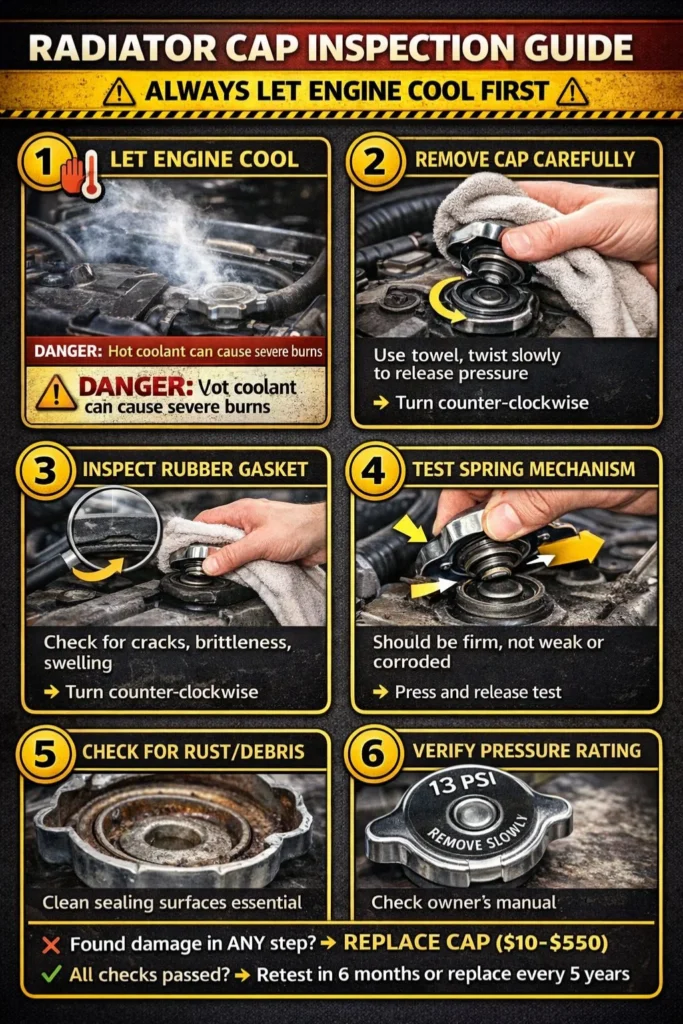
Checking your radiator cap is a straightforward process, provided you follow one critical safety rule:
- Allow the engine to cool down – Do not open the pressure cap when the engine is hot or you will get burns due to the pressure coolant
- Carefully take off the cap – always twist it to discharge the pressure. Inspect the rubber gasket- Check the gasket as having cracks, brittle, swollen, or worn out.
- Check spring mechanism – Make sure that the spring is firm, not loose, weak or corroded.
- Check rust or debris – Search the rusting on the sealing surfaces.
- Check pressure rating – When filling make sure the pressure cap is the correct pressure rating as recommended by your vehicle maker.
- Change where necessary – In case of any damage or weakness, change the cap as it is a cheap but very important part.
When Should You Schedule a Radiator Cap Replacement?
Although you can’t see any clear sign that your cap may have a bad radiator cap, preventive replacement is a good sign. Majority of the manufacturers and cooling system experts suggest that the cap should be replaced every five years whether it is visible or not. According to Consumer Reports‘ car maintenance guidelines, preventive replacement of small, inexpensive parts like pressure cap can prevent thousands of dollars in major engine repairs. The rubber pieces wear out with time and a rubber cap that seems to be fine can still be unable to maintain the correct amount of pressure. You should opt for immediate replacement if you see the following signs:
- There is overheating of your engine even though your thermostat is working and the coolant is sufficient.
- You have coolant pooling under your car without any apparent hose or gasket leak.
- Your coolant tank is always drying out or overflowing.
- There is visible damage on the cap during inspection.
Choosing the Right Replacement Cap
Radiator caps are not all interchangeable. Every cooling system is set to work within a specific pressure range and using a pressure cap with incorrect pressure rating can be as troublesome as using a broken one.
- Look up your owner manual on the recommended pressure rating of the manufacturer.
- Test the pressure rating of your current cap which is normally imprinted on the pressure cap itself.
- Physically compatible designs of caps differ between model and make of vehicle.
- Compromise on price and go with quality because a low cap might not hold constant pressure in the long run.
A higher-pressure cap can be suitable in high-performance or performance modified engines that produce more heat, provided that the components of the system are rated to operate under higher pressure.
Conclusion
Radiator cap can be small in size but its influence on the cooling system of your vehicle is enormous. A functional cap is necessary in ensuring the well-being of the engine, whether through maintaining engine pressure or avoiding chilled out coolant. However, staying aware of the bad cap signs (overheating, coolant leakages, hose failures and overfilled radiator tanks) helps you to save a lot of money on repairs and help maintain your engine functioning, you can be sure of this by remaining mindful of the bad cap symptoms (overheating, coolant leakages, hose failures, and overflowing radiator tanks) and by scheduling a timely pressure cap replacement.
If you need quality replacement parts including OEM pressure cap, browse our selection of reliable automotive components. Unless you are certain that your cap is in good condition, then a test of pressure and an examination should be conducted by a qualified technician. It is a mere test that might save your engine.
Frequently Asked Questions
Is it possible to drive with a defective radiator cap?
It’s not recommended. Defective radiator cap may cause loss of coolant and overheating that could result in severe damage to the engine within a short period of time.
In what ways do you know how much a radiator cap replacement costs?
The rad caps tend to be cheap which varies between 10-50 dollars depending on the type of car and the cap features. It is one of the cheapest maintenance products that can be changed.
Does that mean that a broken radiator cap will make my car overheat despite having sufficient coolant?
Yes. A non-capable of keeping the proper pressure reduces the boiling point of the coolant and may allow air to enter the system which decreases its cooling efficiency and may lead to overheating.
Is there a difference between the radiator cap and the coolant reservoir cap?
Not always. There are those vehicles that have a separate Cap of the coolant reservoir which does not pressurize the system. In pressurized systems, however, the reservoir cap can do the same job as a radiator cap.