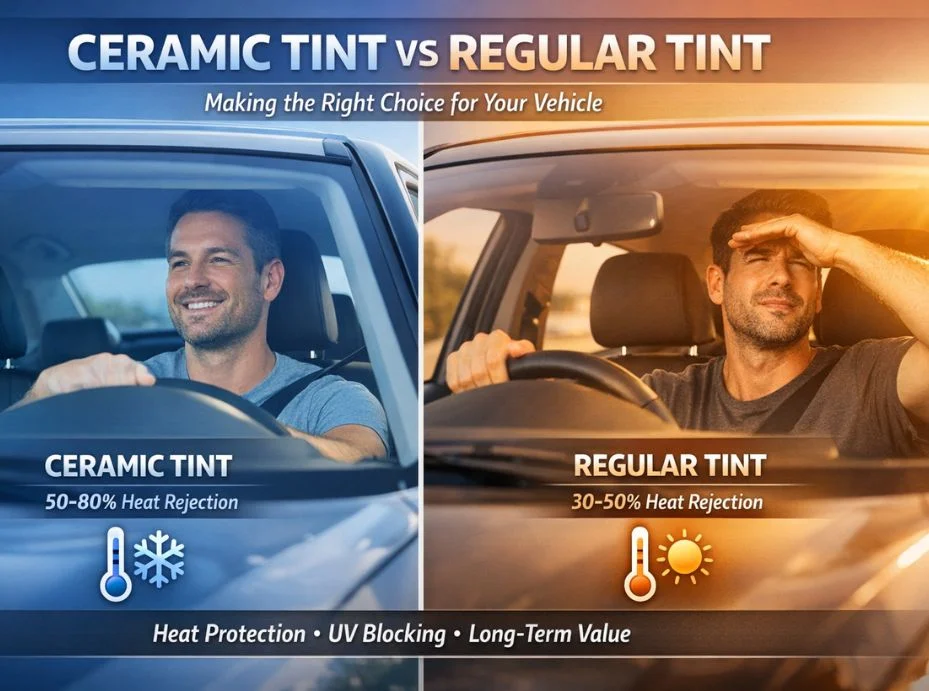
Wishing to protect your vehicle’s interior without compromising on comfort than surely window tinting can be considered one of the most feasible upgrade option for you. Nevertheless, as there are several alternatives on the market, the question of ceramic tint or regular tint has become an even greater concern among the car owners. Knowing the differences in these two popular tinting options would enable you to make informed choices that would suit your needs, budget and shape your driving condition.
The window tinting technology has advanced greatly over the years and the current drivers now have more advanced solutions much more than the simple privacy. No matter whether it is scorching summers, harmful UV light or you just want to decrease glare during your daily commute, choosing the right tint can significantly improve your driving experience. This detailed manual will discuss the major distinctions between the ceramic vs regular tint, ceramic tint vs metallic help you to decide which solution provides the best value for your specific situation.
What Is Window Tint and How Does It Work?
All automotive window tints use a thin polyester-based film (PET) applied to the inside of vehicle glass. This film controls the amount of sunlight, heat, and UV radiation entering the cabin. The difference lies in the materials used within the film this is where ceramic tint vs regular tint truly diverges in performance. Regular tints rely on dyes or metallic particles, while ceramic window film uses advanced nanotechnology to block heat and UV rays without metal or color distortion.
What is Ceramic Tint?
Ceramic tint is a high quality window film made with the use of microscopic ceramic particles in its construction. These nano-ceramic particles are non-conductive and non-metallic and thus enable the film to block infrared heat and ultraviolet rays with outstanding performance. Unlike usual tints that rely on dyes or metal layers, ceramic window film achieves its protective property through advanced material science.
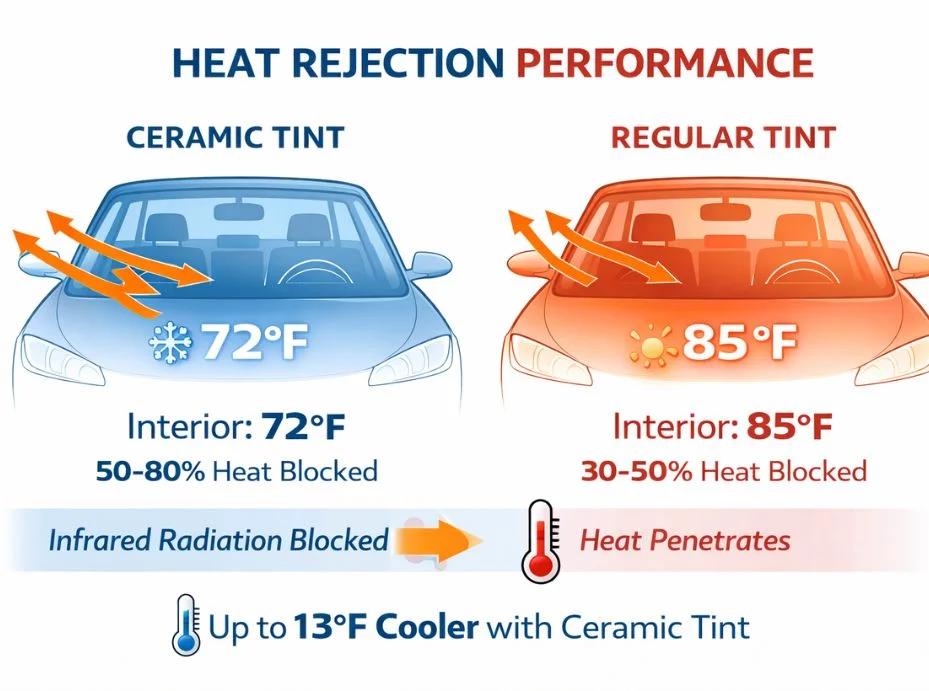
The ceramic particles are incorporated all over the film forming a wall that reflects infrared radiation with a high optical transparency. This technology allows ceramic tint to block upto 99 percent of harmful UV rays, and much more heat infrared radiation while keeping excellent optical clarity. As a result, is a cooler interior, less sun damage, and more comfort without the excessive dark tinting.
Ceramic Tint Vs Metallic and Regular Options: A Detailed Comparison
| Feature | Ceramic Tint | Metallic Tint | Regular (Dyed) Tint |
| Heat Rejection Performance | Blocks 50%–80% of infrared heat, keeping cabin noticeably cooler even in hot climates | Better than dyed tint but still less effective than ceramic | Blocks 30%–50% of heat |
| UV Protection | Blocks up to 99% of harmful UV rays, protecting skin and interior | Moderate UV protection, less than ceramic | Typically blocks 40%–60% of UV rays |
| Visibility & Clarity | Excellent optical clarity; lighter shades still provide strong heat and UV rejection | Can reduce glare but may slightly affect clarity | Often requires darker shades for heat reduction, impacting nighttime visibility |
| Durability & Longevity | Highly resistant to fading, bubbling, and discoloration; often lasts the lifetime of the vehicle | More durable than dyed tint but not as long-lasting as ceramic | Prone to fading, turning purple, bubbling, and peeling over time |
| Electronic Compatibility | Non-metallic and non-conductive; no interference with GPS, phones, radio, or toll tags | Can interfere with electronic signals due to metallic layers | No electronic interference |
| Cost (Full Vehicle) | $300–$800 (higher upfront cost) | Mid-range pricing | $100–$400 (most affordable) |
| Long-Term Value | High—less need for replacement and improved cabin cooling can reduce AC usage | Moderate | Lower—may require replacement after a few years |
Which Option is Right for You?
Choosing between ceramic tint vs regular tint ultimately depends on your priorities, budget, and driving conditions. Ceramic window film is the superior choice if you:
- Live in a hot, sunny climate with intense sun exposure
- Want maximum UV and heat protection
- Prefer long-term value over upfront savings
- Rely heavily on electronic devices while driving
- Desire the best optical clarity and visibility
Regular tint makes sense if you:
- Have a limited budget for vehicle upgrades
- Live in moderate climates with less intense sun
- Primarily want privacy and glare reduction
- Drive an older vehicle where long-term durability is less critical
The debate of ceramic tint vs metallic films is especially relevant for modern vehicles packed with electronics. Metallic tints reflect heat effectively but come with drawbacks like signal disruption and reflective appearance.
Ceramic window film outperforms metallic tint by:
- Blocking heat without signal interference
- Maintaining clear visibility day and night
- Offering longer-lasting performance
For most modern vehicles, ceramic tint vs metallic comparisons strongly favor ceramic films due to their advanced, non-metallic construction.
Tips For proper care and maintenance
Regardless of which option you choose, proper maintenance ensures optimal performance and longevity:
- Wait before rolling down windows: Allow 48-72 hours after installation for the adhesive to cure completely
- Use gentle cleaning products: Always use ammonia-free glass cleaners to prevent film damage
- Use a soft cloth: Using a microfiber towel to clean it off. Avoid scrubbers and paper towers.
- Regular Check-ups: Make sure to check it regularly for bubbling and fading, addressing issues.
For comprehensive vehicle care tips beyond window tinting, explore our car maintenance checklist 2025 to keep your entire vehicle in optimal condition.
Conclusion
The ceramic tint vs regular tint is a choice between high quality performance and low-cost functionality. Although the use of regular tints still remains a viable option in providing a simple solution to the much-needed privacy as well as glare-reduction solutions, the comeback of ceramic window film proposes a new benchmark in the area of heat-rejection, UV-reduction, and long-term longevity. Ceramic tint is the obvious winner because it gives the best protection against heat and UV rays particularly in hot areas whereas its initial cost is higher.
The increased comfort, increased long life, and non-electronic disturbance make it a valuable investment to several car owners. However, regular tint is also an option that can be chosen by those drivers who are budget-conscious and needs basic tinting benefits without premium features. When making your decision, you should look at your unique needs, driving circumstances and long term plans with the vehicle. Ceramic or regular tint, no matter the choice you have, you will have a better comfortable, privacy and protection of the inside of your vehicle. Visit to the nearby car store to negotiate your choice and have them professionally installed making your car last long for years to come.
For those maintaining their vehicles with quality replacement parts, explore our selection of used engines from trusted brands like Honda, Toyota, Ford, and Chevrolet.
Frequently Asked Questions
Is ceramic tint worth the extra cost?
If your priority is heat rejection, durability and electronic compatibility than ceramic tint offers can be an excellent choice despite higher upfront cost.
Can I install window tint myself?
Yes, you can install window tint own your own but installing window tint with the help of a professional can be more satisfying and accurate.
Will window tint affect my car’s resale value?
Yes, high quality professionally installed window tint can increase your resale value by demonstrating good vehicle maintenance and protecting the interior from sun damage.
How long does ceramic tint last?
Along with proper care and maintenance the ceramic tint can last up to 10-12 years.
Does darker tint provide better heat rejection?
No, Ceramic tint can provide excellent heat rejection even in lighter shades. Darkness affects visible light transmission and privacy more than heat rejection capabilities.