A coolant leak is one of the most common and most overlooked issues car owners encounter. What starts as a small drip under the car can quietly escalate into engine overheating, head gasket failure, or even total engine seizure if ignored. Whether you’ve noticed coolant dripping in your driveway, car radiator fluid leaking after a long drive, or you’re simply trying to understand why your temperature gauge keeps climbing, this guide walks you through every cause, diagnosis step, and coolant leak repair option available—from a simple rad leak fix to full cooling system repair.
If you need quality parts or expert guidance, Tagore AutoParts—a trusted auto parts store across the USA—has the components and knowledge to keep your cooling system running reliably.
What Causes a Coolant Leak?
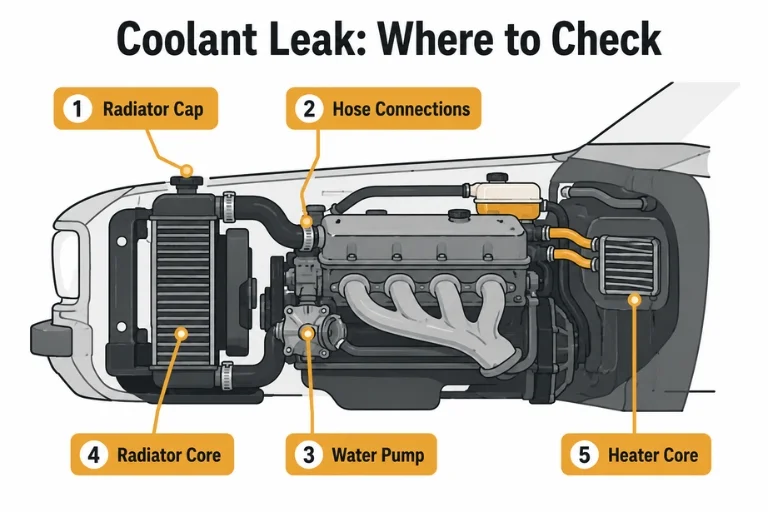
It helps to know where leaks are often found before you can fix a coolant leak in your car. The cooling system is a series of hoses, seals, and components, all of which are constantly under pressure and heat cycling, and any weak point will eventually fail:
- Worn or cracked radiator hoses—Rubber also deteriorates with age from exposure to heat, becoming brittle and cracking
- Failing radiator cap—A worn cap can’t maintain proper system pressure, allowing coolant to escape or boil over
- Corroded radiator core—Internal corrosion or external road debris damage can puncture the radiator itself
- Water pump seal failure—The water pump’s internal seal wears out over time, often the source of a slow, persistent drip
- Damaged heater core—A leaking heater core can cause coolant to seep inside the cabin, often with a sweet smell
- Loose or corroded hose clamps—Connection points can loosen with vibration and age, allowing slow seepage
Warning Signs of a Coolant Leak
Catching a coolant leak early prevents costly engine damage. Watch for these signs:
| Symptom | What It Indicates |
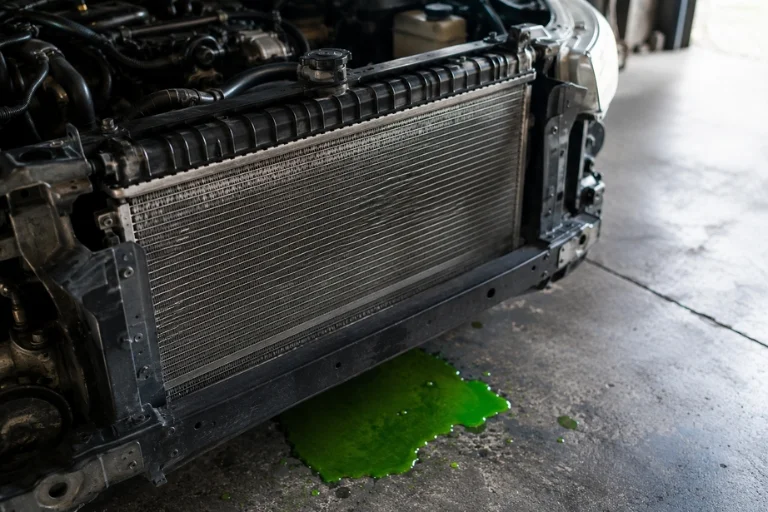
| Puddle of green, orange, or pink fluid under the car | Active coolant dripping from a hose, radiator, or seal |
| Sweet smell inside or outside the vehicle | Coolant leaking near the engine or heater core |
| Engine temperature gauge climbing | Coolant loss reducing cooling system effectiveness |
| Low coolant warning light | Sensor detecting reduced coolant level in the reservoir |
| White steam from under the hood | Coolant contacting hot engine components |
| Frequent need to top off coolant | Slow, ongoing leak somewhere in the system |
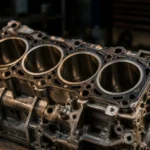
If your engine begins to overheat repeatedly despite topping off coolant, it’s worth having the system pressure-tested before damage spreads to the head gasket or engine block. In severe cases where overheating has already caused internal damage, a quality used engine replacement may be more cost-effective than repeated repairs.
How to Diagnose a Coolant Leak
- Visual inspection—Check under the car for fresh puddles and inspect hoses, the radiator, and water pump area for wet residue or dried mineral deposits
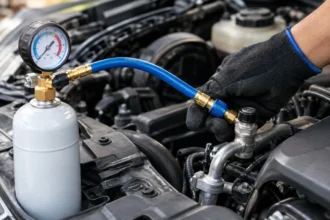
- Pressure test the cooling system—A cooling system pressure tester reveals exactly where pressure is escaping, even from leaks too small to see
- UV dye test—Adding UV-reactive dye to the coolant and inspecting with a blacklight reveals the precise leak location, especially for hard-to-spot internal leaks
- Check the reservoir and radiator cap—A cap that won’t hold pressure properly is a common and easily fixed cause of a rad leak fix scenario
- Inspect for white residue—Dried coolant often leaves a white or rust-colored crusty residue at the leak point, even after the puddle has evaporated
Coolant Leak Repair Options
The right coolant leak repair depends on where the leak originates and how severe it is.
Option 1: Hose and Clamp Replacement
The most common and affordable fix is to replace the hose and clamp. If coolant dripping traces back to a cracked hose or loose clamp, replacement typically costs $50–$200, including parts and labor, and can often be done as a DIY repair in under an hour.
Option 2: Radiator Cap Replacement
A simple, inexpensive fix. A new radiator cap costs $10–$30 and resolves pressure-related coolant loss often without any other repair needed.
Option 3: Water Pump Replacement
If the water pump seal is the source, replacement costs $300–$700 depending on the vehicle make and labor accessibility, since many water pumps are located deep within the engine and require significant disassembly.
Option 4: Radiator Replacement or Sealant
For a car radiator fluid leaking from a small puncture or seam, a radiator sealant product can provide a temporary fix for $10–$25. For larger leaks or corrosion damage, full radiator replacement runs $300–$900.
Option 5: Head Gasket Repair
If the leak is internal — that is, coolant disappearing without an external puddle — a failing head gasket may be the cause. This is a more serious repair requiring professional diagnosis and typically costs $1,200–$2,500. For high-mileage vehicles, replacing the engine with a quality used engine can be the smarter financial choice over extensive internal repair.
DIY Rad Leak Fix: Step-by-Step
For a minor external coolant leak, here’s a basic DIY approach:
- Let the engine cool completely—Never work on a hot, pressurized cooling system
- Identify the leak source—Use the diagnosis steps above to confirm exactly where the leak originates
- Replace the damaged hose, clamp, or cap—These are the most beginner-friendly fixes
- For radiator core leaks, consider a stop-leak sealant—Follow product instructions exactly, including required idle time
- Refill with the correct coolant type—Mixing incompatible coolant types can cause chemical reactions that damage seals
- Bleed the cooling system of air—Trapped air pockets can mimic leak symptoms and cause overheating
- Monitor closely for several days—Check coolant levels daily to confirm the fix has held
Cooling System Repair: When to Call a Professional
While many coolant leak fixes are DIY-friendly, certain situations call for professional cooling system repair:
- The leak source can’t be identified through visual inspection or pressure testing
- The leak appears to be internal (head gasket, intake manifold gasket, or block crack)
- The engine has already overheated and may have sustained internal damage
- The water pump requires replacement and isn’t easily accessible
- Multiple cooling system components show signs of failure simultaneously
If a coolant leak has caused transmission overheating — which is common in vehicles where the transmission cooler runs through the radiator — it’s worth inspecting the entire drivetrain. Tagore AutoParts stocks a wide range of used transmissions to support complete drivetrain repairs when needed.
Preventing Future Coolant Leaks
- Inspect hoses and clamps annually—Catch brittle or cracking hoses before they fail completely
- Replace coolant on schedule—Typically every 30,000–50,000 miles, as old coolant becomes acidic and corrodes seals
- Watch the temperature gauge—Address rising temperatures immediately rather than waiting for a visible leak
- Use the correct coolant type—always match your vehicle manufacturer’s specification
- Address small leaks immediately—A minor seep today prevents a major cooling system repair tomorrow
For vehicles with chronic cooling system issues despite repairs, particularly older high-mileage vehicles, browse Tagore AutoParts’ selection of used Toyota Camry engines and other popular models—sometimes a fresh engine is more reliable than chasing repeated leaks on a worn-out one.
Conclusion
If you catch the leak early and diagnose it properly, you won’t have to pay a big bill for a repair. Whether it’s a quick rad leak fix at home or a professional repair for something more serious, knowing your options helps you make the right choice—from simple hose replacements to full cooling system repair. Keep an eye on your coolant level and fix drips as soon as you see them, and your engine will thank you with years of reliable service.
Whether you are in need of cooling system parts, complete used engines and transmissions, or any other auto parts, Tagore AutoParts is your reliable auto parts supplier to customers around the country.
Frequently Asked Questions
Why is my car leaking coolant but not overheating?
A slow coolant leak may not cause immediate overheating if the system still has enough fluid to function. However, the leak will worsen over time, so it should be addressed before it becomes a bigger problem.
Can I drive with a small coolant leak?
A very minor leak may allow short-term driving if you monitor coolant levels closely, but it’s best to repair it promptly. Driving with low coolant risks overheating and serious engine damage.
What does it mean if coolant is dripping from underneath the car?
Coolant dripping from underneath usually points to a hose, radiator, or water pump issue. A visual inspection or pressure test will confirm the exact source.
How much does coolant leak repair typically cost?
Costs vary widely depending on the source — from $10 for a radiator cap to $700+ for a water pump, with internal leaks like a head gasket costing significantly more.
Is a rad leak-fix sealant a permanent solution?
No, radiator sealant products are generally a temporary fix for minor leaks. For lasting reliability, the damaged component should be properly repaired or replaced.