Table of Contents
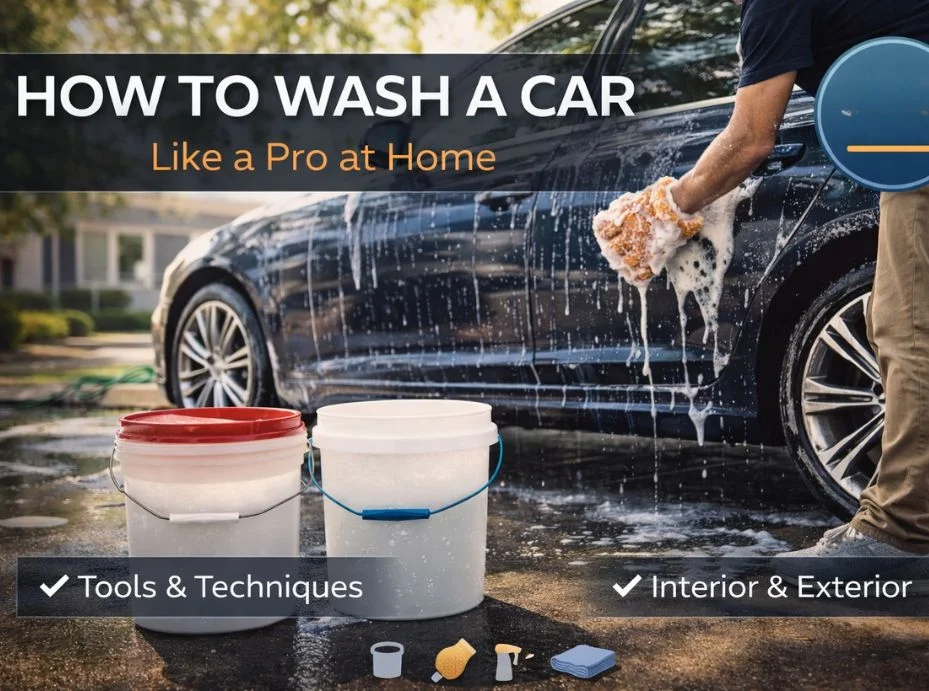
Knowing how to wash a car properly is one of the most valuable skills one can have. A regular wash not only keeps your car clean but it actively protects your vehicle from rust and other debris formation. Yet most drivers either skip the process entirely or rely on machine washing which can often lead to swirl marks and scratches over time. In this comprehensive guide we will acknowledge how to wash a car at home using professional techniques, the right car wash kit and step by step guide covers it all.
Why Proper Car Washing Matters
A proper car washing is far beyond the daily rituals to keep your car going ahead. Over time, corrosive contaminants such as road, salt, mud, bird dropping, tree sap and industrial fall out might settle down on your car leaving your car slowly eat through the paint and clear the coat which may lead to rust formation and oxidation.
Washing your car on a regular basis can help you keep the paint finish and overall integrity of the car. Clean windows, mirrors and headlights are also very crucial in terms of safety, because any dirt accumulation may severely limit the visibility and effectiveness of the headlights especially when driving at night or under bad weather.
Moreover, it is also good to maintain a clean exterior which will help in safeguarding resale value because a well maintained car will be an indication that the car is adequately taken care of, and it may fetch a better price in the market. Routine washing may also help you check whether your car has scratches, dents or rust forming spots. For more information on maintaining your vehicle’s condition, check out our complete car maintenance checklist.
Build Your Essential Car Wash Kit
Washing a car properly requires the right tools before you can know how to do this correctly. One of the most common errors is the use of household sponges or dish soap and it will strip your paint and might scratch it. A decent car wash kit would comprise the following:
- pH-neutral car wash soap – safe on paint, wax, and ceramic coating
- Two heavy buckets with dirt tap screens -the basis of the two bucket technique
- Soft-microfiber wash mitt -lifts without scratching
- Specialized tire brush and wheel brush. Bug and tar remover of hard-to-clean residue
- Microfiber drying towels (no less than two)
- Drying aid or quick detailer spray
- Glass cleaner for windows
- Dressing tires to a complete appearance
Best Conditions for Washing Your Car
Washing car with water in the wrong conditions can cause more harm than good. Use this quick reference:
| Condition | Ideal Range | Risk if Ignored |
| Temperature | 50°F – 90°F (10°C – 32°C) | Soap dries too fast or water freezes |
| Sunlight | Shade or overcast | Water spots and premature soap drying |
| Time of Day | Early morning or evening | Direct UV accelerates evaporation |
| Frequency | Every 2–4 weeks | Paint damage from contaminant buildup |
| Surface | Absorbent ground or driveway | Runoff and environmental impact |
How to Wash a Car: Step-by-Step Exterior Process?
Follow these steps for a professional-level exterior wash every time:
Step 1 — Pre-Rinse: Begin with washing car with a mild soap or detergent.
Step 2 — Clean the Wheels First: Brake dust and dirt are also built up on wheels and it may be contaminated your wash mitt. Apply a specific wheel cleaner and brush and thoroughly rinse it down before coming in touch with the body panels.
Step 3 — Remove Tough Residue: Use bug and tar remover on any difficult to remove splatter or sap on the trees. Allow it to rest one minute, and then rinse. This is absolutely a necessary step in the hand car washing before you go and use your wash mitt.
Step 4 — The Two-Bucket Method: This is the most significant method of knowing how to wash a car safely. Prepare the following: one bucket of soapy water (1-3 oz of pH-neutral soap) and one of clean rinse water. Insert a dirt trap screen at the bottom of them. Once the panels have been washed rinse your mitt in the clean bucket and reload it with soap. This prevents the recontamination of your paint by grit.
Step 5 — Laundry Strauss Top to Bottom: Starting at the top and work downward- in this way the dirt is removed by gravity on previously cleaned areas. Take straight overlapping strokes (never circular) to kill swirl marks. This method is particularly important in studying how to clean a car with a dark finish in it.
Step 6 — Rinse and Dry: Wash completely and dry instantly using two microfiber towels one to remove large amounts of water and another to dry off the remaining portion of water. It should not be air-dried, as it will leave the deposits of minerals and spots of water. Mirrors and emblems concealed in water should be sprayed by compressed air.
Exterior Cleaning Products Comparison
| Product Type | Best For | Example Brands | Price Range |
| pH-Neutral Shampoo | All paint types | Meguiar’s Gold Class | $10–$20 |
| Quick Detailer | Light dust | 303 Touchless | $15–$25 |
| Clay Bar Kit | Contaminants | Mothers Kit | $20–$40 |
| Wax/Sealant | Protection | Collinite 845 | $15–$30 |
How to Wash Cloth Car Seats?
Interior cleaning is an often-overlooked part of a complete car wash. Knowing how to wash cloth car seats properly can dramatically improve your car’s smell, hygiene, and comfort. Follow these steps:
- Vacuum thoroughly.
- It should be spot-cleaned using upholstery shampoo.
- Deep refresh with steam clean or wet vac.
- Air dry it thoroughly to prevent mildew.
- The cleaning of these parts of the upholstery by hand car increases the life of upholstery years.
When you wash cloth car seats, avoid soaking the fabric excessively, over-saturation can promote mold growth beneath the cushion. Always test cleaners on an inconspicuous area first.
How to Clean Leather Car Seats?
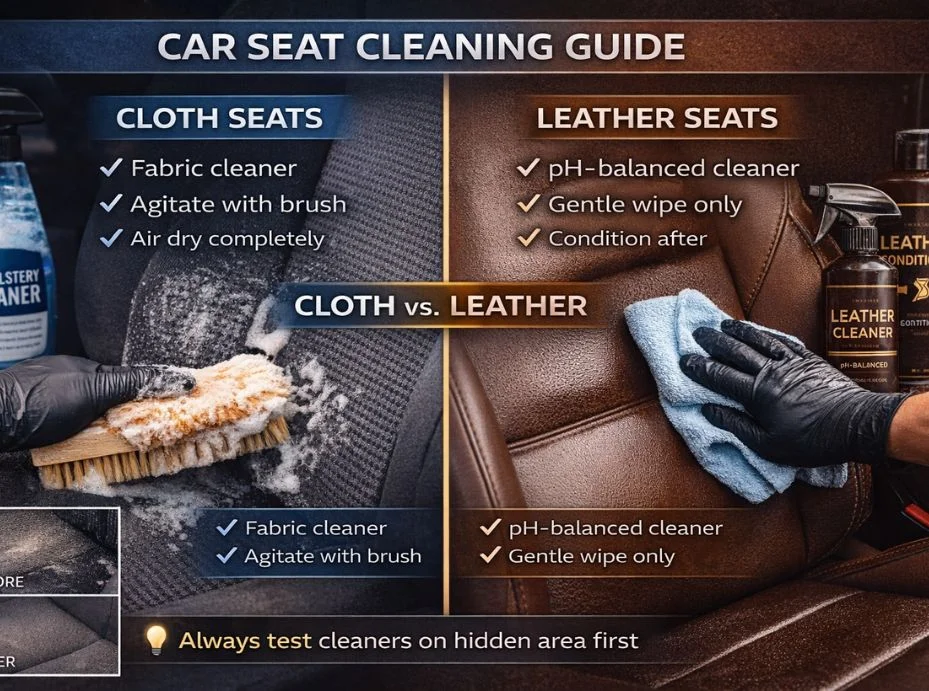
Leather needs an extra care and approach, so this is how you can clean leather car seats without cracking, fading, or discoloring them:
- First convince the vacuum crevices to remove crumbs and debris that may scratch during cleaning.
- Spray a pH-balanced leather cleaner but avoid it directly spraying on the seat.
- Wipe in circular motions, which are soft and in small segments to prevent the re-deposition of dirt.
- Use a soft-bristle detailing brush for Stitching and textured grain areas.
- Clean with a clean damp cloth.
- Complete the task with an excellent leather conditioner to make it moist and prevent cracking.
The car seat material is made of leather avoid using household items, such as baby wipes, vinegar, or dish soap, as they will remove the natural oils and coating in the leather, which provides protection against oil and grease. Repetitive conditioning after every 1-3 months maintains the material supple and extend its life span further.
Cloth vs. Leather Seat Care: Quick Comparison
| Factor | Cloth Car Seats | Leather Car Seats |
| Cleaner Type | Fabric upholstery cleaner | pH-balanced leather cleaner |
| Application Method | Spray on fabric, agitate with brush | Apply to cloth, wipe gently |
| Drying | Air dry fully, avoid over-wetting | pat dry with clean microfiber |
| Conditioning | Not required | Required every 1–3 months |
| Stain Sensitivity | Moderate — absorbs spills quickly | Lower — easier to wipe clean |
| Frequency | Monthly or as needed | Monthly clean, quarterly condition |
Pro Tips for Better Results
- Use a foam cannon beforehand car cleaning to pre-loosen dirt without contact
- Apply a clay bar after washing to remove bonded contaminants and prep for waxing
- Spray a quick detailer between full washes to maintain the shine and add protection
- Always wash microfiber towels separately, without fabric softener, after each use
- Use a boar’s hair brush for delicate areas like badges, trim, and emblems
- Check your work under different lighting to catch missed spots or streaks
Conclusion
Learning to wash a car in your own house is among the best investments that you can make as a vehicle owner. Since it involves washing your car with water and pH safe soap in the so-called two bucket technique, to the understanding of how to clean cloth car seat, how to clean leather car seat without damaging it, all these steps are helping you to make sure that your car is in the best condition.
Assemble a great car wash pack, put it in the right sequence and make hand washing of cars a habit. Your effort will be reflected in your paint, your seats and your resale value. For maintaining other aspects of your vehicle, explore our guides on touchless car wash alternatives and essential car maintenance tips. If you need quality replacement parts for your vehicle, visit Tagore Auto Parts for OEM and remanufactured components. Ready to get started? Take your own supplies, go to a shady place and give your car the treatment it deserves and you will be surprised at the outcome.
Frequently Asked Questions
How often should I wash a car?
Most drivers should drive after every 2-4 weeks. Assuming that you are driving in difficult conditions salty winter roads, copious dust, and frequent highway driving then set a goal of every two weeks so the paint does not suffer.
Is it possible to clean a car using only water and no soap?
Spraying water over the car is sufficient to clean the light dust, but not oils, tar or brake dust. To get the contaminants without scratching, you require a pH-neutral soap which is safe and does not scratch. A waterless car wash spray is more appropriate in case of very light dirt between the washes.
What comes in the beginner’s car wash kit?
An entry level car wash kit comprises: a PH-neutral car wash soap, two buckets, a microfiber wash mitt, a wheel brush, microfiber drying towels, and a quick detailer spray. Further on, include a foam cannon, clay bar and tire dressing.
Is the hand car washing superior to the automatic car wash?
Yes, in most cases. Hand car wash enables you to clean with proper methods, with safe products and you can also evade the harsh brushes of various tunnel cleanse. Touchless automatic wash is not a bad option as long as it is not frequently done, however, nothing can be compared with a well-done two-bucket hand wash.
What can I do to wash cloth car seats so that I do not leave water stains?
When washing cloth car seats, apply a foam or spray cleaner in light even strokes – do not get wet. Wipe, not rub, and leave the seats to dry in an open airy place. The most important thing to achieve stain free results is working in bits and maintaining low overall moisture level. Q6. What should I do to clean the cracking leather car seats? Ans. To clean leather automobile seats that have started to crack apply a special leather cleaner and then deep-conditioning leather treatment. Avoid harsh chemicals. In severe cases of cracking, a professional detailing service or leather repair kit might be required before conditioning will help.