Table of Contents
Sometimes driving can be scary as scary as losing traction on an ordinary road. Unlike snow or slush, the black ice can appear as the most slippery patch on the road, showing no visual indication until and unless your car begins to skid. Being informed about what black ice is, how to recognize it and how to react to it will do you a favor. In this case we will assist you to identify and navigate this invisible winter threat with confidence.
What Is Black Ice?
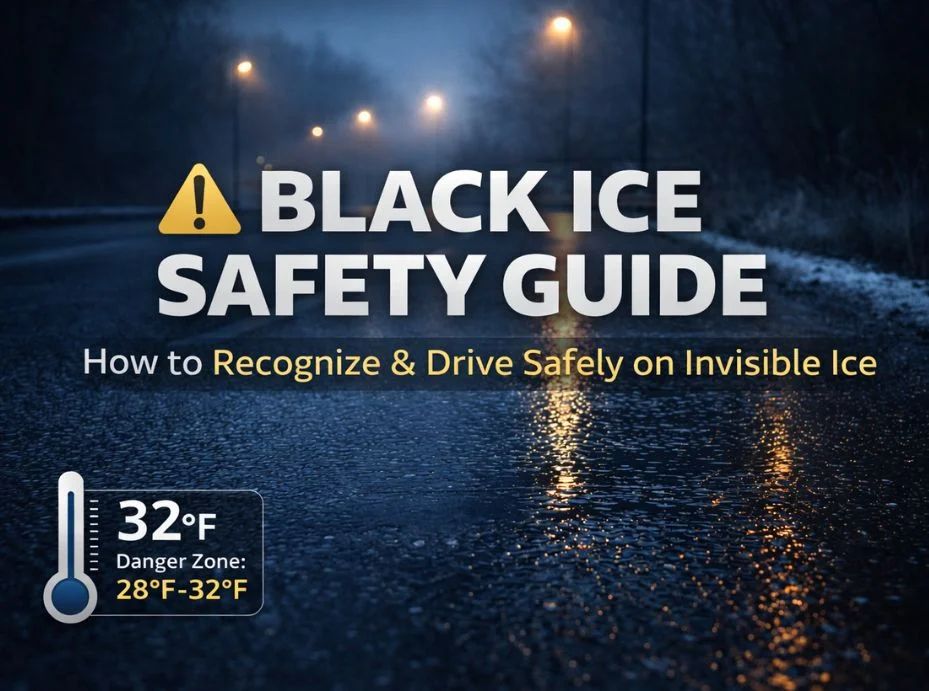
Black ice is a thin ice which is almost transparent and is formed directly on the road surfaces. Despite its name, it is not actually black but due to its clarity, it assumes the dark color of the asphalt where it is located. It is this transparency that makes the black ice particularly dangerous since it often appears as a wet road yet offers practically no grip. The formation of black ice is mostly due to the temperature that is 28°F and 32°F (-2°C to 0°C) and moisture of rain, fog, melting snow, or high humidity freezes when it touches the cold pavement. This process may take place within a short time and is unnoticeable.
Black Ice Formation Conditions
| Condition | Temperature Range | Risk Level |
| Freezing Rain | 28°F – 32°F (−2°C – 0°C) | Very High |
| Dense Fog | Below 32°F (0°C) | High |
| Melting Snow | 28°F – 36°F (−2°C – 2°C) | High |
| Morning Dew (below freezing) | Below 32°F (0°C) | Moderate |
What Does Black Ice Look Like?
One of the most dangerous aspects of black ice is how difficult it is to detect. On dry pavement, black ice may appear as:
- A faint, glassy sheen
- A slightly darker patch that looks wet
- A subtly reflective surface under headlights or streetlights
In daylight, black ice can look nearly identical to damp pavement. At night, it may appear as a suspiciously dark stretch of road with a faint gloss. If the road appears wet but there has been no recent precipitation, consider it a warning sign especially if temperatures are near freezing.
Key Visual Clues
- A shiny or glass-like surface on an otherwise dull road.
- Darker patches compared to surrounding pavement.
- Wet-looking sections with no recent rain.
- Vehicles ahead drifting or making sudden corrections.
- Outside temperature readings near or below 32°F with high humidity.
Where Does Black Ice Form Most Often?
There are certain places that are much more susceptible to the formation of black ice:
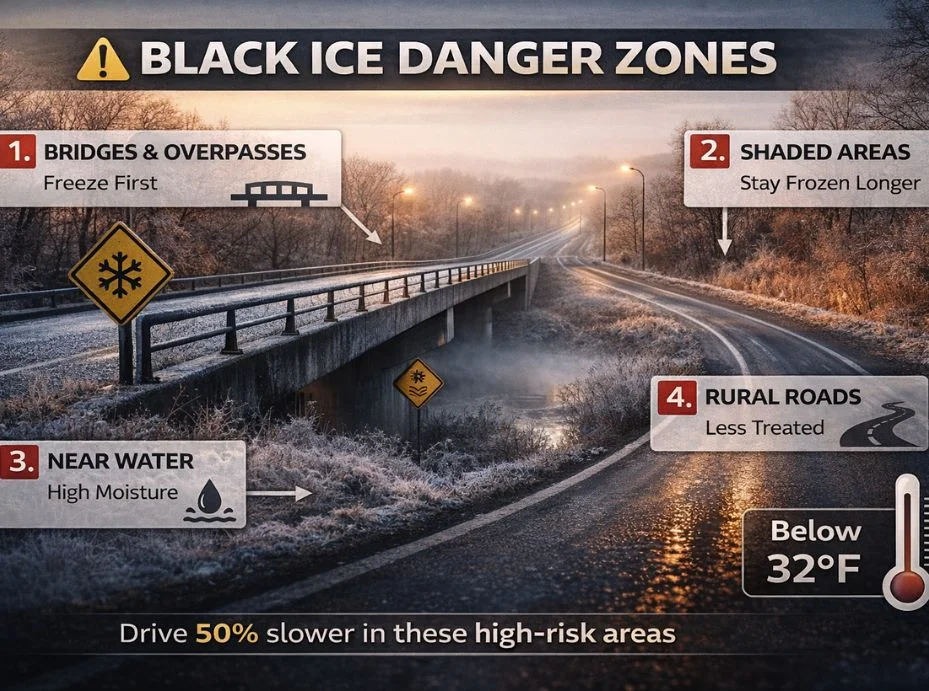
1. Bridges and Overpasses Highways cool down more than the normal roads, as they are heated up and cooled down by the ground, thus being frozen faster. Even an icy bridge can be present when the adjacent roads are free. Never cross speeding.
2. Shaded Areas The roads that are covered with trees, buildings, or hillsides do not get the sunlight and thus get colder even longer. Ice can also remain in these areas when the adjacent pavements have melted.
3. Roads Near Water Ambient moisture levels are elevated by lakes, rivers and streams. This water can accumulate when the temperatures are lower and freeze on the nearby roads, particularly during the night and in the early morning.
4. Low-Traffic Rural Roads Highways with heavy traffic have friction and heat that are produced by other traffic and tend to be treated faster. The rural roads have a high tendency to freeze earlier and might not be cleared.
How to Drive Safely on Black Ice?
When driving in near-freezing conditions, adjust your driving habits proactively. Smooth, controlled inputs are essential.
Before You Encounter Ice
- Reduce speed gradually when temperatures approach freezing
- Maintain a following distance of at least 8–10 seconds
- Apply brakes and acceleration gently
- Slow down before curves avoid braking mid-turn
- Check weather forecasts and temperature readings before traveling
If conditions suggest possible ice, assume it may be present.
What to Do If You Start to Skid?
If your vehicle loses traction:
- Immediately ease off the accelerator and brake
- Avoid slamming the brakes
- Steer gently in the direction you want the front of the vehicle to go
- Make smooth, controlled steering adjustments
- Stay calm and allow the tires to regain traction
- Once control returns, reapply light braking gradually if needed
Vehicles equipped with ABS (Anti-lock Braking Systems) allow you to apply steady, firm pressure without pumping the brakes. However, no technology can fully compensate for excessive speed on black ice. Prevention and reduced speed remain your most effective safety tools.
The National Highway Traffic Safety Administration recommends additional winter driving precautions to keep you safe during hazardous conditions.
Winter Vehicle Maintenance: Essential Safety Preparation
To drive safely in winter, the first step is making sure that the vehicle is well prepared. See to it before it is too late:
- Tires: Tread depth of 4/32 and inflation. Low temperatures lower the pressure and traction of tires.
- Brakes: Pads and rotors should be checked in order to make sure they are in optimum condition and provide maximum stopping power.
- Antifreeze: ensure that your mixture of coolant is good to local winter temperatures.
- Windshield Washer Fluid: Fluid (winter-rated) should not be frozen (below -20F).
- Motor Oil: When operating in cold conditions, use the recommended oil viscosity as shown by the manufacturer. Ready vehicles act in a more predictable way in the occurrence of hazardous situations.
If you’re experiencing engine performance issues during cold weather, consider inspecting or replacing critical components with OEM replacement parts to ensure reliable winter operation.
Conclusion
Black ice is an uncontrollable threat of the winter, yet it does not necessarily need to surprise you. You can by learning its formation, its appearance, its location, and modifying your driving behaviors to minimize your exposure to the risks of developing it to a great extent. The safety of winter driving is not an isolated behavior it is an attitude. Brakes not vigorously, do not neglect your car, and when driving, do not think how fast you can get to the destination, but how safe you can get and get there. Arrange a winter car checkup when it is still winter.
Frequently Asked Question
Can you have black ice even at a higher temperature than freezing point?
The temperature at which the black ice is usually formed is 28°F and 32°F Nevertheless, the ice may still remain in dark regions during brief increases in ambient temperatures above freezing. Overpasses and bridges are particularly likely to hold ice longer than other roads.
How does black ice appear at night in comparison to how it appears in the day?
In the night the black ice can provide a faint reflective look with the Headlights. It usually looks darker and wet on the daytime. When the road appears wet without precipitation in recent times and the temperatures are approaching freezing conditions, then treat the road as a potential black ice.
Would I stop in case I run over black ice?
Avoid sudden braking. Take off the accelerator, the brake, steer slowly towards your way, and leave the traction to come slowly back. In the case of ABS on your car, do not pump the brakes, just press.
How will I know whether the road which I am on is overlaid with black ice?
You may look and examine the temperature of the outward side close to the freezing point and to be mindful in the danger spots such as bridges, dark places and waterways along the roadways.
Are AWD cars safer in black ice?
AWD can increase the traction of acceleration but not braking or cornering on ice. Whichever the kind of the drivetrain, drivers must still reduce their speed and make smooth and controlled inputs.