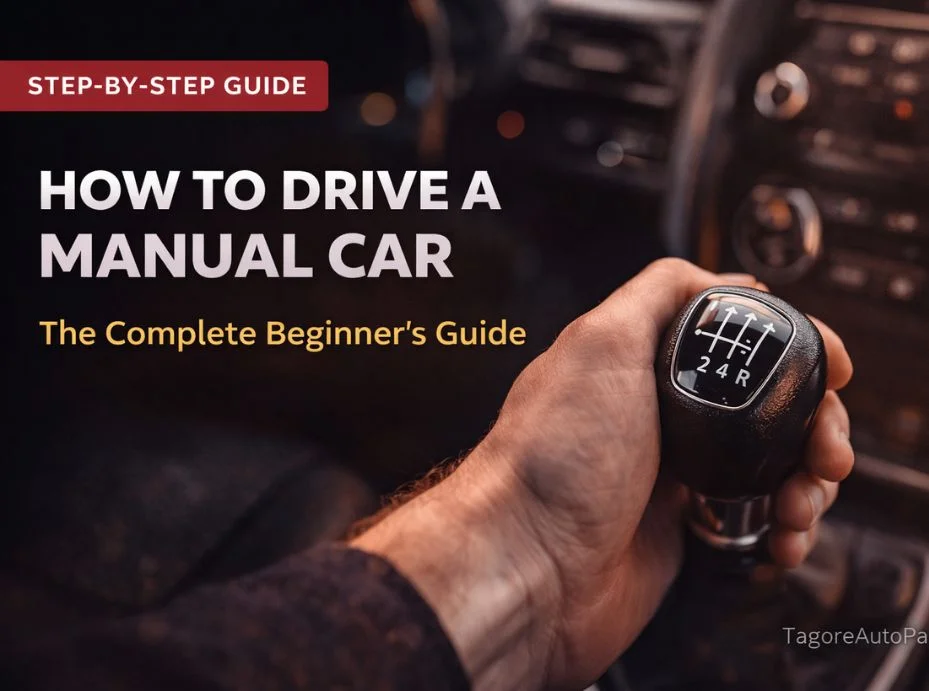
In a world that seems more dominated by automatic transmissions and electric vehicles, understanding how to drive a manual car is actually one of the most useful and applicable things that a person can learn in the automotive sphere. The so-called stick shifts or standard transmission or even just a basic term of having what is referred to as a manual, this kind of vehicle allows you to be in full control of your driving experience and that is exactly what makes it that much more rewarding.
The personal satisfaction is not the only tangible and very real, benefits of learning how to use a manual car. Manufactured vehicles are cheaper to buy and maintain, provide superior fuel efficiency in a majority of cases and are more connected and engaged to drive. To drivers who are looking to performance drive, do motorsport, or track days, knowing how to drive in a manual car is practically a requirement. This detailed manual cuts down the process of learning how to operate a manual car to simple easy steps regardless of whether you are a total beginner or just need to polish up the rusty old skills.
Understanding the Key Components of a Manual Car
Before you attempt to drive a manual car, it is critical to understand what makes it different from an automatic. The three fundamental components are:
| Component | Function | Foot / Hand Used |
| Clutch Pedal | Disengages the engine from the transmission, allowing gear changes | Left foot |
| Gear Selector (Stick Shift) | Selects which gear ratio the transmission is in | Right hand |
| Accelerator (Gas Pedal) | Controls engine speed and power delivery | Right foot |
| Brake Pedal | Slows and stops the vehicle | Right foot |
| Handbrake / Parking Brake | Holds the vehicle stationary, especially on hills | Left hand (or electronic) |
Step-by-Step Guide: How to Drive a Manual Car
These phases should be followed in order to know how to drive a manual vehicle in a safe and comfortable manner:
Step 1: Check whether the Car is in Neutral: Prior to starting the engine, push the gear lever to the halfway position on the gear boot that is the neutral position. To check, shake the stick about. When it moves freely in every direction, then you are in neutral. It begins here each time you step in the manual car.
Step 2: Press the Clutch to the Maximum and turn on the Engine: Use the left foot to step on the clutch pedal to the floor. A majority of the modern manual cars come with a clutch safety switch which will not allow the engine to start unless the clutch is fully depressed. First turn the ignition key half than fully to start up the engine (enabling sensors to be set up).
Step 3: Unlock the Handbrake and Be Ready to Move: Turn off the handbrake – refer to your owner manual, as there are also electronic parking brakes on some vehicles. When on a slope, you should have the right foot on the pedal of the brake and release the handbrake so as not to roll over. Seat and mirror adjustments, then proceed.
Step 4: Engage First Gear: As the clutch is fully depressed, switch the gear lever to the first gear. Most manual automobiles have first gear on the top-left of the shift pattern. The pattern of shift is normally printed on the top of the gear knob. The movement left and up should come first.
Step 5: Determine the Bite Point, and start moving: This is the most important thing in learning how to drive manual car. Lift your left foot off the pedal slowly. As you do this you will experience (and hear) then the engine note lowering a little as you do so, it is the bite point, at which the clutch starts engaging the engine to the wheels. Now, you need to press the accelerator with your right foot softly and keep taking off the clutch. The vehicle will start driving.
How to Shift Gears When Driving a Manual Car?
As you move, you will be required to switch gears with increase in speed. The following is the time to change when studying how to drive a manual car in the roads:
- Activate the clutch completely: It is always important to depress the full clutch first, then pick any gear.
- Change gear: Press the gear lever into the next suitable gear (e.g. 2nd to 3rd, 1st to 2nd)
- Clutch release: The clutch should be released progressively with some light throttle.
- Repeat with increasing speed: The majority of manual cars have 5 or 6 gears – change to higher gear as engine RPM increases.
- Acceleration upon deceleration: Change down the gear before decelerating or taking a turn. For additional reference, you can also check the official manual transmission driving guidelines recommended by driving authorities before hitting the road.
General Gear Change Speed Reference
The following table provides a general guide for when to change gears in a typical manual car. Actual shift points will vary depending on the vehicle, engine size, and driving conditions.
| Gear | Approx. Speed Range | Typical Use | Engine RPM Range |
| 1st | 0 – 10 mph | Moving off from stop | 1,500 – 2,500 RPM |
| 2nd | 10 – 20 mph | Low speed, residential streets | 1,500 – 2,500 RPM |
| 3rd | 20 – 35 mph | Town / urban driving | 2,000 – 3,000 RPM |
| 4th | 35 – 50 mph | Suburban / A-roads | 2,000 – 3,000 RPM |
| 5th | 50 – 70 mph | Dual carriageways / highways | 2,000 – 2,500 RPM |
| 6th | 70+ mph | Motorway / freeway cruising | 1,800 – 2,500 RPM |
Common Mistakes to Avoid When Learning to Drive a Manual Car
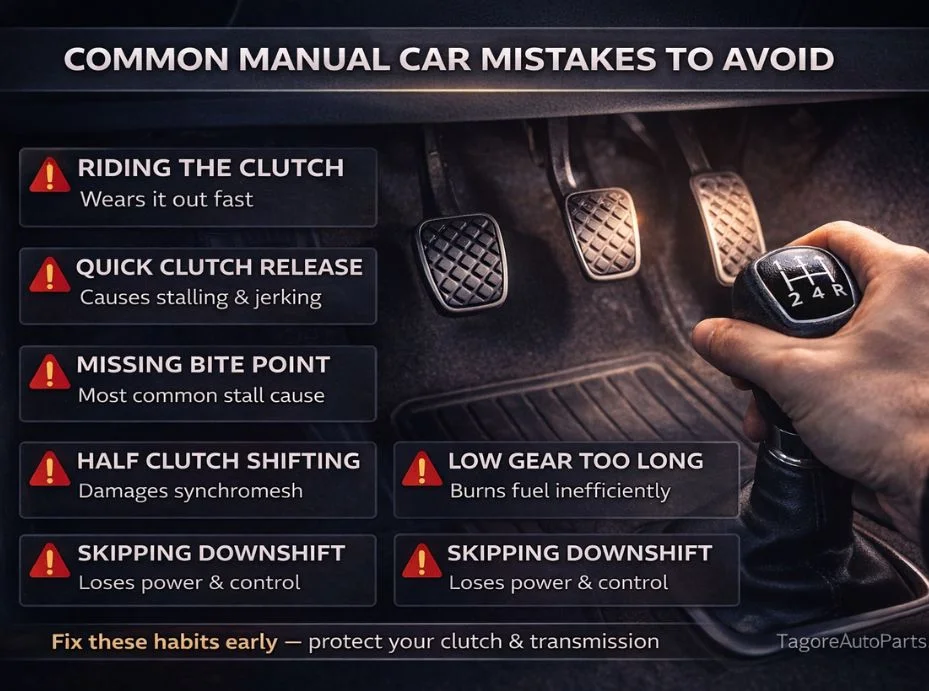
Every car enthusiast learning how to drive a manual car can make mistakes. Being aware of these mistakes in advanced is always better:
- Riding the clutch: When driving, you should not place your foot on the clutch pedal, as this will wear it out too soon. It is advisable always to have your left foot off the clutch when not changing gears.
- Releasing the clutch too quickly: The act of suddenly releasing the clutch will lead to stalling or jerking. One should take off the pedal gradually and in a smooth manner.
- Missing the bite point: The most common cause of stalled manual car is rushing the bite point. Take your time to feel it.
- Not pressing the clutch fully when shifting: You should not use half-clutch to change gears, as it damages the synchromesh of your transmission. Regular transmission fluid change can help protect your gearbox internals from premature wear caused by improper clutch use.
- Leaving low gears too long: An engine works too hard when operated in high speed at a low gear and does not burn fuel efficiently. Prolonged high-RPM driving in low gears puts excessive stress on engine components — if wear has already occurred, a quality remanufactured engine ensures you get back factory-level reliability and performance.
- Leaving out the downshift: Not choosing the right lower gear when making a slow-down could leave you powerless to get going again when it is necessary.
How to Perform a Hill Start in a Manual Car?
Hill starts are one of the most challenging skills for the beginners learning how to drive a manual car. Here is how you do it:
- Use the brake pedal and switch on first gear.
- Raise the clutch to the bite point – you will be tempted to move the car.
- At the same time release the footbrake and use a little throttle body.
- As the car starts climbing the hill, pressing the clutch all the way out. Or the handbrake, apply the handbrake, get the bite point and then release the handbrake and rise throttle.
Key Benefits of Knowing How to Drive a Manual Car
- Reduced cost of purchase: Manual transmission cars tend to be cheaper as compared to automatic ones.
- Lower maintenance costs: The manual gearboxes are simpler to maintain, and usually cheaper than the automatic gearboxes are to maintain.
- Much more driver control: A manual car gives you the direct control over power delivery and thus driving is more interactive and fun.
- Improved performance capability: In the case of the track days and performance driving, manual transmissions provide accurate gear control.
- Universal driving versatility: Being able to drive a manual car, you can drive literally any type of vehicle: automatic, manual, and so on.
- Better fuel consumption: In most vehicles, a good manual driver would be able to get a better economy compared to a similar automatic.
Conclusion
Knowing how to drive a manual car is truly one of the most rewarding thing for every car enthusiast. It takes a single pull-away, nail-a-heel-toe downshift, or sailing thru the traffic with a stick-shift car before it clicks, and you will be wondering why you were afraid.
To understand how to operate a manual car, one should always start in neutral, make sure to use the full range of the clutch when shifting gears, slow down the release of the clutch pedal to locate the bite point, adjust engine RPM with different speeds, and one should not have his foot on the clutch pedal when cruising. Before heading out for practice, make sure your vehicle is in top shape by going through a complete car maintenance checklist to avoid any mechanical surprises.
Pairing stick-shift skills with proper defensive driving techniques recommended by the National Highway Traffic Safety Administration will make you a more confident and safer driver overall.
Frequently Asked Questions
What Destinations Do You Offer?
Discover a wide range of travel destinations, from serene beaches to bustling cityscapes, with packages designed to suit every traveler’s needs.
How Can I Book a Trip?
Booking your dream vacation is simple! Learn how to select destinations, customize your itinerary, and secure your booking through our easy process.
What’s Included in Your Packages?
Our travel packages typically include accommodation, transportation, and some guided tours. Check the details to see what’s specifically covered for each package.