Table of Contents
When you have ever had to contend with irregular idling, inexplicable oil spills or unexplainable high fuel consumption, there is a little engine element that may be silently contributing to the problem—the PCV valve. This small component is often neglected in the course of the regular check-ups, but it is of significant importance to ensure that your engine is running smoothly, efficiently and without any complications.
The Positive Crankcase Ventilation (PCV) system is necessary to regulate the harmful gases in the air and to avoid the accumulation of internal pressure, which is necessary in the performance and longevity of the engine. In this manual, you will discover the meaning of a PCV valve, its functions, all the important parts in the valve, the most common signs when the valve goes wrong, and when to replace it to prevent expensive repairs and ensure your engine is in excellent condition.
What Is a PCV Valve?
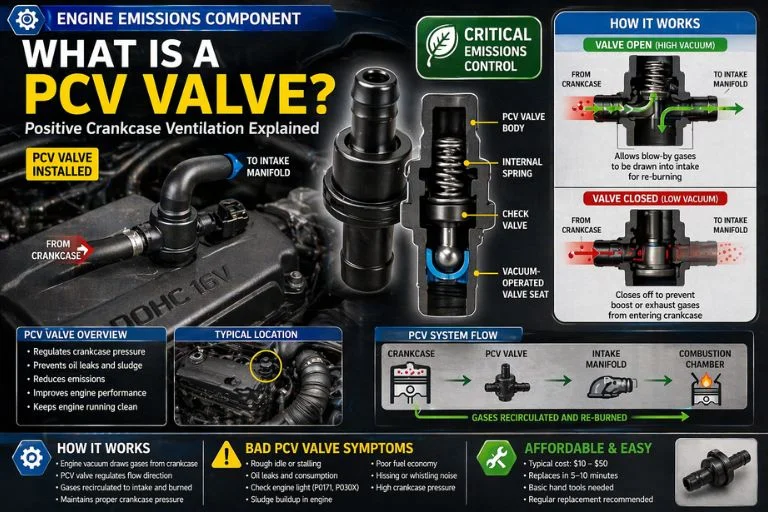
A Positive Crankcase Ventilation (PCV) valve is a small, but important, emissions-control device that has a large impact on keeping your engine healthy and efficient. It operates by controlling the pressure in the crankcase of the engine and diverting toxic “blow-by” gases, including unburned fuel, air and moisture, back to the combustion chamber where they burn safely.
This does not only avoid the release of toxic fumes to the atmosphere but also helps to reduce internal engine sludge, oil contamination and corrosion. By ensuring the engine is cleaner and that the appropriate pressure balance is maintained, the PCV valve also helps to achieve smoother operations, increased fuel efficiency as well as extended engine life. Although it is an essential component, it is a cost-effective and low-maintenance element, and it usually has to be checked or replaced after 30,000 to 50,000 miles, making it one of the most essential element of regular car maintenance.
How the Car PCV System Works
Understanding how PCV valve works requires a few words about what takes place in your engine when you are running your engine normally. When the pistons are firing in the cylinders, slight quantities of the combustion gases begin to escape through the piston rings into the crankcase. These blow-by gases include unburned fuel, oil vapours and moisture. The car PCV system works in the following way:
- Blow-by gases are built up in the crankcase during the running of the engine.
- The flow of these gases is regulated by opening and closing the PCV valve depending on the engine vacuum.
- The gases are pulled via the PCV valve into the intake manifold.
- These gases are directed back to the combustion chamber by the intake manifold.
- The gases are combusted with the normal air-fuel mixture.
It is a closed-loop system to avoid crankcase pressure accumulation, to minimize oil pollution, and harmful emissions, all with only one, low cost, valve.
Key Components of the Car PCV System
The PCV system consists of several interconnected parts working in harmony:
| Component | Function | Failure Impact |
| PCV Valve | Regulates crankcase gas flow into intake manifold | Rough idle, oil leaks, increased emissions |
| Crankcase Breather Hose | Transfers gases from valve cover to PCV valve | Vacuum leaks, engine hesitation |
| Oil Separator / Catch Can | Separates oil mist from blow-by gases | Oil build-up in intake, carbon deposits |
| Intake Manifold Port | Receives recirculated gases for combustion | Backpressure issues if clogged |
| PCV Hose / Tube | Connects PCV valve to intake manifold | Vacuum leaks, poor fuel economy |
PCV Valve Bad Symptoms: Red Flags You Should Not Ignore
Early identification of bad symptoms of PCV valves can save severe and costly engine damage. A defective PCV valve may present itself in a variety of ways, depending on whether the valve is frozen open or frozen closed.
Stuck-Open PCV Valve Symptoms
- Rough or irregular idle because of too much vacuum in the intake
- Weak air-fuel mixture leading to misfires and hesitation.
- Higher consumption of oil due to attraction of oil into the combustion chamber.
- Exhaust smoke (white or grey) caused by the burning of oil vapours.
Stuck-Closed PCV Valve Symptoms
- Too much crankcase pressure causing oil leaks around gaskets and seals.
- Accumulation of sludge in the engine as a result of moisture and non-evaporated gases.
- Check Engine light was activated due to connected sensor malfunctioning.
- Blocked air filter by oil mist being forced back by the breather hose.
- Noise and roughness of running in the engine.
Should you experience any of these PCV symptoms of a bad valve, then make sure that your car is checked out. PCV valves are also some of the cheapest parts of the engine to change, and usually cost $10-$50 just to change the part.
Understanding Engine Components and Their Interconnections
The PCV valve works as part of your engine’s broader emissions and ventilation system, similar to how the EGR valve manages exhaust gas recirculation to reduce emissions. Just as a failing alternator affects electrical system performance, a bad PCV valve impacts engine efficiency and oil consumption. Regular maintenance following a comprehensive car maintenance checklist helps catch these issues early. When major engine problems occur from neglected maintenance, quality aftermarket suppliers like Tagore Auto Parts provide reliable remanufactured engines and transmissions to restore your vehicle at reasonable costs.
What Is a PCV Delete Kit? Should You Consider One?
An aftermarket adjustment that is used to eliminate the stock PCV system and open up or vent the crankcase, typically redirecting crankcase gases to an external catch can or venting them to the atmosphere is known as a PCV delete kit. The following are some facts about the PCV delete kit:
- Usually found on high-performance and forced-induction applications where the stock PCV systems may oil up the intake manifold and intercooler.
- Has a catch can that will collect the oil and moisture instead of reusing it.
- May will result in a vehicle failing to pass emissions testing in most states and countries due to its circumventing of the emissions-control system.
- Not to be used on day-to-day drivers or street-legal cars in controlled areas.
- Ideal with dedicated track cars, racing applications or cars in emissions-exempt regions.
Always consult your local emissions regulations before installing a PCV delete kit. In the case of the majority of street-driven cars, it is prudent, clean, and legal to keep the stock PCV system.
PCV Valve Repair: How and When Do You Replace?
The PCV valve is not taken into consideration in daily servicing but it can greatly affect the health of the engine. The PCV valve should be inspected or replaced every 20,000 to 50,000 miles, although this is dependent on the vehicle. Indications that you need to change your PCV valve:
- Valve rattles when shaken – a good PCV valve must be free to rattle.
- You see oil in the air intake or throttle body.
- Sludge or heavy deposits of oil visible around the valve or hose.
- Your car is experiencing any of PCV valve bad symptoms mentioned above.
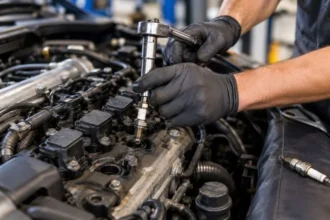
- Replacement is normally a simple DIY job that needs basic hand tools.
Never use anything but an OEM-spec or high-quality aftermarket PCV valve to ensure reliability.
Conclusion
The PCV valve can be tiny and cost little, but its contribution to your PCV system in the car is immense. The answer to what is a PCV valve, how PCV valve works, and knowing the symptoms of a PCV valve bad before it becomes expensive to maintain can help you avoid the pitfalls of expensive repairs later. No matter whether you have a daily driver or a high-performance machine with a PCV delete kit in mind, all car owners need to know about this component. Make sure your PCV valve is clean, check it frequently and replace it when there is trouble. It will pay off to your engine.
Frequently Asked Questions
What is PCV valve and why is it important?
Yes, the valve is of the utmost importance. It avoids the build-up of crankcase pressure, lessens engine sludge, manages the amount of oil used and assists your vehicle in passing the test of emissions. Leakage of oil, misfires and engine damage may occur in case of a failed valve.
What does a PCV valve do, and how does it affect fuel economy?
A valve that is stuck open permits excessive intake of air into the intake manifold, a very lean mixture, which may adversely impact fuel economy and performance. Proper maintenance of PCV system is beneficial in keeping the combustion efficiency at an optimum level.
Can I drive with a bad PCV valve?
Yes you can drive with a bad PCV but generally it is not recommended. Long-term operation with valve bad symptoms may result in oil spillage, formation of sludge, and increased engine wear. It is always best to repair it immediately since it is cheap to replace.
Is PCV delete kit legal on road?
A PCV delete kit is not a street legal device in most jurisdictions because it removes an emissions control device. It has a limited use to off-road or the track only. It is best to check with local regulations before undertaking this change.
How frequently should I change the PCV valve?
The majority of mechanics suggest that valve is checked every 20,000-30,000 miles and replaced every 30,000-50,000 miles, or according to the instructions in your vehicle owner manual. It should be replaced always in case of valve bad symptoms.