Have you ever wondered which part is responsible for keeping the exhaust of your car clean? Well, the SCR (Selective Catalytic Reduction) is a system that operates in your car in the background. This guide will cover the meaning of the SCR, how the system works, what can cause problems and why it’s important for any diesel owner or maintainer.
SCR Meaning and What Does SCR Stand For?
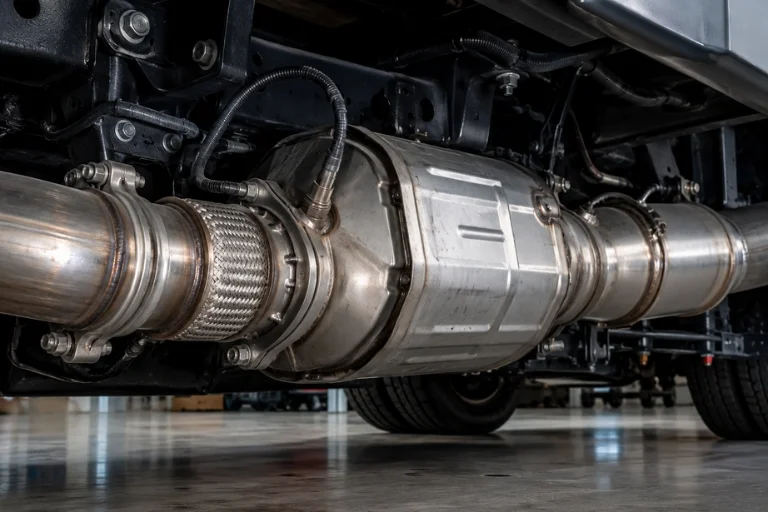
One of the most important systems of your car is the advanced emission control system also known as Selective Catalytic Reduction (SCR). This system is used to remove the harmful nitrogen oxide (Nox) emissions from the diesel engines and certain industrial equipment — a urea-based solution, into the exhaust stream. The exhaust gas flows through the SCR catalysts where the DEF neutralizes the NOx gases and produces harmless nitrogen, water vapor and low concentrations of carbon dioxide. This process is very efficient, and it can achieve a reduction of up to 90-95% of NOx emissions, which ensures low levels of NOx even under stringent environmental laws without affecting the engine performance and fuel consumption of vehicles and machines.
How an SCR System Works?
An SCR system alone is not a single component but it is a set of components that are different in each vehicle.
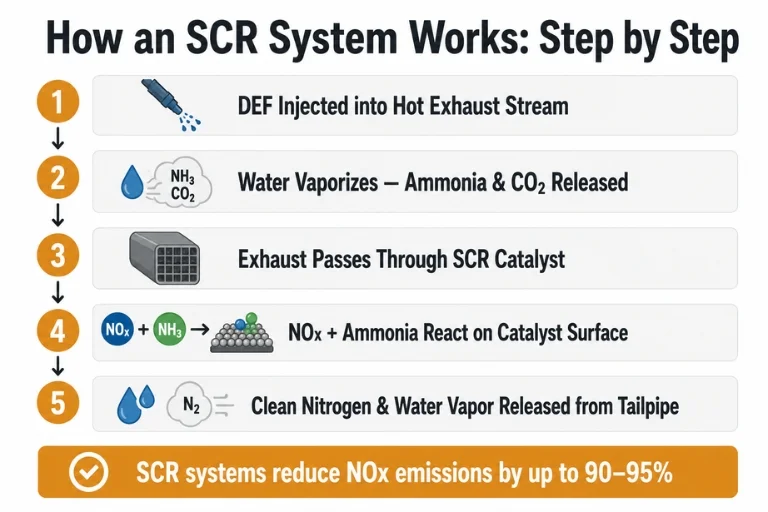
DEF Injection: The urea solution water or the DEF is injected into the hot exhaust stream, by the SCR system.
Urea Breaks Down: The water gets vaporized due to excessive high temperature and breaks down the Ammonia and Co2.
Exhaust passes through the SCR Catalyst: The different exhaust gases emitting is combined with Ammonia and pass through SCR catalyst, coated with vanadium, copper or iron-based Zeolities.
Chemical Reaction Takes Place: The harmful nitrogen oxide and Ammonia combine together with Catalyst to form harmless Nitrogen and Water Vapour.
Clean Exhaust Is Released: The tail pipe releases cleaned exhaust gases. Many systems also include an Ammonia Oxidation Catalyst (AOC), which removes excessive Ammonia (NH3) to prevent ammonia slips and odours.
Understanding how your SCR system interacts with your diesel engine’s overall performance is essential for long-term reliability. For diesel truck and SUV owners exploring engine replacement options alongside emissions repairs, Tagore AutoParts stocks a full range of used engines for popular diesel and petrol makes and models across the USA.
Understanding Diesel Exhaust Fluid (DEF)
DEF is a straightforward, non-toxic fluid made of roughly 32% automotive-grade urea mixed with purified water. It’s sold under a wide range of brand names, and in Europe it’s often labelled AdBlue instead. A few practical details worth knowing:
| DEF Detail | What to Know |
| Composition | About 32% urea, remainder purified water |
| Typical consumption | Roughly 3% of diesel fuel consumption |
| Onboard tank size | Usually 5 to 22 gallons, depending on the vehicle |
| Identification | Blue filler cap, often labelled “DEF Only” |
| Freezing point | Can freeze below 12°F; most tanks include a heating element |
| Availability | Sold at fuel stations, retailers, and in bulk nationwide |
For pickups and SUVs, the DEF filler is usually right next to the diesel fuel nozzle. On heavy-duty trucks, it’s typically mounted near the fuel tank, close to the driver’s side of the vehicle. The filler necks are intentionally shaped so a diesel nozzle can’t be inserted into the DEF tank by mistake, which helps prevent cross-contamination between the two fluids. For heavy-duty trucks where the DEF system works in tandem with the transmission control module, keeping the entire drivetrain in good health matters — Tagore AutoParts carries a wide selection of used transmissions for trucks and SUVs that regularly operate under heavy towing and load conditions.
Recognizing an SCR Fault
An SCR fault rarely shows up out of nowhere — most vehicles are designed to warn drivers well before things get serious. Typical warning signs include:
- Dashboard alerts tied to DEF level or emissions system status
- A countdown warning that engine power will be reduced if DEF isn’t topped off
- Diagnostic trouble codes linked to NOx sensor readings that fall outside expected ranges
- Noticeably higher-than-normal DEF consumption
- Reduced engine power, followed by speed limiting, if the issue isn’t corrected
That escalation is intentional. Regulators require this kind of “operator inducement” system precisely so that drivers can’t simply ignore a failing emissions system indefinitely — left unresolved, the vehicle will eventually derate and, in some cases, refuse to restart until it’s repaired. For diesel truck owners whose SCR fault has escalated to the point of engine derating or shutdown, Tagore AutoParts stocks used DD15 engines and other heavy-duty diesel engines for drivers who determine that an engine swap is the most practical path forward.
What Typically Causes SCR Problems
A handful of root causes account for most SCR system issues:
- Low-quality, diluted, or contaminated DEF
- A clogged or malfunctioning dosing injector
- A failed or drifting NOx sensor
- Corroded wiring or connectors in the DEF heating circuit
- A cracked or degraded catalyst, often from age or prolonged overheating
Using certified DEF, keeping the tank topped off, and addressing warning lights promptly go a long way toward avoiding these problems altogether. For a comprehensive technical reference on DEF quality standards and SCR system specifications, the Diesel Technology Forum’s official SCR and DEF resource page is one of the most authoritative industry references available.
Why NOx Reduction Matters
Nitrogen oxides are a major contributor to smog and respiratory irritation, especially in areas with heavy diesel traffic. As emissions regulations have tightened over the past two decades, NOx reduction technology has become essential rather than optional. SCR systems have effectively let diesel engines keep their traditional advantages — strong torque, excellent fuel economy, and long service life — while meeting standards that would have been unreachable with older exhaust treatment methods alone. For diesel pickup owners who want to maintain both emissions compliance and strong engine performance, Tagore AutoParts also stocks used Cummins ISX15 engines — one of the most popular and reliable diesel engines available for heavy-duty applications across the USA.
Conclusion
SCR technology has become one of the quiet workhorses of modern diesel engineering, letting trucks and SUVs meet strict NOx limits without giving up the performance drivers expect. Understanding the SCR meaning, keeping DEF topped off, and responding quickly to warning lights are the simplest ways to keep an SCR system running the way it’s designed to. If your vehicle is flagging a DEF or SCR fault right now, don’t put it off — a prompt diagnostic check is almost always far cheaper than the repair that follows a neglected warning light.
For all your diesel engine and drivetrain needs — from emissions system components to complete used engines and transmissions — trust Tagore AutoParts, your reliable autoparts supplier serving customers nationwide.
Frequently Asked Questions
What is SCR in a diesel engine?
It’s an emissions control system that injects a urea-based fluid into the exhaust to convert harmful NOx gases into nitrogen and water vapor.
What does SCR stand for?
The SCR stands for Selective Catalytic Reduction system. The catalyst reacts specifically with NOx rather than the entire exhaust stream.
Is SCR the same thing as a catalytic converter?
No both are not the same. A traditional catalytic converter is passive and doesn’t need a reducing agent, while an SCR system actively injects DEF to drive the NOx reduction reaction.
How much DEF does a vehicle typically use?
On average, about 3% of diesel fuel consumption, though this varies with driving conditions and load.
Can I keep driving with an SCR fault?
For a limited time, yes, though power may be reduced. If it’s not addressed, most systems will eventually limit speed or prevent the engine from restarting.